
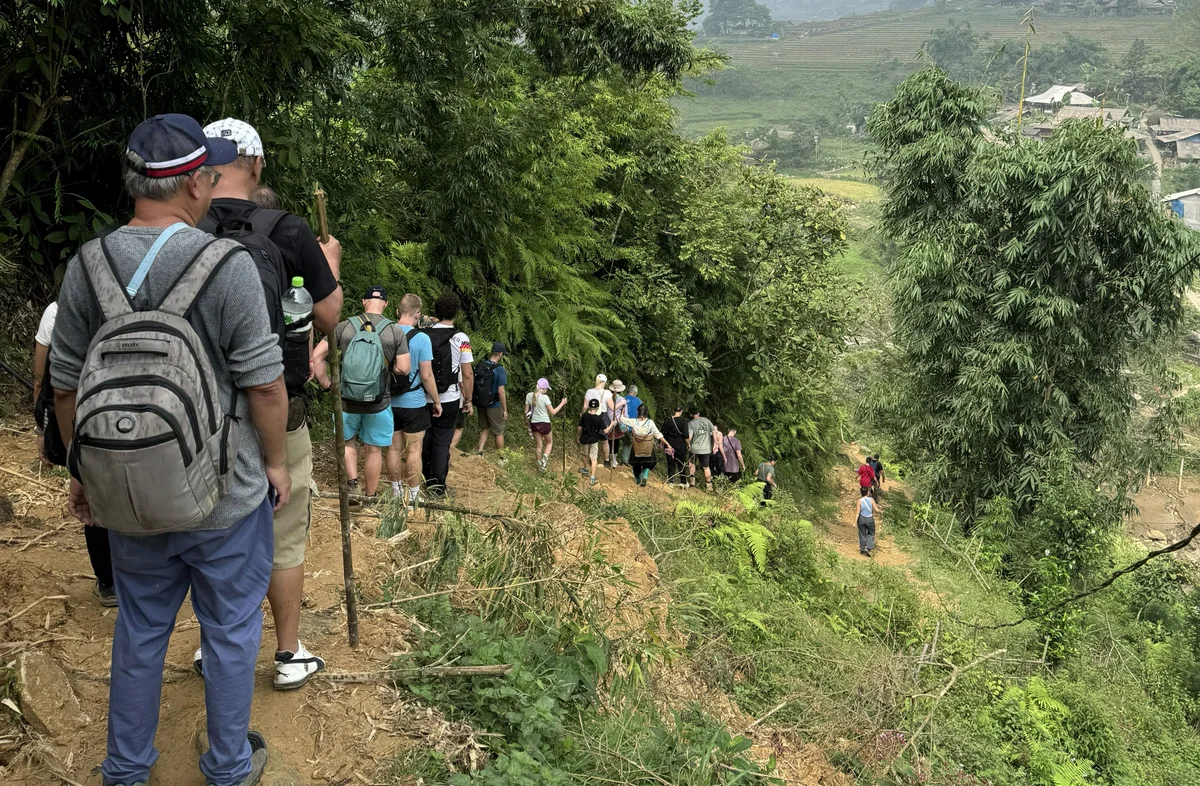
September is when Sapa really starts showing off.
The summer rains are winding down, temperatures become more comfortable for walking, and the rice terraces begin turning gold as harvest season arrives.
Add misty mountain mornings, local villages, waterfalls, markets, and plenty of good food waiting at the end of the trail, and you've got one very good reason to head north.
For anyone planning trekking in Sapa, September is one of the best times of year to visit.
It isn't completely rain-free, and the exact colour of the rice depends on when you visit. But that's mountain weather for you. One minute you're walking beneath blue skies, the next you're wondering where the mountain has disappeared to.
Here's what to expect when you go trekking in Sapa in September, and how to make the most of it.
What is the Weather like in Sapa in September?
September marks the transition from Sapa's wetter summer period into early autumn.
Daytime temperatures generally sit around 23°C to 24°C, while mornings and evenings can feel cooler. For trekking, that's a welcome change from the heat you'll find elsewhere in Vietnam.
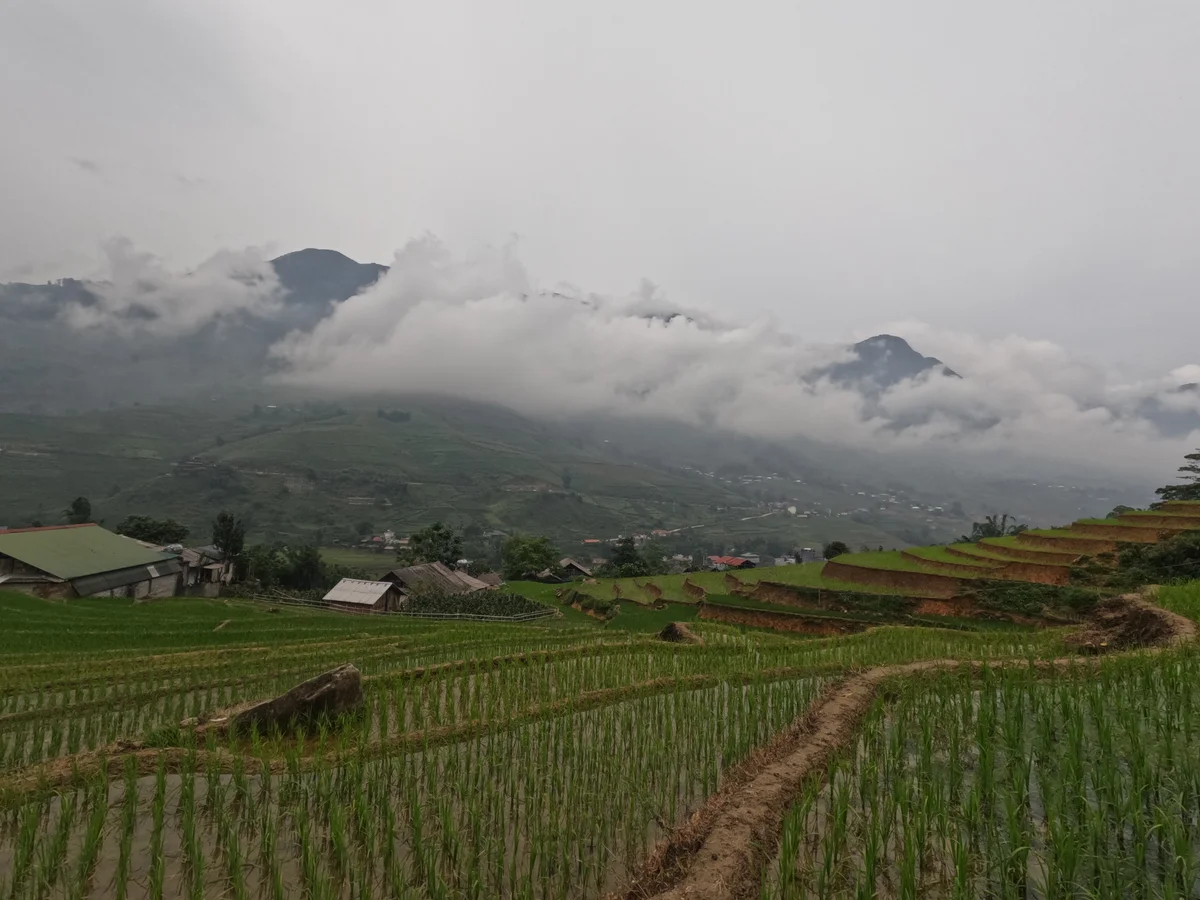
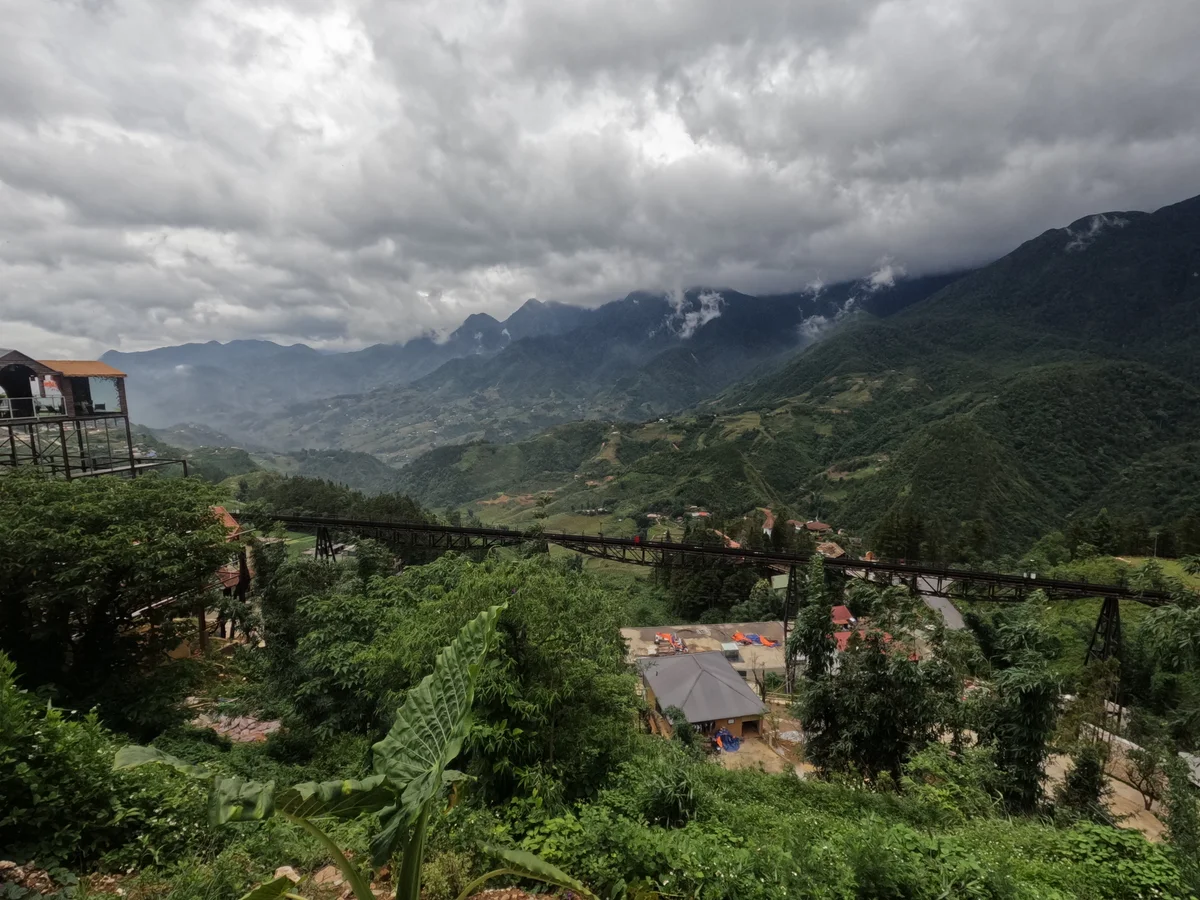
The rainy season is winding down, but it hasn't packed its bags completely. Showers are still possible, particularly later in the day, and mornings can be misty before the fog lifts and the mountain views appear.
The weather can change quickly in the highlands, so the best approach is to prepare for a bit of everything.
Sapa Weather in September at a Glance
Weather | What to expect |
Daytime temperature | Around 23°C–24°C |
Night-time temperature | Can drop to around 14°C–17°C |
Rainfall | The rainy season is winding down, but showers are still possible |
Mornings | Often cool and misty, with fog sometimes covering the valleys |
Afternoons | Generally warmer, with a chance of rain |
Trekking conditions | Generally good, although trails can become muddy or slippery after rain |
Mountain views | Can be excellent when mist and cloud clear |
What to pack | Light layers, waterproofs, good-grip shoes, sunscreen, and insect repellent |
The good news is that a rainy forecast doesn't necessarily mean you need to cancel your trek. Showers can be short, and the rain often leaves the landscape looking even greener and fresher.
Misty mornings can also be spectacular, particularly when the fog gradually lifts to reveal the rice terraces and mountains underneath.
Pack a lightweight waterproof jacket, protect your electronics, and wear shoes with decent grip. A little mud is practically a Sapa trekking souvenir anyway.
For a more detailed weather guide check out our seasonal breakdown here: Sapa Seasons Uncovered: The Best Time to Visit Sapa in Vietnam.
The Rice Harvest in Sapa: Why September is So Special
The rice terraces are the real reason September gets so much attention.
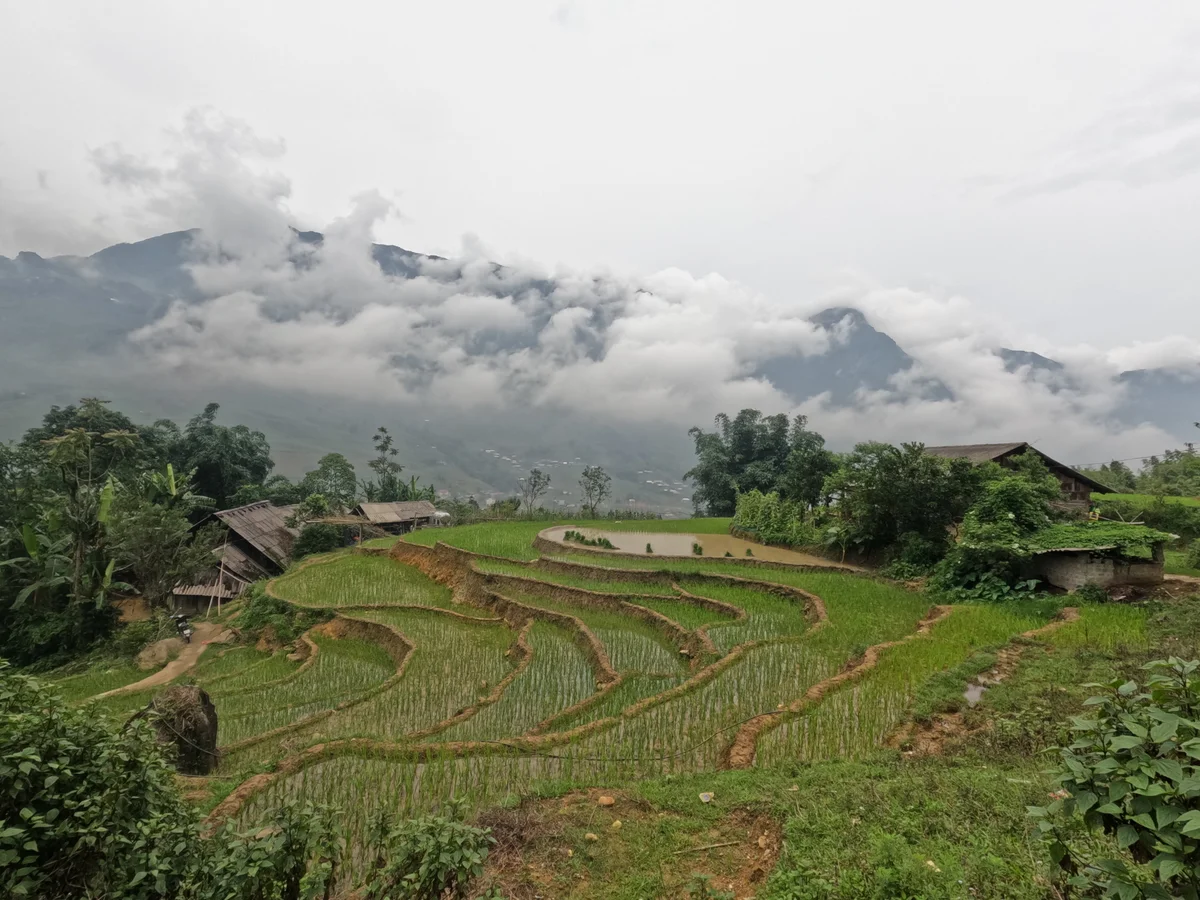
As the rice ripens, the terraces around Sapa gradually change from green to shades of yellow and gold.
Early September can still give you plenty of green, while later in the month more fields may be golden, being harvested, or already cut.
That means there isn't one single "golden rice" day across the whole region.
What you will get is an incredible agricultural landscape in transition, with farmers working the terraces and villages busy during one of the most important times of the year.
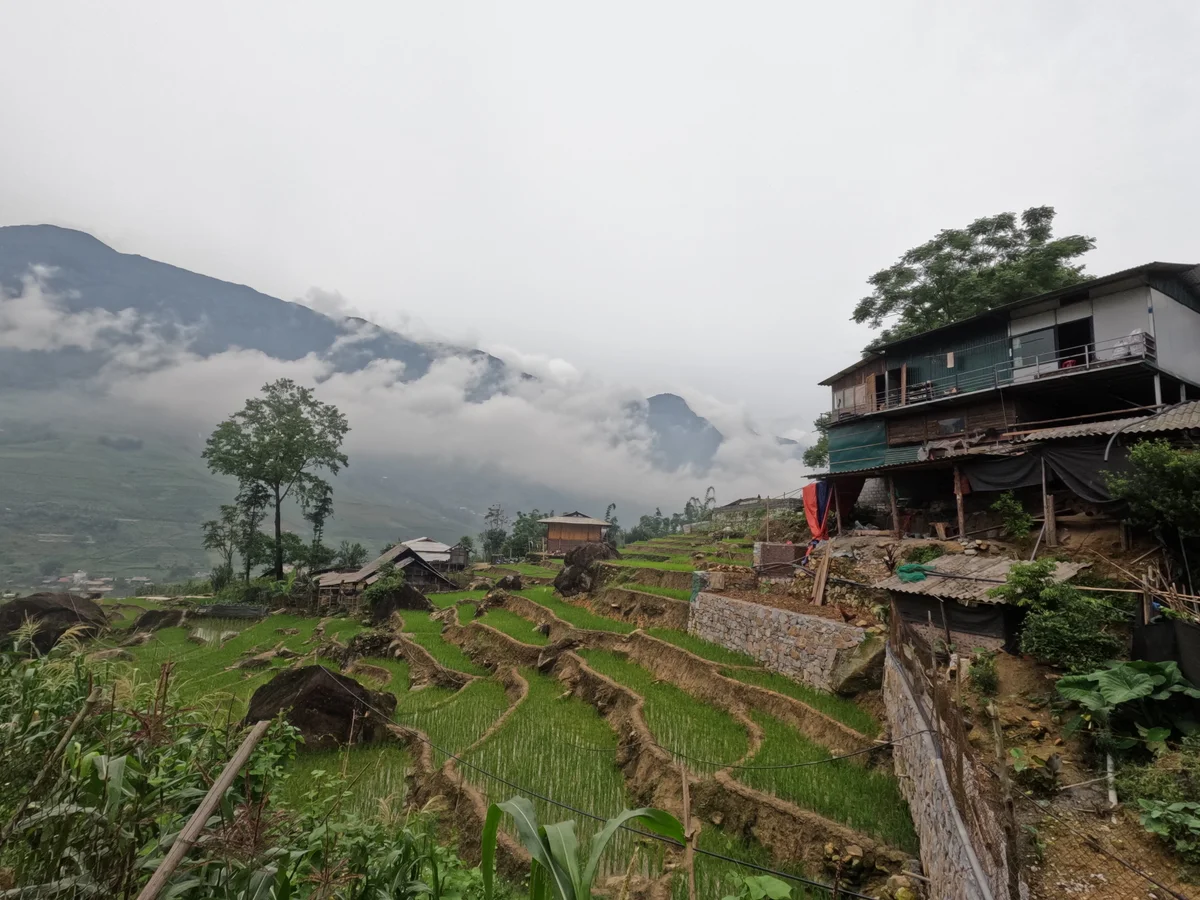
On a trek, you're right among the terraces, following paths between the fields, passing villages, crossing streams, and seeing how the farmland fits into everyday mountain life.
Just remember that these fields are working farmland. Stick to appropriate trails, don't walk through crops for a photo, and ask before photographing people.
Read more about the harvest season: What Harvest Season in North Vietnam Really Means in 2025: Culture, Community, and Rice.
Why September is a Good Month for Trekking in Sapa
The biggest advantage is the combination of comfortable trekking conditions and harvest-season scenery.
The cooler temperatures make long walks easier, while the rice terraces provide some of the best scenery of the year.
The landscape is also still wonderfully green in places, so you can get a mixture of lush fields, golden terraces, forests, and misty mountains rather than one colour everywhere.
September is particularly good for travellers who want to experience more than the famous viewpoints.
Harvest season means the countryside feels active. Farmers are working, villages are going about their daily routines, and local food and produce become part of the experience.
It is also a brilliant month for photography. Foggy mornings can make the valleys feel atmospheric, while later in the day, softer light brings out the warmer tones in the rice terraces.
Basically, September gives you plenty of reasons to go trekking… even when your legs have other opinions.
The Best Things To Do in Sapa in September
While we know trekking is at the top of your list, there is also lots to do between hikes.
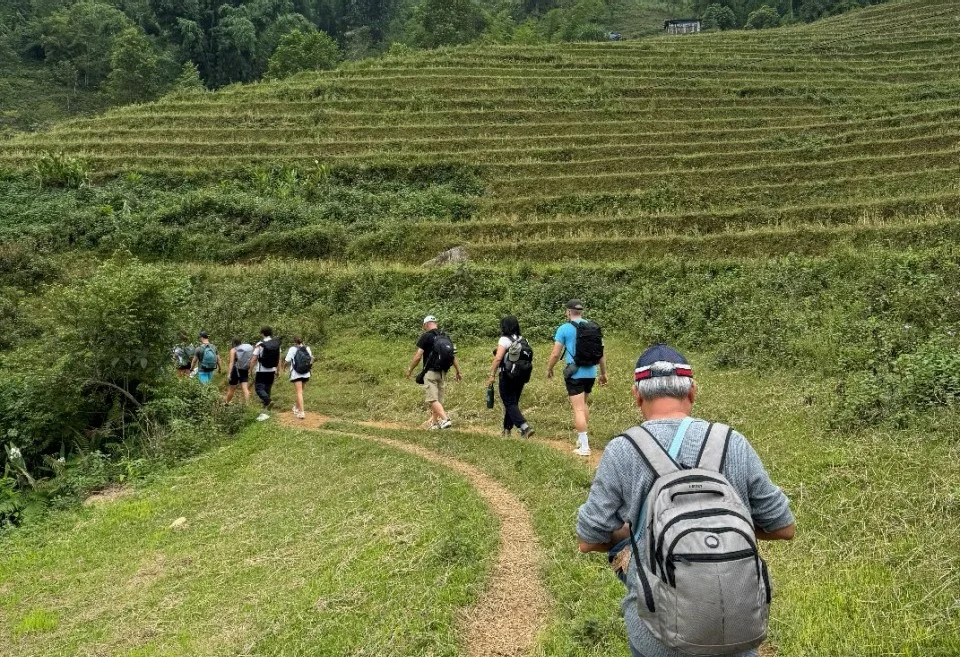
1. Trek through Muong Hoa Valley
For many travellers, Muong Hoa Valley is the main event.
The valley is surrounded by mountains and filled with terraced rice fields, with trails connecting villages including Y Linh Ho, Lao Chai, and Ta Van.
September is an excellent time to walk here because the harvest adds even more to an already spectacular landscape.
Take your time. There's no prize for reaching Ta Van first.
2. Visit Sapa's Ethnic Villages
The villages around the valley are a big part of what makes Sapa different from a standard mountain destination.
Y Linh Ho, Lao Chai, and Ta Van are popular stops, while longer treks can continue towards Giang Ta Chai, Su Pan, and Ban Ho.
These areas are home to different ethnic communities, including Hmong, Dao, and Dzay people.
3. Visit Fansipan
Fancy going even higher? Fansipan reaches 3,143 metres and is the highest mountain in Vietnam.
You can trek to the summit, or take the cable car if your legs have already had enough adventure.
September can still bring cloud and mist to the summit, so visibility isn't guaranteed, but clear days offer spectacular views.
4. See Silver Waterfall and Love Waterfall
The end of the rainy season means the waterfalls around Sapa can still be impressive.
Silver Waterfall and Love Waterfall are two of the area's better-known natural attractions and are worth adding to a day when you fancy something a little less demanding than a full trek.
5. Take in the Views at Tram Ton Pass
Also known as Heaven's Gate, Tram Ton Pass is one of the most spectacular viewpoints around Sapa.
On a clear day, you'll get sweeping views across the mountains and valleys. The weather can also be quite different from one side of the pass to the other, which is a nice reminder that Sapa weather enjoys doing its own thing.
6. Explore Sapa's Markets
Markets are one of the best ways to experience another side of northern Vietnam.
The Sapa Market is an easy place to start if you're staying in town.
For a bigger day out, head further into the region to Can Cau Market, held on Saturdays, or Bac Ha Market, which takes place on Sundays.
Bac Ha is particularly lively, bringing together people from surrounding communities, including Hmong, Dao, and Tay groups.
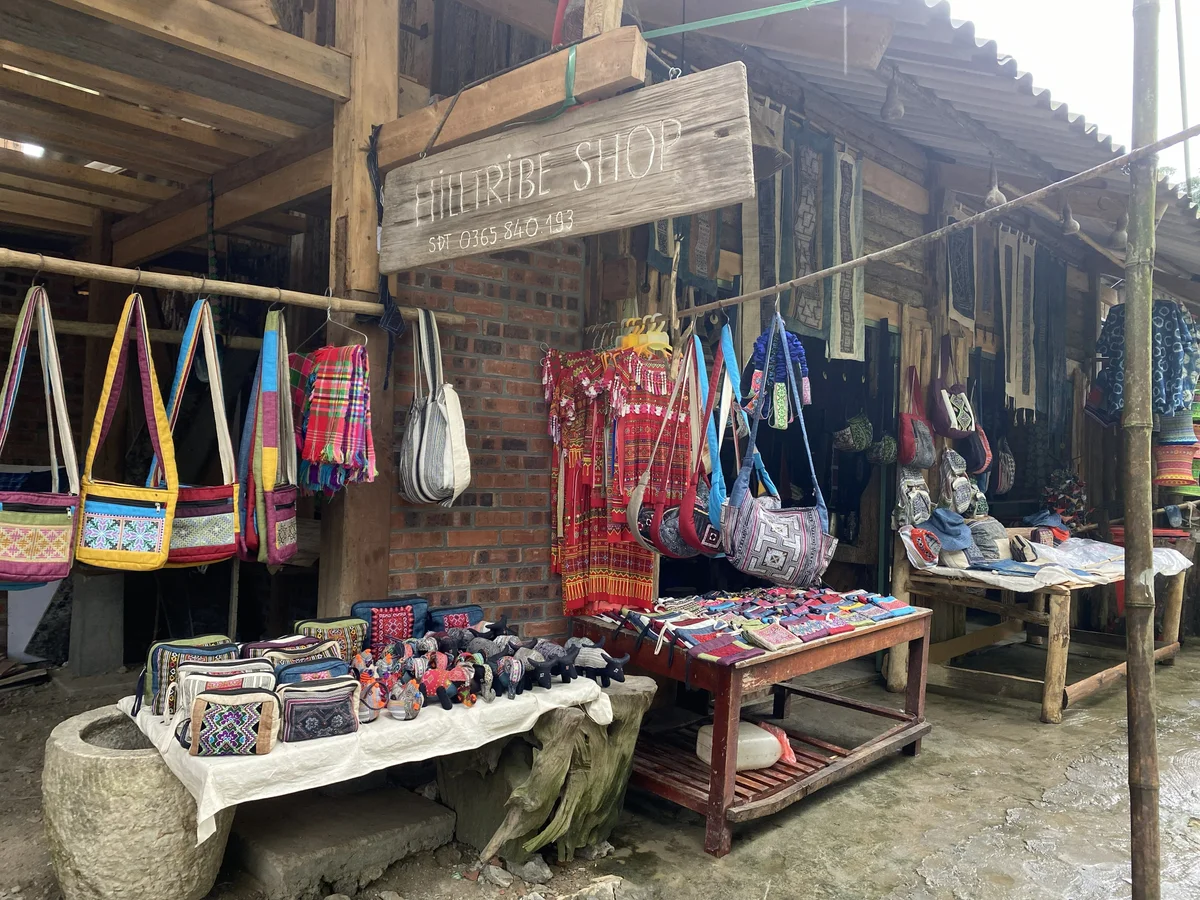
You can browse clothing, textiles, produce, livestock, and all sorts of things that would be significantly more difficult to fit into your backpack than you originally imagined.
These markets aren't just tourist attractions, either. They're places where local communities trade, socialise, and go about ordinary life.
Wander slowly, buy something from a local seller, and ask before taking photographs.
7. Eat Your Way Through Sapa
After several hours of trekking, food stops being a nice part of travelling and becomes an extremely serious matter.
Luckily, Sapa in September has plenty worth trying.
Start with cơm lam, sticky rice cooked inside bamboo. It's simple, smoky, filling, and exactly the sort of food that tastes even better when you've just walked several kilometres.
Then there's lẩu cá hồi, or salmon hot pot, one of Sapa's better-known specialities. It's particularly welcome when you're sitting down after a cooler evening in the mountains.
For something more casual, head to Sapa Night Market and work your way through the grills. Look out for corn, sweet potato, chicken, sausage, and plenty of skewers.
You may also find seasonal fruit such as plums and pears, alongside local produce and mountain specialities.
8. Look out for September celebrations
During the month of September Sapa will also join the important cultural celebrations happening across Vietnam.
Vietnam Independence Day on 2 September is a national holiday, while Tết Trung Thu (Mid-Autumn Festival) can fall in late September or early October depending on the lunar calendar.
If you're travelling around either period, expect a livelier atmosphere in town and check local listings for what's happening during your visit.
9. Experience a Local Homestay
One of the best ways to make your Sapa trip feel like more than a day of sightseeing is to spend a night in a local village.
A homestay gives you the chance to eat with your hosts, experience village life after the day-trippers have left, and wake up in the mountains rather than heading back to town.
Bong Hostel's 2-day, 1-night Sapa trekking tour includes an overnight stay with a local family in Ta Van, along with dinner and breakfast.
It also means you get two days on the trails instead of trying to squeeze everything into one.
Not sure how long you should stay? Read our guide How Many Days Do You Need in Sapa? before planning your trip.
10. Discover Sapa’s Cloud Cafe’s
You've done the trekking. You've survived the hills. Now you’ve earned a coffee.
Sapa has some seriously good cafés, from cosy spots in town to mountain cafés perched up in the clouds with some pretty ridiculous views.
On a clear day, you can sit with a Vietnamese coffee and watch the mountains stretch out in front of you. On a cloudy day, well… you might just be sitting in the clouds.
There are also plenty of places serving tea, smoothies, and cocktails, so whether you need a caffeine fix or something a little stronger after all those steep trails, you're covered.
Check out our guide to the best cafés in Sapa, including seven secret cloud cafés to find a good spot to put your feet up and enjoy the view.
What to Pack for Sapa in September
When planning for your trekking adventure in Sapa, it's worth remembering that the weather can change quickly in the mountains. The key is to come prepared for a bit of everything.
Light layers: Mornings and evenings can be cool, while walking during the day will warm you up quickly. Lightweight layers make it easy to adjust as the temperature changes.
Rain protection: Bring a lightweight waterproof jacket or poncho, and keep your phone, camera, and other electronics protected inside your bag.
Proper trekking shoes: Sapa's trails can become muddy and slippery after rain, so sturdy footwear with good grip is much more useful than your cleanest trainers.
Spare socks: Boring advice. Excellent advice. Your future self will thank you when you've just walked through a muddy patch.
Sunscreen and insect repellent: Both are useful when you're spending several hours outdoors, even when the sky is cloudy.
Water: A reusable bottle is ideal. You'll want plenty of water once you're climbing.
Camera protection: September can be brilliant for photography, but mountain weather has absolutely no respect for expensive cameras. A waterproof bag or cover is worth carrying.
Want the full packing list? Check out our Bong Hostel Survival Guide: What to Pack for Your Trekking Tour in Sapa.
Trekking in Sapa with Bong Hostel
So you've decided that walking through rice terraces, visiting mountain villages, eating home-cooked food, and sleeping in a local homestay in September sounds better than heading straight for the Ha Giang Loop and skipping Sapa altogether.
Good choice.
Bong has two Sapa trekking options, depending on how much time you have.
1. Bong's 2-day, 1-night Sapa trekking tour
This is the option for travellers who want to properly get into the mountains.
Day One: 12km of Trekking
Trekking Difficulty: 6/10
You'll visit Y Linh Ho and Lao Chai, have lunch with a local family in Lao Chai, and continue towards Ta Van, where you'll stay overnight in a local homestay.
Dinner is included, giving you the chance to experience a home-cooked meal and village life after the day's trek.
Day Two: 8km of trekking
Trekking Difficulty: 7/10
Day two starts after breakfast, taking you from Ta Van through Giang Ta Chai and Su Pan to Ban Ho.
You'll visit two villages associated with the Red Dao and Hmong communities. The route also includes a waterfall and rattan bridge before you finish in Ban Ho.
The tour includes:
A local guide for both days
Entrance tickets
Homestay accommodation
2 Breakfasts, 2 lunches, and 1 dinner
Sleeper bus transport between Hanoi and Sapa
For September, it's a great way to experience the rice terraces from inside the landscape rather than simply stopping for a photograph.
2. Bong's full-day Sapa trekking tour
Short on time? Bong's full-day trek takes you through Y Linh Ho, Lao Chai, and Ta Van.
Full Day: 12km of trekking
Trekking Difficulty: 6/10
You'll start with a trek towards Y Linh Ho before continuing to Lao Chai, where you'll have lunch at a Black Hmong house and learn more about the local way of life.
After lunch, you'll continue towards Ta Van before returning to Sapa by van.
The tour includes:
A local guide
Entrance fees
Breakfast and lunch
Return sleeper bus transport between Hanoi and Sapa.
It's a good option if you want a proper day in the mountains without committing to an overnight stay.
How to Trek in Sapa Responsibly
September is a popular time to visit Sapa, so accommodation and transport can be busy, particularly around weekends. Booking ahead is sensible, especially if you're planning to stay in a homestay.
Starting your trek early is also a good idea. You'll avoid the warmest part of the day and may have clearer conditions before any later showers arrive.
And don't let a little rain put you off. Prepare for it, accept the mud, and carry on.
Most importantly, be respectful when visiting local communities. Ask before taking photographs, don't walk through rice crops, take your rubbish with you, and support local businesses where you can.
You're visiting people's homes and workplaces, not just beautiful scenery.
For more responsible travel tips click here: Cultural Etiquette in Vietnam: 20 Dos and Don'ts for Respectful Travel.
FAQs About Trekking in Sapa in September
Is September a good time to visit Sapa?
Yes. September is considered one of the best months to visit Sapa, particularly if you're interested in trekking and seeing the rice terraces during harvest season.
The weather is cooler than the summer months, rainfall is beginning to decrease, and the terraces start changing from green to golden as the rice ripens.
Is September a good time for trekking in Sapa?
Absolutely. September offers a particularly good combination of comfortable temperatures and spectacular scenery.
The trails can still be muddy after rain, but the cooler weather makes longer walks more enjoyable, while the rice terraces are entering their golden harvest season.
Are the rice fields golden in September?
Often, but it depends on exactly when you visit.
Early September can still be quite green, with some terraces beginning to turn yellow. As the month progresses, more fields become golden and harvesting gets underway.
The timing can vary between different areas, so don't expect every terrace to be glowing gold on the same day.
Will it rain in Sapa in September?
It can. September is towards the end of the rainy season, so showers are still possible, particularly later in the day.
The good news is that rainfall generally decreases as the month progresses.
Pack waterproofs and prepare for muddy trails, but don't let the possibility of rain put you off. Some of the most dramatic Sapa scenery can appear just after a shower.
What food should I try in Sapa in September?
Make sure you try cơm lam, sticky rice cooked inside bamboo, and lẩu cá hồi, or Sapa-style salmon hot pot.
For something more casual, head to Sapa Night Market for grilled corn, sweet potatoes, chicken, sausage, and other skewers.
And if you're staying in a local homestay, don't miss the home-cooked dinner. After a full day of trekking, you'll probably be more excited about it than you were about your breakfast.
Which markets should I visit around Sapa?
The Sapa Market is an easy option if you're staying in town.
For a bigger market experience, Can Cau Market takes place on Saturdays, while Bac Ha Market takes place on Sundays and attracts people from several ethnic communities, including Hmong, Dao, and Tay.
They're great places to see local produce, clothing, crafts, food, and everyday trading and socialising.
How do I get from Hanoi to Sapa?
You have a few options. The most straightforward is a sleeper bus, which travels directly from Hanoi to Sapa.
You can also take an overnight train from Hanoi to Lao Cai, then continue by road to Sapa. A private car or limousine is another option if you prefer a more flexible journey.
Is trekking in Sapa difficult?
It depends on the route. Some trails are relatively gentle, while longer treks involve steep sections, uneven ground, and muddy paths.
Bong's full-day trek covers around 12 km and is rated 6/10 for trekking level. The 2-day tour covers around 12 km on day one, rated 6/10, and around 8 km on day two, rated 7/10.
You don't need to be an experienced hiker, but you should be comfortable walking for several hours on uneven mountain trails.
So, is September Really the Best Time for Trekking in Sapa?
For us, it's pretty difficult to argue with.
You get comfortable conditions for long walks, spectacular rice terraces entering harvest season, lively villages and markets, mountain scenery, waterfalls, and plenty of excellent food waiting for you afterwards.
September also gives you a chance to see Sapa doing what it has always done: farming its terraces, trading at its markets, cooking its local food, and getting on with mountain life.
That's what makes the experience special: you aren't just visiting a pretty landscape and taking pictures from afar, you're trekking right through it.
Because if you're going to make the trip north, you might as well get your boots muddy while you're there.
About Faye Hilling
Travel writer and Vietnam explorer sharing authentic experiences and insider tips for discovering the beauty of Vietnam.