
What Harvest Season in North Vietnam Really Means in 2025: Culture, Community, and Rice
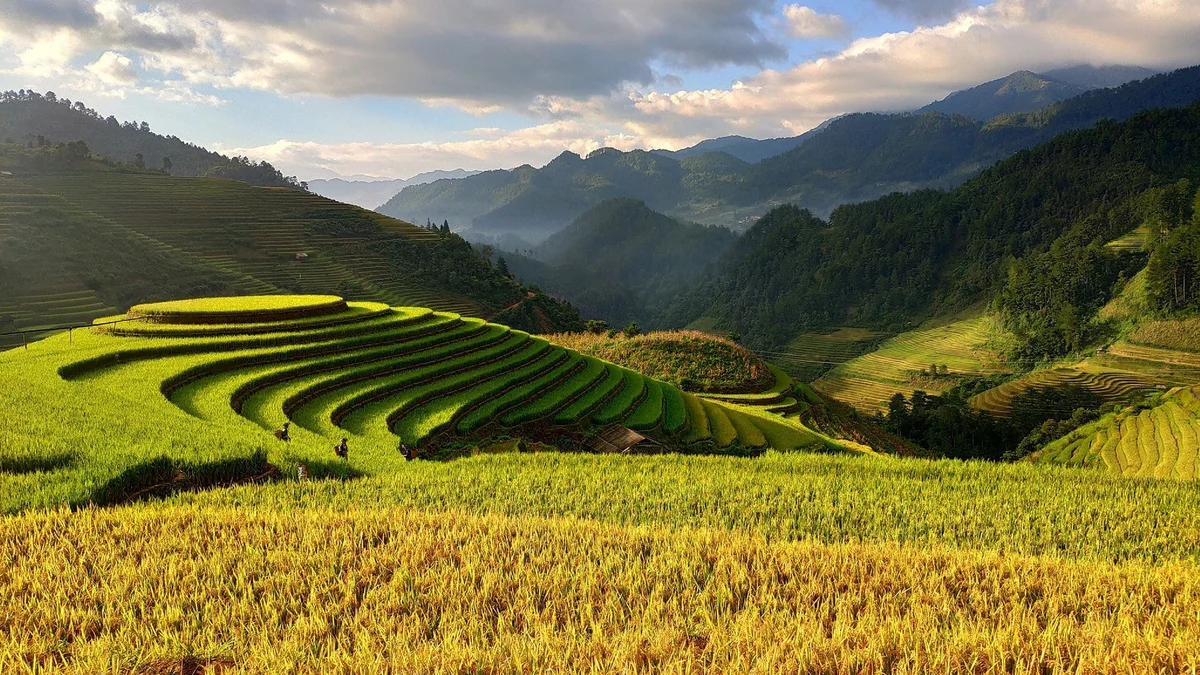
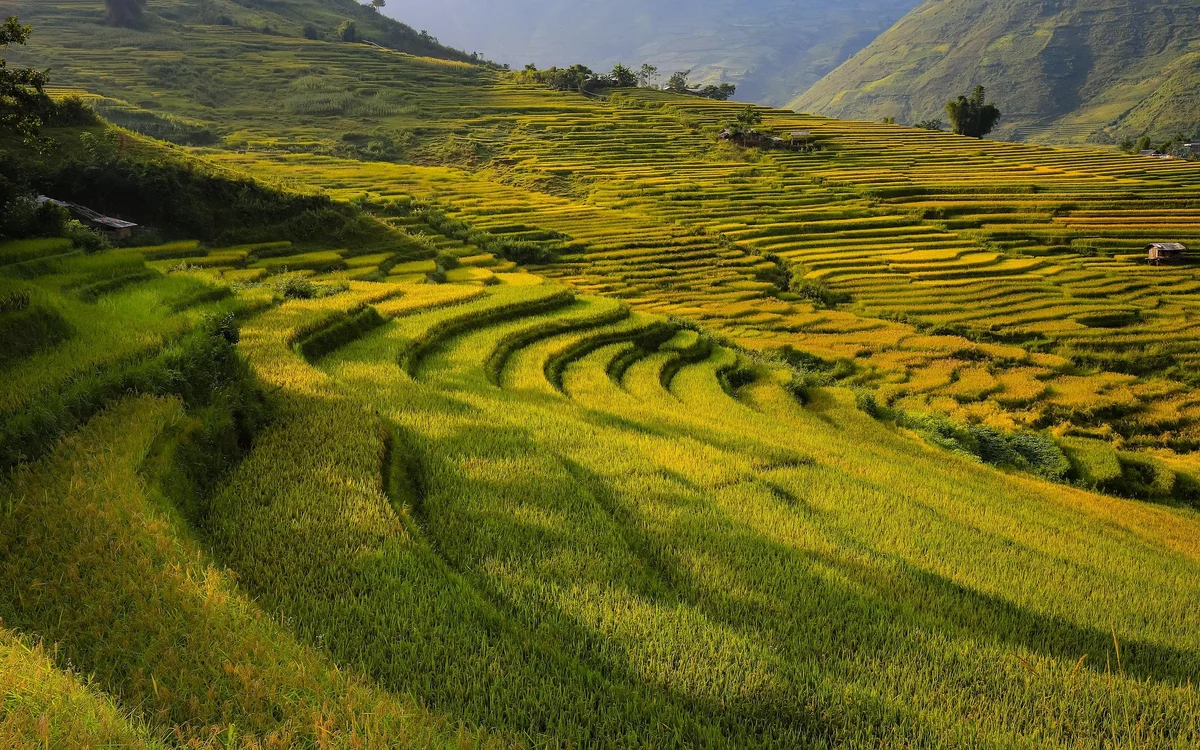
If there were a "Vietnam bingo card," terraced rice fields would be right there in the centre square—golden, tiered, and wildly photogenic.
But beyond the beauty, there’s a story of hard graft, cultural tradition, and some clever farming techniques as ancient as Vietnamese fairytales.
Welcome to the harvest season in North Vietnam: where rice isn't just a crop, it's a lifestyle, a livelihood, and a true highlight of any trip to Vietnam.
When is the Harvest Season in North Vietnam?
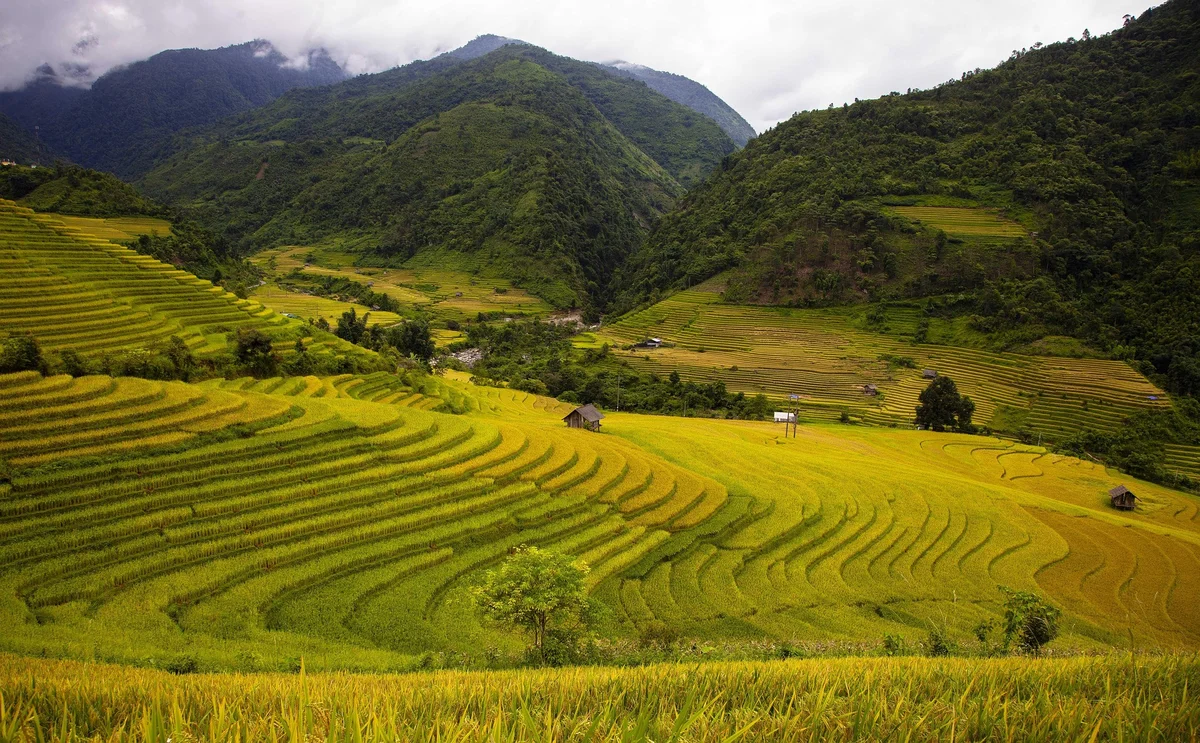
The harvest season in North Vietnam typically falls between August and October. But if you're looking to catch the perfect glow, late September is usually your best bet.
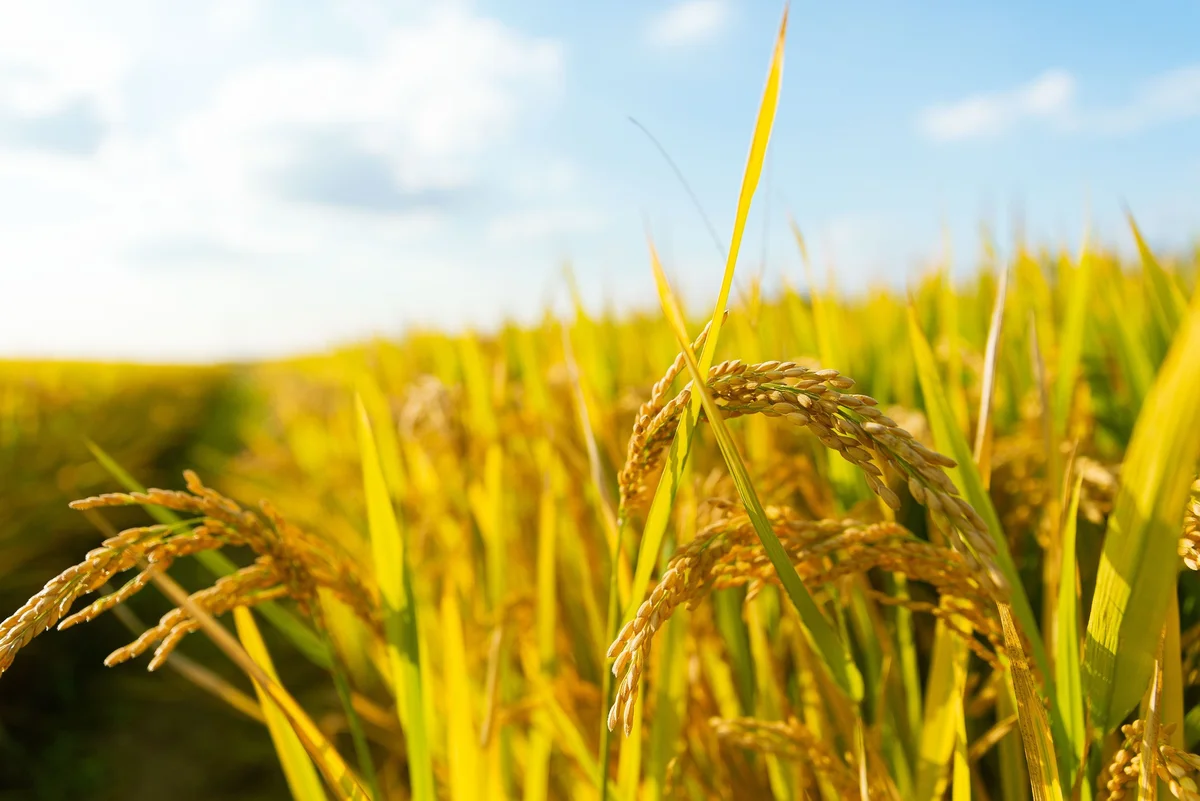
That's when the paddies turn from lush green to radiant gold, and the hillsides look like someone spilled liquid sunshine across the mountains.
Why Timing Matters
Weather, water, and even when the rice was transplanted earlier in the year, give the harvest scene a slightly unpredictable calendar.
Heavy rains can delay cutting by weeks, while an early monsoon might force farmers into overtime.
Psst! Sometimes, even local superstitions can shift exact harvest dates.
Spring vs. Autumn Harvests
Let’s break it down further:
Spring Crop (Xuân): Planted February–March, harvested May–June.
Autumn Crop (Thu): Planted May–July, harvested August–October.
In the North, winters are too chilly for a third cycle, so we focus on autumn’s golden crescendo.
Related article: Rainy Season on the Ha Giang Loop: Tips, Safety, & What to Expect.
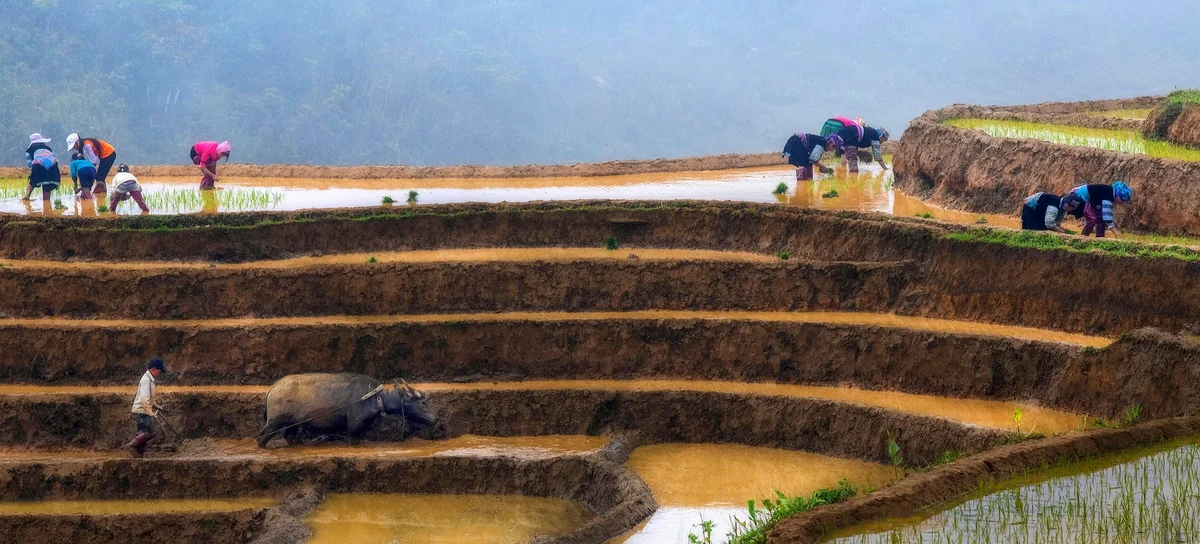
A Day in the Life of a Northern Rice Farmer
Vietnamese farmers don’t just grow rice; they practically live in it.
Many are up before sunrise, bent double in the paddies by 5 am, and they’re still at it when the stars come out.
It’s tough work: hot, muddy, and back-breaking. But it's also rhythmic and deeply tied to the land.
In the highlands, farmers don’t have access to big, mechanized fields like those in the Mekong Delta.
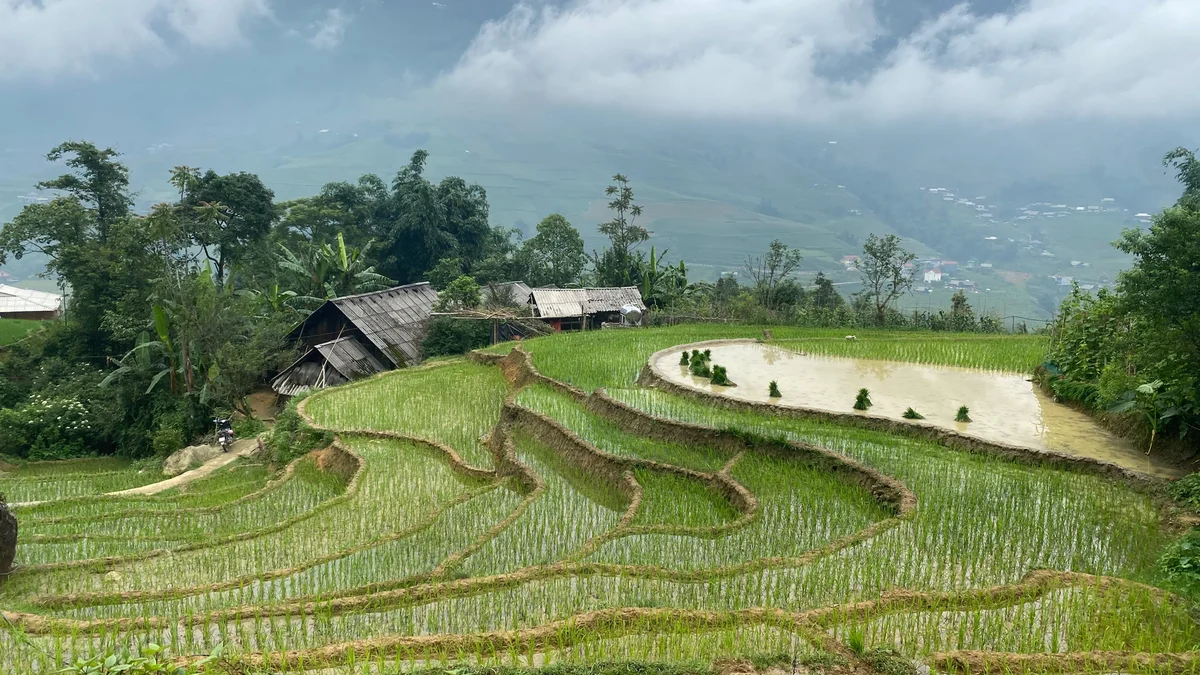
Instead, they rely on terrace farming, a clever method that prevents water from running downhill too quickly and gives rice a place to thrive in the hills.
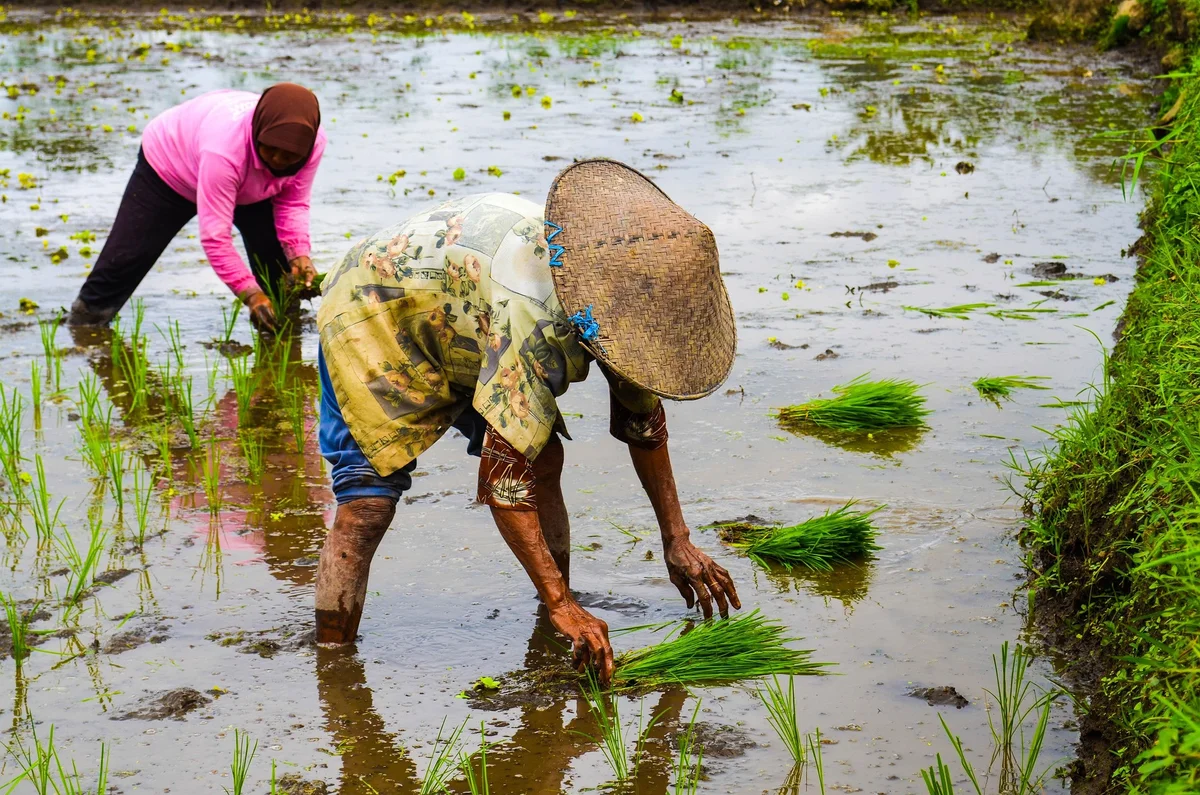
Step by Step: How Rice is Harvested in North Vietnam
Here's how Vietnamese farmers keep millions fed and fuel the economy:
Stage
Traditional Method
Modern Twist
Land Prep
Buffalo‑drawn plows level flooded fields.
Small tractors in lower valleys.
Transplanting
Seedlings planted by hand, one at a time.
Mechanical transplanters in easier terrain
Irrigation and Care
Water is kept flowing constantly. In the mountains, this means diverting streams or relying on rain.
Harvesting
Farmers cut the rice with iron sickles.
Small combine harvesters (rare in highlands).
Threshing & Winnowing
Beating bundles on wooden threshing boards; tossing for wind cleaning.
Portable machines save time.
What Happens to the Rice After the Harvest?
Once the rice is cut, it goes through several steps:
Drying: Grains are laid out in the sun on large tarps.
Storage: Traditionally in bamboo granaries, now often in sealed bags.
Transport: Hauled by foot, bike, or buffalo-cart to markets or buyers.
The entire community often helps out—its a group effort!
What Makes Rice So Important in Vietnam?
In Vietnam the grain is a symbol of prosperity, life, and cultural heritage. It's offered to ancestors, used in spiritual ceremonies, and forms the base of pretty much every meal.
Here are some stats, which reflect the significance of rice in the Vietnamese economy:
Annual Output: In 2024, Vietnam produced roughly 56 million tonnes of paddy rice. The Red River Delta contributes nearly 8 million tonnes, powering local tables and export lanes.
Per‑Capita Love: The average Vietnamese person eats about 145 kg of rice each year—more than a quarter kilogram every single day!
Clearly, without rice, Vietnam would be incomplete.
Related article: Journey to the North: Culture on the Ha Giang Loop.
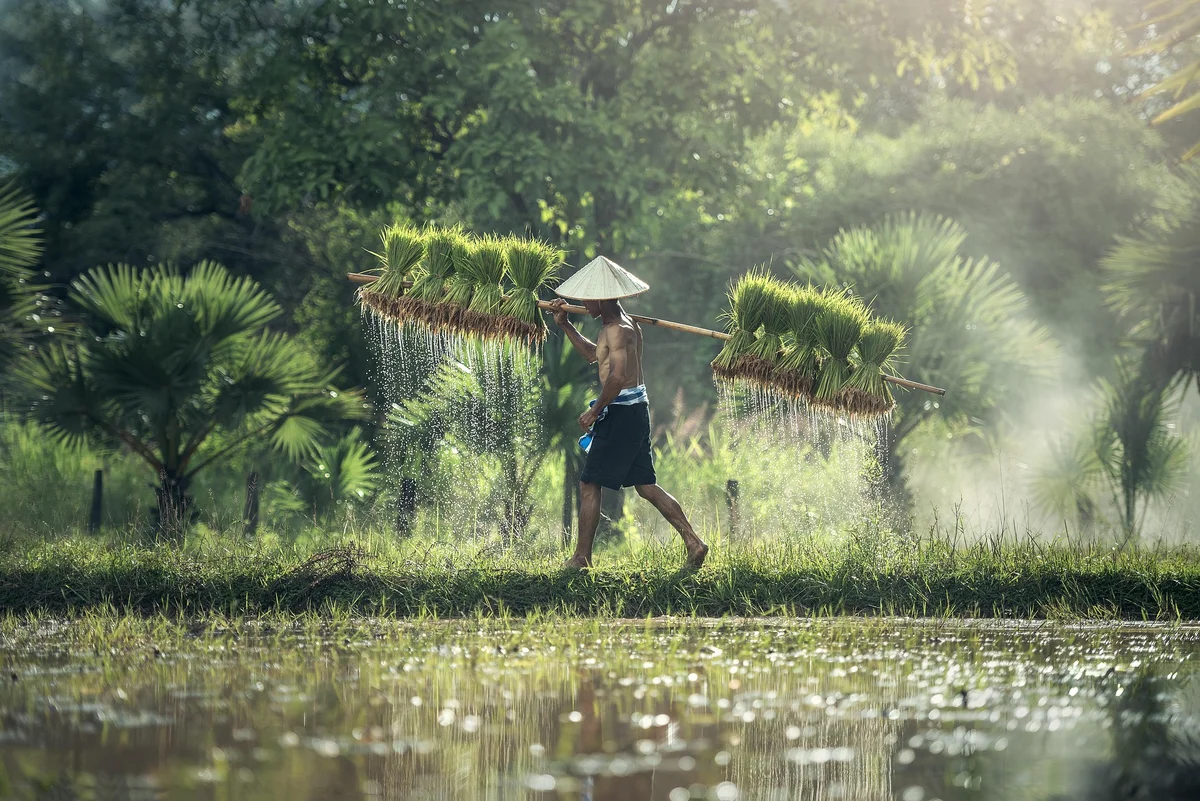
SRI vs. Conventional Harvesting Methods
Modern Twists: Technology on the Rise
While many farmers still use traditional methods, there’s a quiet tech revolution happening:
Combine Harvesters: Cut and thresh in one go.
Irrigation Systems: Automated for efficiency.
Data-Driven Farming: Track soil quality, rainfall, and crop yields.
Still, in the highlands, it’s mostly old-school. Which means what you see during your travels is raw, real, and refreshingly unplugged.
The System of Rice Intensification (SRI) is making waves even in the North’s valleys:
Plant Spacing: Wider rows give roots room to stretch.
Alternate Wetting & Drying: Fields aren’t flooded constantly—this saves up to 30% water and boosts yields by 20–30%.
Young Seedlings: Transplanting at 8–12 days old, not 20–30, increases tiller numbers.
Conventional paddies still dominate highland terraces, but lowland cooperatives are adopting SRI patches with impressive results.
What Are the Different Rice Varieties?
While you may know rice as "white or brown," Vietnam has quite the palette:
Jasmine Rice (Đặc Sản): Perfumed, long-grain—top pick for daily bowls.
Sticky Rice (Nếp): Short-grain, gluey when cooked—used in xôi, bánh chưng, and desserts.
Black & Red Rice: Ancient heirloom types rich in antioxidants, used in celebratory dishes.
Green Rice (Com): A chewy, seasonal treat harvested early.
Floating Rice: Grows in deepwater areas—stalks can reach 3 m tall!
Each variety has its own harvest window, use, and cultural significance in Vietnam.
Did you know? Deepwater rice fields flood 3–5 m, and farmers harvest from small boats—imagine “rice kayaking.”
Traditional Clothing and Tools Used By Rice Farmers
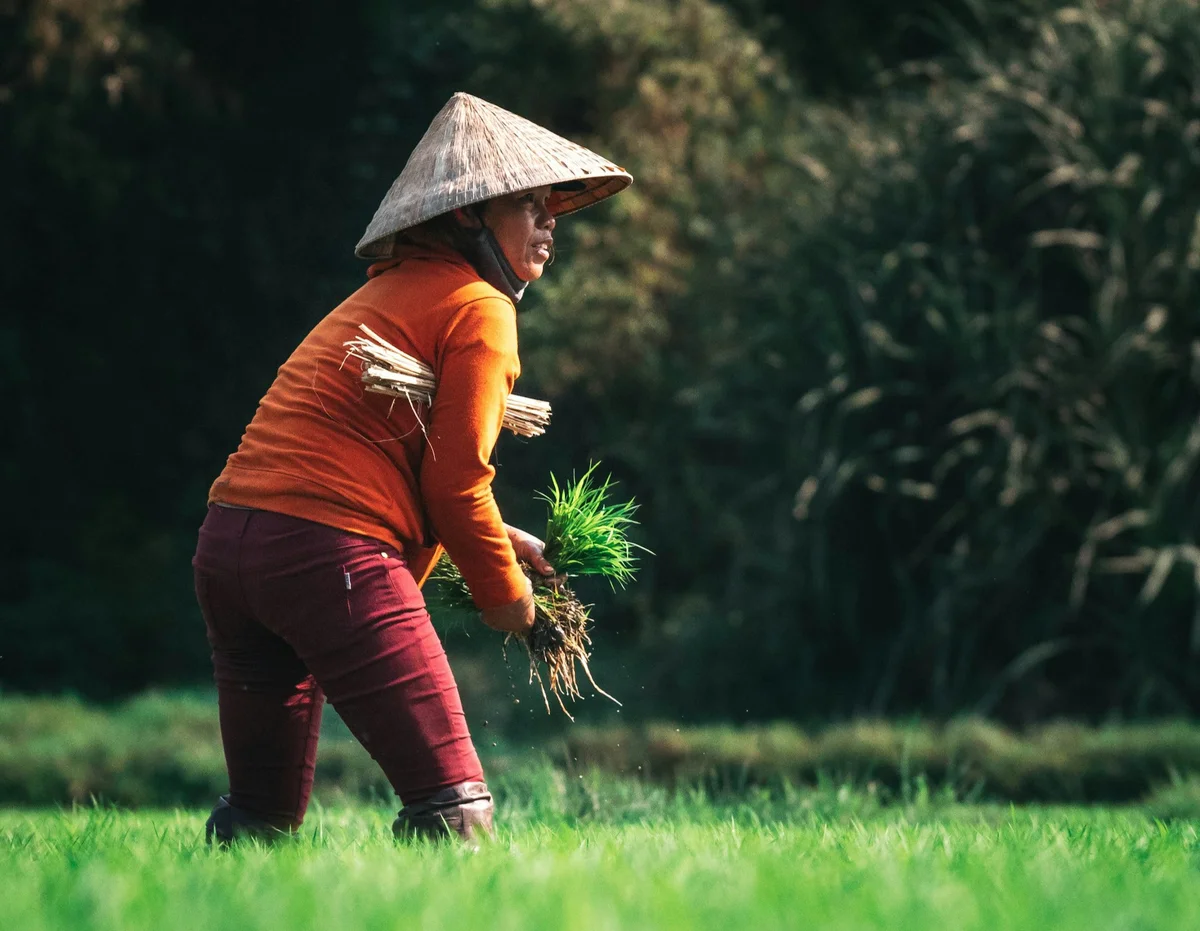
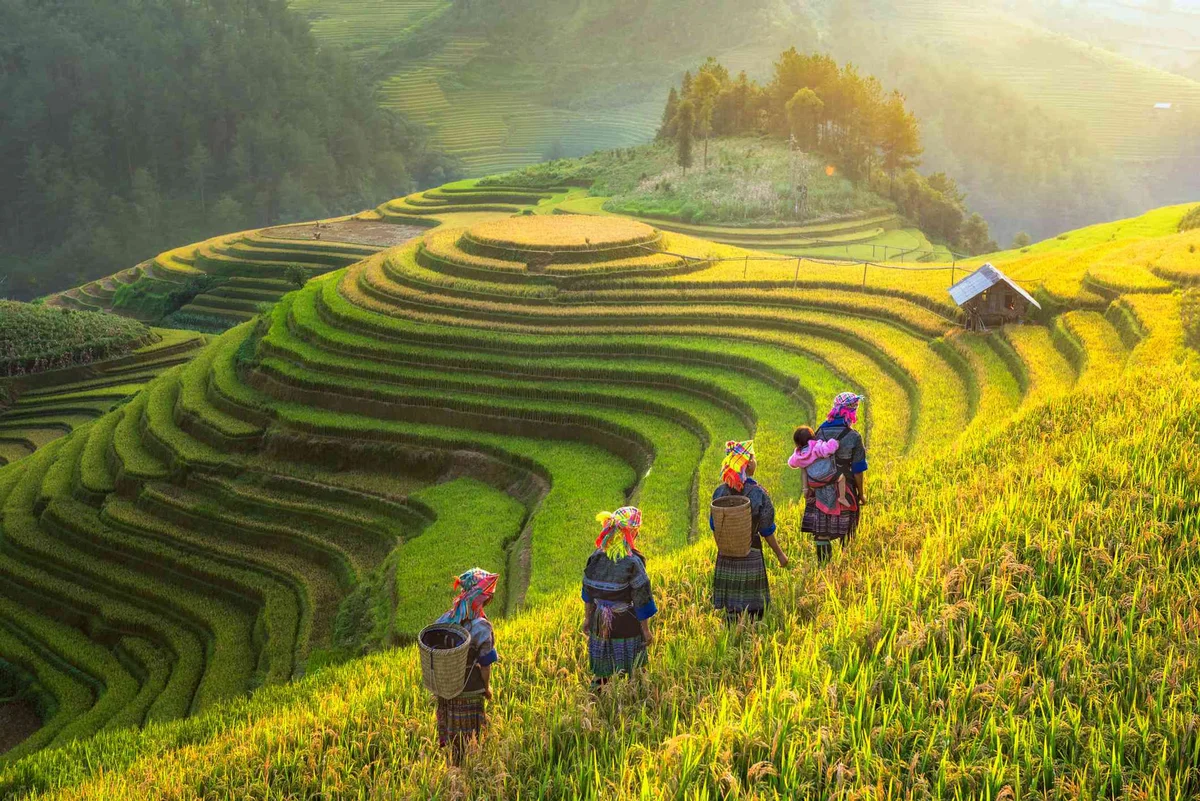
Expect to see farmers sporting the classic nón lá (conical hat), loose cotton clothing, long sleeves, and headscarves.
It’s more than a fashion choice—it's sun protection and sweat control.
Nón Lá: Conical hat that also fans your face when you nod.
Long Sleeves/Pants: Shield from sunburn and leeches.
Headscarves: Sweat‑wicking, mud‑fighting essentials.
Tools of the Trade:
Sharp sickles (lưỡi hái).
Woven bamboo baskets (đòn gánh).
Wooden threshing boards (sàng).
Hand‑held winnowing fans (vật phất).
Many of these haven’t changed in centuries—proof that if it ain’t broke, don’t mechanize it.
The Best Terraced Fields to Visit During Harvest Season
If you're planning your trip around the harvest season in North Vietnam, here are the best spots:
Mu Cang Chai (Yen Bai Province): Famous for its sculptural rice terraces.
Hoang Su Phi (Ha Giang): A lesser-known spot, but no less spectacular.
Sapa (Lao Cai): Popular, yes. Crowded, sometimes. Worth it? Absolutely. Combine with a trek and meet the local Hmong and Dao communities.
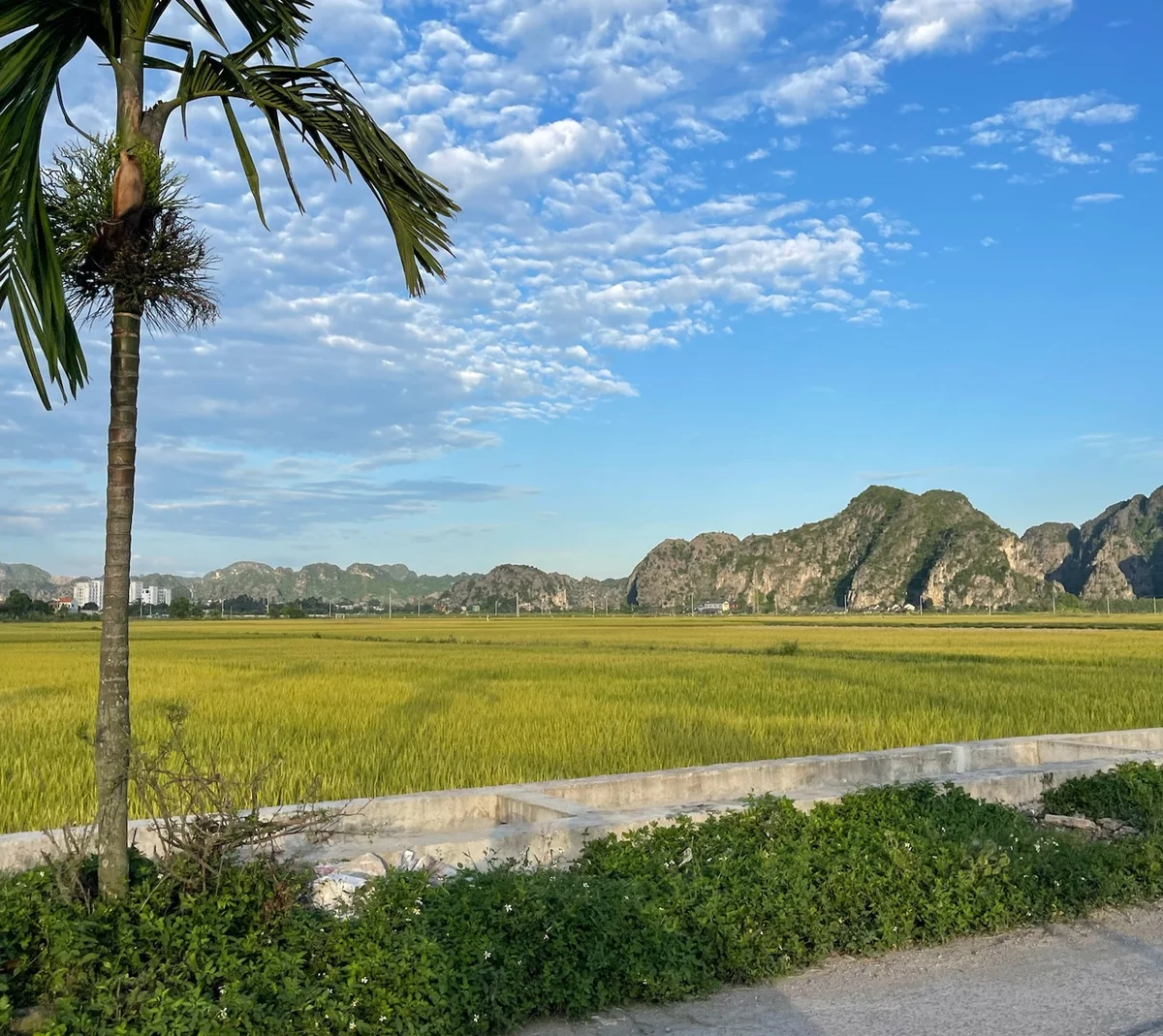
Ninh Binh: If you missed the highland harvest, check out the lowland paddy fields here, framed by limestone cliffs and peaceful rivers.
Related article: The Best Rice Terraces to See in North Vietnam During Harvest Season (2025 Edition).
Cultural Traditions: Celebrating Vietnam’s Rice Harvest
In many villages, harvest season brings not just work, but joy and gratitude.
Here's how locals celebrate:
Thờ Thần Ruộng (Field Spirit Worship): Offerings of rice cakes and wine to land deities.
Vui Khai Mạ (Transplanting Festival): Songs and dancing bless young rice.
Lễ Tạ Mùa (Harvest Thanksgiving): Village feasts, folk music, and boat races on flooded paddies.
These aren’t tourist spectacles, but authentic community moments. If you're invited, consider it an honor (and bring an empty stomach!).
What to Eat During Harvest Season
Get ready to enjoy the cream of the crop. During and after harvest season, you'll find:
Com Xanh: Young green rice, chewy and fresh.
Xôi Gấc: Bright red sticky rice with sweet gấc fruit.
Pho and Bun: Classic noodle dishes made from rice flour.
Bánh Chưng: Sticky rice squares with pork and beans, wrapped in lá dong.
Rice Wine (Rượu Nếp): Sweet, potent, and usually shared from a communal jar.
Hungry yet? Because the rice harvest doesn’t just look good—it tastes divine.
Related article: What is Happy Water: Discover the Ha Giang Loop’s Secret Ingredient.
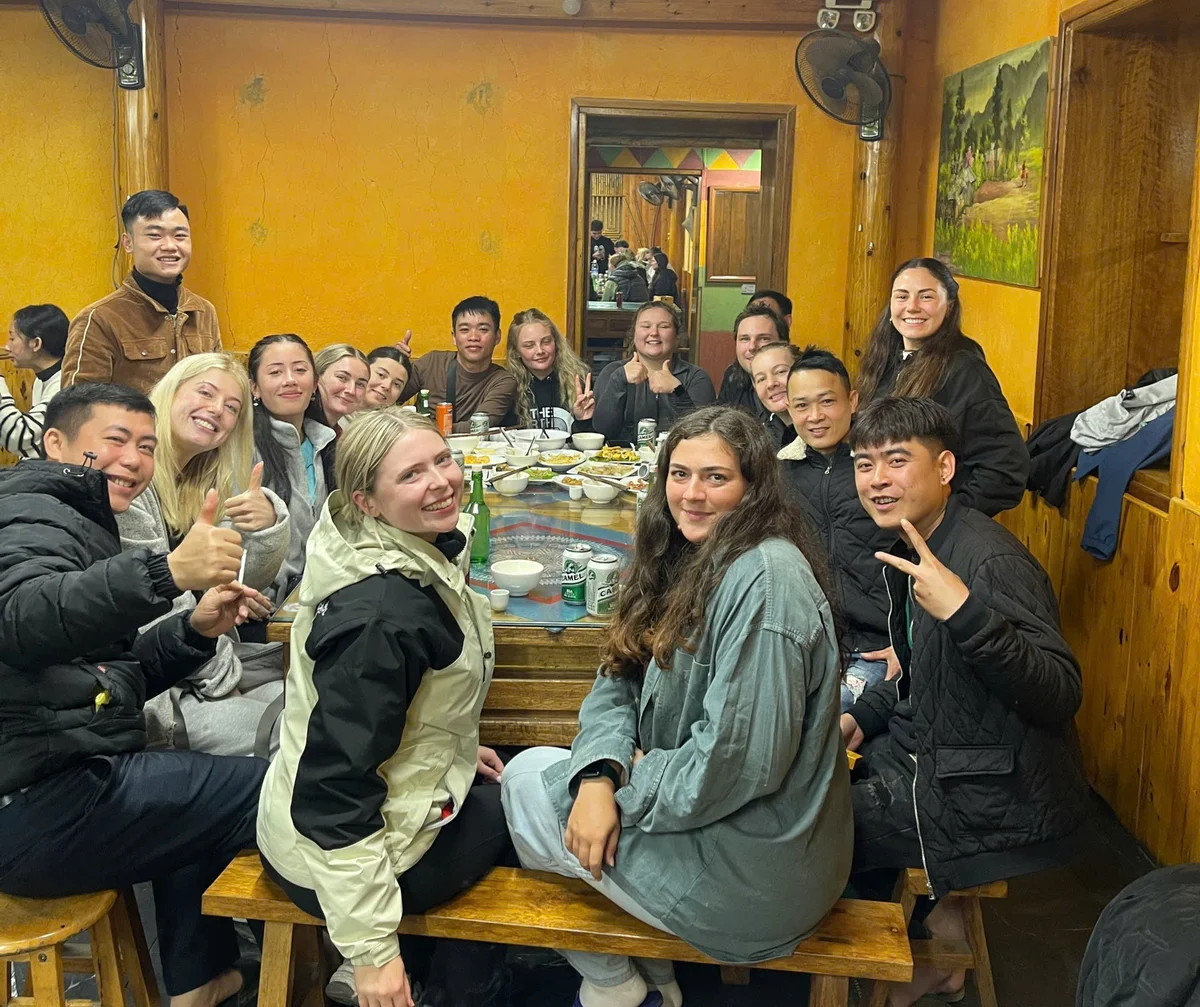
Enjoy rice wine on the Ha Giang Loop with Bong Hostel
Climate Change and Challenges for Rice Farmers
The rice harvest isn’t all sunshine and serenity. Farmers face:
Unpredictable Weather: Too much rain or not enough.
Pests and Plant Diseases: Brown planthopper, rice blast fungus.
Labour Shortages: Many young people are migrating from the rural areas.
Price Fluctuations: Global prices can dip mid‑harvest, hurting smallholders.
Your visit can help by supporting community-based tourism and buying locally made products.
How Tourists Can Join In (Respectfully)
Want to be more than just a spectator? Here’s how:
Ask Before You Wander: Fields are farms, not public parks.
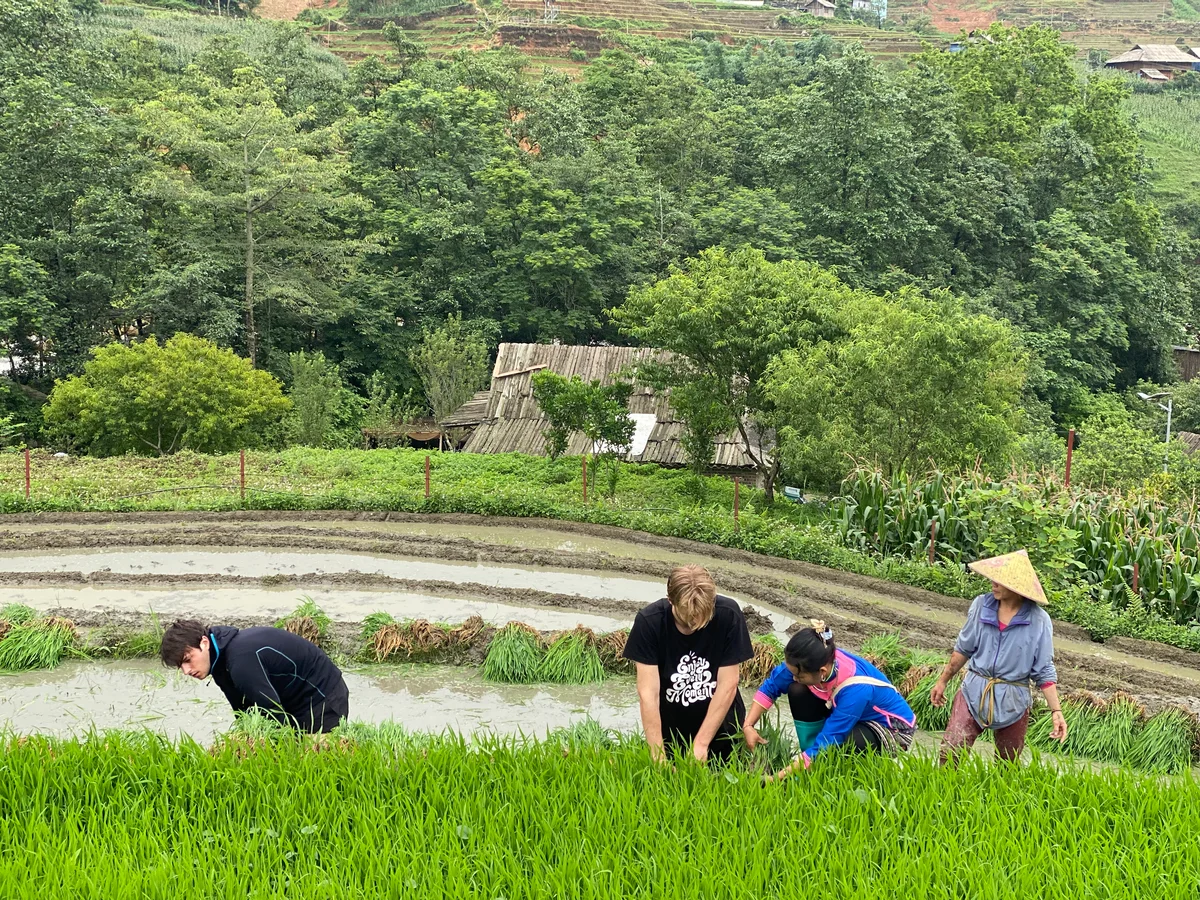
Join a Tour: Many include hands-on harvesting (muddy fun guaranteed).
Buy Local: Rice, handicrafts, snacks—support the community.
Learn Some Phrases: A little Vietnamese goes a long way.
And if you’re unsure? Just ask Bong Hostel staff—we’ve got your cultural back.
The Harvest Checklist: Your Golden Field Field Guide
When: Aim for late September–early October.
Where: Mu Cang Chai, Hoang Su Phi, and lesser‑trodden Bac Ha.
What to Wear: Long sleeves, sturdy shoes, and a rain jacket.
What to Pack: Sunscreen, repellent, and extra memory cards.
How to Act: Always ask before stepping into fields.
Related article: Why You Should Experience the Ha Giang Loop in September.
Lesser-Known Facts About Harvest Season
Rice Bran Oil: A healthy, heart-friendly cooking oil byproduct.
Rice Paper: Not just for spring rolls—artisans craft lamps, stationery, and more.
Rice Husks: Burned for fuel or woven into eco-bricks for building.
Ancient Landraces: Heirloom strains that predate modern farming by centuries.
Keep these nuggets in your back pocket for dinner-party conversation.
The Future of Rice Farming in Vietnam
Tech is slowly transforming rice farming in Vietnam. Here’s what to expect in the future:
Precision Farming: Drones, sensors, and data to guide each water droplet.
Biofortified Varieties: Grains enhanced with vitamins and minerals.
Community Cooperatives: Farmers banding together for better market access.
Renewable Energy: Solar-powered irrigation and grain-drying stations.
However, in the North traditional practices are still going strong—and many communities are balancing both worlds.
Sustainable tourism, fair-trade rice, and community-based farming are the way forward.
Related article: Sustainable Travel in North Vietnam: How to Be a Responsible Tourist.
Travel Tips for Visiting Vietnam During Harvest Season
Book Early: Tours and homestays fill fast during peak harvest.
Pack Light, Pack Smart: Breathable clothes, sunscreen, and a raincoat.
Stay Hydrated: It’s hotter than it looks.
Be Rain-Ready: A lightweight poncho or umbrella can save the day.
Keep Your Shoes Clean: You’ll probably step in some... nature.
Learn Basic Vietnamese: A few phrases unlock genuine smiles and stories.
Respect the Rhythm: Let the farmers lead. You're a guest.
Bonus Tip: Book your North Vietnam adventure with Bong Hostel. We handle the logistics so you can focus on that perfect golden-hour selfie (or, you know, soaking in the real-life beauty).
FAQ: Harvest Season in North Vietnam 2025
Q. When is the harvest season in North Vietnam?
A. The harvest season in North Vietnam typically takes place from late September to early October, depending on the region and altitude.
In highland areas like Mu Cang Chai, Hoang Su Phi, and Sapa, golden rice terraces peak around this time, offering stunning views and cultural experiences.
Q. Where can I see the best rice terraces during harvest season?
A. The most spectacular rice terraces during harvest season can be found in:
Mu Cang Chai (Yen Bai Province) — known for perfectly layered golden fields.
Hoang Su Phi (Ha Giang Province) — remote and dramatic landscapes.
Sapa (Lao Cai Province) — more accessible, with terraced valleys surrounded by mountains. Each offers a unique experience, from festivals to homestays and photo ops.
Q. Can tourists join in the rice harvest in Vietnam?
A. Yes, but it’s important to do so respectfully and responsibly. In some rural villages, especially in Ha Giang or Mu Cang Chai, local families or tour guides may invite you to try threshing or gathering rice.
Always ask permission and offer to help, not just take photos. Joining a guided tour with local knowledge—like those run through Bong Hostel—is the best way to experience this.
Q. What should I wear when visiting rice terraces during harvest season?
A. Wear lightweight, breathable clothes that can get muddy, plus sturdy walking shoes or hiking sandals. A hat, sunscreen, and water bottle are essential for the heat.
If you're staying in villages, modest dress is appreciated—longer shorts or trousers and covered shoulders go a long way.
Q. Are there festivals during the harvest season in North Vietnam?
A. Yes! Around late September, you’ll find harvest celebrations, especially in villages in Yen Bai and Ha Giang.
These may include traditional music, food, and community rice-threshing days. While they’re not tourist events, travelers are often welcome to observe or take part if invited.#
Related article: Festivals in North Vietnam 2025: A Guide on Celebrations, Culture, and Chaos.
Q. Is it a good time to trek or ride the Ha Giang Loop?
A. Absolutely. The weather is dry and cool, the landscapes are golden, and the air is fresh.
It’s one of the most photogenic and culturally rich times to ride the Ha Giang Loop, especially if you combine it with Mu Cang Chai or Hoang Su Phi for a full harvest adventure.
Final Thoughts: Why You Shouldn’t Miss Harvest Season
The harvest season in North Vietnam is not just a pretty postcard—it’s a living, breathing cultural moment. It's sweat and song, tradition and innovation, effort and reward.
And hey, if you need help planning your golden getaway, Bong Hostel's got you. From Ha Giang to Sapa, we know where the fields glow brightest.
Ready to chase golden fields and soak up local life? Come stay with us at Bong Hostel and experience the rice harvest in all its muddy, magical glory.
About Faye Hilling
Travel writer and Vietnam explorer sharing authentic experiences and insider tips for discovering the beauty of Vietnam.