
Vietnam SIM Cards & eSIMs Explained (2026): The Complete Traveller's Guide

There’s nothing quite like arriving in a brand-new country—you’re excited, slightly sleep-deprived, and ready to start exploring… until you realise your phone has no signal.
Google Maps won’t load, Grab won’t let you book a taxi, and suddenly finding your hostel becomes much harder than expected.
Luckily, staying connected in Vietnam is incredibly easy.
With some of the cheapest mobile data in Southeast Asia, getting online doesn’t need to cost a fortune.
Whether you’re backpacking Vietnam for three months, squeezing in a two-week holiday, or travelling from Hanoi to Ho Chi Minh City, a reliable SIM card makes your journey much smoother.
The only question is: Should you buy a Vietnamese SIM card when you arrive, or install an eSIM before you fly?
This guide covers everything you need to know about Vietnam SIM cards and eSIMs in 2026. Ready to get connected? Let’s dive in.
Quick Answer: What Is the Best Vietnam SIM Card in 2026?
Short on time? Here’s everything you need to know:
Traveller | Best overall network | Best SIM card for backpackers | Best eSIM provider | Best option for the Ha Giang Loop | Best option for short holidays | Best option for digital nomads | Cheapest option |
Best option | Viettel | Viettel physical SIM | Airalo | Viettel | eSIM | eSIM with large data package | Local Viettel SIM card |
If you’re travelling beyond Vietnam’s major cities and heading towards places like Ha Giang, Sapa, Cao Bang or national parks, Viettel is usually the safest choice.
It consistently offers the widest coverage, especially in rural and mountainous areas.
Do You Actually Need a SIM Card in Vietnam?
Yes, of course.
Because while Vietnam has excellent Wi-Fi (you’ll find free internet in cafés, restaurants, hotels and hostels throughout the country), relying entirely on Wi-Fi becomes frustrating very quickly.
Vietnam is a country built for exploring. One day you might be wandering through Hanoi’s Old Quarter and the next, you could be relaxing on a cruise ship in Cat Ba.
A few days later, you might be climbing mountain roads towards Dong Van on the Ha Giang Loop.
Having mobile data means you can:
Navigate with Google Maps
Book Grab taxis and motorbikes
Contact your accommodation
Message tour operators
Translate menus
Find restaurants and cafés
Book buses and activities
Access online tickets
Stay connected with friends and family
And after a 12-hour sleeper bus arriving at 5am, the last thing you want is to stand outside your hostel trying to explain your booking using hand gestures because your internet won’t load.
Your phone quickly becomes your most useful travel companion.
Worried about Vietnamese sleeper buses? Find all the information you need here: Vietnam Sleeper Buses (2026 Guide): How to Survive the Ride.
Vietnam SIM Cards vs eSIMs: What’s the Difference?
The biggest decision travellers face before arriving is whether an eSIM is better than a physical SIM in Vietnam.
But because both work extremely well, there isn’t really a wrong answer.
The better option just depends on your travel style.
Physical SIM Cards for Vietnam
A traditional SIM card works exactly how you would expect.
You purchase it after arriving in Vietnam, insert it into your phone, complete registration using your passport, and you’re connected.
Physical SIM Card | What it means for travellers |
Cheaper option | Usually the best choice if you’re backpacking Vietnam on a budget |
More data for your money | Perfect for travellers who want plenty of Google Maps, Grab and Instagram without worrying about running out |
Vietnamese phone number included | Handy for longer stays, local bookings and some services |
Easy to top up | Simple to add more data while travelling |
Great for backpackers | Especially useful if you’re spending weeks exploring Vietnam |
You need to swap SIM cards | Remember where you put that tiny piece of plastic — it’s surprisingly easy to lose |
Passport registration required | Bring your passport when buying a physical SIM |
Airport queues can happen | Convenient, but sometimes slower during busy arrival times |
Less convenient than eSIM | A little more effort compared with simply scanning a QR code |
For travellers spending several weeks exploring Vietnam, especially those heading north towards Ha Giang, a physical Viettel SIM card remains one of the best-value options available.
eSIMs for Vietnam Travel
Think of an eSIM as a digital SIM card.
Instead of inserting a tiny piece of plastic into your phone, you purchase a plan online, scan a QR code and activate it when you arrive.
No airport queues
No searching for a mobile shop
No worrying about losing your tiny home SIM card somewhere inside your backpack
You simply arrive, switch it on, and start exploring.
eSIM | What it means for travellers |
Works immediately after landing | Arrive in Vietnam, switch it on, and start using mobile data straight away |
Buy before your trip | Set everything up before you fly so you’re connected as soon as you leave the airport |
Keep your home SIM inside your phone | No need to remove your usual SIM card, meaning you can still receive calls and messages from home |
No passport registration for most travel eSIMs | Avoid the registration process required for many physical Vietnamese SIM cards |
Perfect for shorter trips | Ideal for one- or two-week holidays where convenience matters most |
Usually costs slightly more | You’ll often pay a little extra compared with buying a local SIM card |
Many plans are data-only | Some eSIMs don’t include a Vietnamese phone number or traditional calling |
Your phone must support eSIM technology | Check your device is compatible before purchasing |
For travellers visiting Vietnam for one or two weeks, an eSIM is often worth paying slightly extra for the convenience.
Landing after a long flight and immediately ordering your Grab is a very underrated luxury.
👉 If you're travelling through several Southeast Asian countries, compare the cost of a regional eSIM with buying local SIM cards in each country. For longer trips, local Vietnamese SIM cards are often cheaper, but regional eSIMs can save time if you're crossing borders frequently.
Which Vietnam SIM Card Should You Choose?
Still unsure whether an eSIM or physical SIM is right for you? Here’s the easiest way to decide:
If you’re... | Best option |
Visiting Vietnam for one week | eSIM |
Taking a short holiday | eSIM |
Backpacking Vietnam for several weeks | Viettel physical SIM |
Exploring northern Vietnam | Viettel |
Riding the Ha Giang Loop | Viettel |
Working remotely | eSIM with a large data package |
Travelling on a budget | Local Viettel SIM |
The difference between the two options is actually quite small.
Most travellers will be perfectly happy with either.
However, if your trip includes remote destinations like Ha Giang, Cao Bang, Sapa or national parks, we would prioritise coverage over convenience.
👉 If you’re arriving in Hanoi before heading north, consider buying your SIM card before travelling to Ha Giang. Having mobile data ready means you can download maps, contact your accommodation, keep yourself entertained on the long (7 hour) bus ride, and avoid wasting time searching for a shop when you arrive.
Which Mobile Network Is Best in Vietnam?
Vietnam has three major mobile providers:
Viettel
Vinaphone
MobiFone
All three perform well in cities.
If you’re spending your trip drinking coffee in Hanoi, exploring Ninh Binh’s food scene or relaxing along Vietnam’s beaches, you’ll probably find all three perfectly acceptable.
The differences become noticeable once you head into the countryside. Especially if you're planning adventures beyond the usual tourist trail.
Looking for the best beaches in North Vietnam? Find them here: Cat Ba Beach Guide 2026: The Best Beaches on Cat Ba Island.
1. Viettel: The Best Network for Travelling Vietnam
If you asked us to recommend just one network for travellers… It would be Viettel.
Especially if the Ha Giang Loop is on your itinerary.
Viettel is Vietnam’s largest mobile network and generally provides the strongest coverage across the country.
That makes it the safest choice for travellers visiting:
Ha Giang
Cao Bang
Sapa
Phong Nha
Cat Ba Island
National parks
Rural villages
The reason is simple: Vietnam’s most beautiful places are often its most remote.
The same dramatic mountains, valleys, and landscapes that attract visitors to North Vietnam also make mobile coverage more challenging.
A network that works brilliantly in Hanoi may struggle once you’re surrounded by limestone peaks and winding mountain roads.
Viettel usually keeps working longer than the competition.
That doesn’t mean you’ll have signal everywhere—even Viettel cannot perform miracles.
There are still sections of the Ha Giang Loop where every network disappears completely.
But if you want the highest chance of staying connected, Viettel is the obvious choice.
2. Vinaphone: Great for Cities and Popular Destinations
Vinaphone is another strong option.
Its biggest advantage is performance in urban areas.
If your Vietnam itinerary focuses mainly on:
Hanoi
Ho Chi Minh City
Da Nang
Hoi An
Hue
Nha Trang
you’ll likely notice very little difference between Vinaphone and Viettel.
For city travellers, Vinaphone offers reliable service and fast speeds.
However, once you begin exploring Vietnam’s mountains and rural provinces, Viettel generally has the advantage.
Here are some of the places where your phone signal may become a little patchy: 15+ Best Stops on the Ha Giang Loop: Complete 4-Day Route Guide (2026).
3. MobiFone: A Solid City Option
MobiFone completes Vietnam’s “big three” networks.
It offers competitive prices and reliable service, particularly around larger towns and cities.
For a city break, it works perfectly well.
However, travellers heading into more remote areas often find coverage less consistent compared with Viettel.
If your adventure involves the Ha Giang Loop, we would choose Viettel instead.
Which Network Should You Pick?
To keep things simple:
Network | Cities | Rural Areas | Ha Giang Loop | Best For |
Viettel | ★★★★★ | ★★★★★ | ★★★★★ | Backpackers, road trips and travelling beyond the cities |
Vinaphone | ★★★★★ | ★★★☆☆ | ★★★☆☆ | City breaks and popular tourist destinations |
MobiFone | ★★★★☆ | ★★☆☆☆ | ★★☆☆☆ | Budget-conscious travellers staying mainly in urban areas |
Budget-conscious travellers staying mainly in urban areas
For most backpackers, Viettel remains the easiest recommendation.
Does Vietnam Have 5G?
Yes—and the good news is that it's becoming increasingly available across Vietnam.
By 2026, all three major mobile networks offer 5G coverage in major cities and many popular tourist destinations, including Hanoi, Ho Chi Minh City, Da Nang and Hai Phong.
If your phone supports 5G and your chosen SIM plan includes it, you'll be able to enjoy faster download speeds, smoother video calls and quicker uploads while travelling.
Once you leave the cities and head into more remote regions, you'll naturally spend more time using 4G.
Fortunately, Vietnam's 4G network is still fast enough for Google Maps, Grab, messaging apps and streaming music.
👉 For most travellers, 5G is a nice bonus—but choosing the right network is far more important than chasing the fastest speeds.
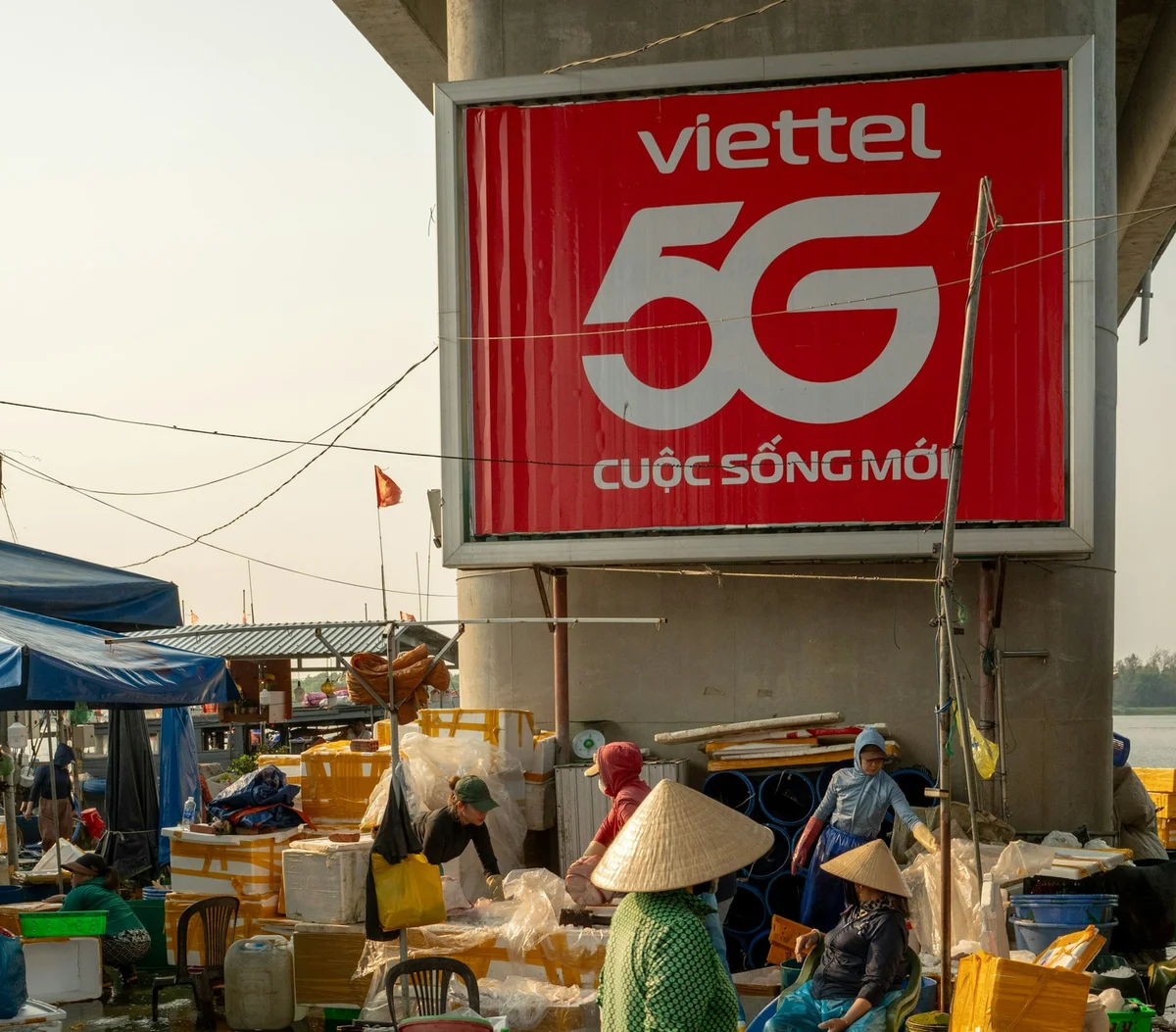
As of 2026 5G is available throughout North Vietnam
Where Should You Buy a Physical Vietnam SIM Card?
Once you know which network you want, the next question is: Where should you actually buy your physical Vietnam travel SIM card?
You have two main options:
Airport shops
Official mobile stores
Each has advantages.
1. Buying a SIM Card at the Airport
The easiest option is buying a SIM card immediately after landing.
You’ll find mobile counters at Vietnam’s major international airports, including:
Noi Bai International Airport (Hanoi)
Tan Son Nhat International Airport (Ho Chi Minh City)
Da Nang International Airport
Cam Ranh International Airport (Nha Trang)
Staff will usually:
Register your SIM using your passport
Insert it into your phone
Activate your data package
Check that everything works
Within minutes, you can:
Order your first Grab
Message your hostel
Open Google Maps
After a long journey, that convenience is valuable. However, airport SIM cards are usually slightly more expensive than buying one in the city.
For a short holiday, many travellers consider the extra cost completely worth it.
2. Buying a SIM Card in Hanoi or Another City
If you’re travelling around Vietnam for several weeks, buying from an official network store (Vinaphone, Viettel, or even The Gioi Di Dong) usually offers better value.
You’ll often get:
More package options
Larger data allowances
Better prices
Staff who can help with setup
Physical SIM cards in Vietnam must be registered under Vietnamese regulations.
👉 Remember to bring your passport.
Avoid Cheap Unofficial SIM Cards
This is one of the biggest mistakes travellers make.
You’ll often see cheap “ready-to-use” SIM cards sold at random shops, markets or online.
They might look like a bargain, but there’s a reason they’re cheaper.
Many unofficial SIM cards have already been registered under somebody else’s information.
This can cause problems later, including suddenly losing service.
Always buy from:
Official carrier stores
Airport counters
Trusted eSIM providers
How Much Does a Vietnam SIM Card Cost in 2026?
One of the best things about travelling in Vietnam? Mobile data is incredibly affordable.
Compared with international roaming charges, local SIM cards offer excellent value.
Prices vary depending on the provider, package and whether you choose physical SIM or eSIM, but these are realistic estimates.
Short Trips (7–15 Days)
Perfect for:
Holidays
City breaks
Short Vietnam itineraries
Expect to pay: Around US$5–10
Most travellers will have more than enough data for:
Google Maps
Grab
WhatsApp
Instagram
Restaurant searches
Medium Trips (15–30 Days)
Ideal for:
Backpackers
Full Vietnam routes
Travellers heading to Ha Giang
Expect to pay: Around US$10–20
These packages usually include generous daily data allowances.
Long Stays
Perfect for:
Digital nomads
Volunteers
Remote workers
Expect:
Around US$20–40
These plans can easily cover:
Video calls
Remote work
Streaming
Heavy daily usage
For volunteering opportunities at Bong Hostel, click here: How to Volunteer at Bong Hostel and Experience the Ha Giang Loop.
How Much Data Do You Actually Need?
Most travellers dramatically overestimate how much data they need.
For a normal backpacking trip, your daily usage will probably include:
Checking Google Maps
Booking Grab
Sending WhatsApp messages
Browsing Instagram
Looking up restaurants
Translating
You’ll likely use around 1GB per day or less.
The biggest data killer? Videos!
Watching YouTube, uploading travel reels and streaming Netflix can destroy your allowance surprisingly quickly.
But like I said before, Vietnam has excellent Wi-Fi so save the streaming for your hostel or hotel, and your mobile data will last much longer.
As a rough guide:
5GB suits a short city break.
10GB comfortably covers a two-week holiday.
15GB or more works well for longer backpacking trips.
Heavy remote workers may want larger or unlimited plans.
The best part is that Vietnamese mobile data is so affordable that even generous plans rarely break the budget.
Can I Use My UK SIM Card in Vietnam?
Technically, yes—but we wouldn't recommend it.
Most UK mobile providers allow international roaming in Vietnam, so your phone will usually work as soon as you land.
The downside is the cost. Depending on your provider and plan, roaming charges can quickly add up.
For most travellers, buying a local Vietnamese SIM card or installing an eSIM is significantly cheaper and provides much better value.
If you're only passing through Vietnam for a day or two, roaming may be convenient. But if you're spending a week or more exploring the country, switching to a local SIM or eSIM will almost always save you money.

You can use your UK SIM card in Vietnam but we do not recommend it as it can be very expensive.
What are the Best eSIM Providers for Vietnam
If you prefer the convenience of an eSIM, several providers offer Vietnam travel plans.
Provider | Best For | Data Options | Vietnamese Phone Number |
Airalo | Most travellers | Flexible packages | No |
Holafly | Heavy data users | Unlimited plans available | No |
Gigago | Longer trips | Various packages | Sometimes |
1. Airalo
Airalo is one of the most popular travel eSIM providers worldwide.
It’s simple to use, reliable and offers plans suitable for:
Short holidays
Backpacking trips
Multi-country Southeast Asia adventures
For many travellers, it’s the easiest eSIM option.
2. Holafly
Holafly is popular among travellers who use a lot of data.
It’s particularly useful for:
Remote workers
Video calls
Heavy social media users
Many plans offer unlimited data.
However, always check the terms carefully, as some “unlimited” plans may include fair-use restrictions.
3. Gigago
Gigago specialises in Asian destinations, including Vietnam.
Some plans include features that are useful for longer stays, such as Vietnamese phone numbers.
4. Other Popular eSIM Providers
You’ll also find options from:
👉 Psst! The best deal often depends on current promotions when you purchase.
How to Buy and Install Your Vietnam eSIM?
Unlike physical SIM cards, eSIMs are purchased online directly from the providers listed above (Airalo, Holafly, Gigago, etc.).
The easiest time to buy and install your eSIM is before arriving in Vietnam while you still have reliable Wi-Fi.
Most providers follow the same process:
Purchase your eSIM online.
Scan the QR code.
Install the eSIM.
Set it as your mobile data line.
Activate it when you arrive in Vietnam.
👉 Don't activate your eSIM too early. Some plans begin the moment they're activated, so if you switch on a 7-day eSIM three days before arriving in Vietnam, you'll lose three days of your allowance. Always check your provider's activation policy before setting it up.
Does Your Phone Support eSIM?
Before buying an eSIM, check if your phone supports the technology.
Most modern smartphones do, including many:
iPhones from XS onwards
Google Pixel devices
Samsung Galaxy S series
Samsung Fold series
You’ll also need an unlocked phone.
If you’re unsure, check with your mobile provider before travelling.
👉 No eSIM? No problem. A physical Vietnamese SIM card works perfectly well.
Can You Keep Your Home Number with an eSIM?
Absolutely. In fact, it's usually a good idea.
Many banks still send one-time security codes (OTPs) to your original mobile number.
If you remove your home SIM entirely, you could find yourself locked out of online banking at the worst possible moment.
With an eSIM, things are wonderfully straightforward.
Your home SIM stays in your phone for calls and text messages while the eSIM handles all your mobile data.
If you're using a physical Vietnamese SIM and your phone supports dual SIM functionality, you can usually keep both active at the same time.
👉 Just remember to switch off data roaming on your home SIM to avoid any unexpected charges.
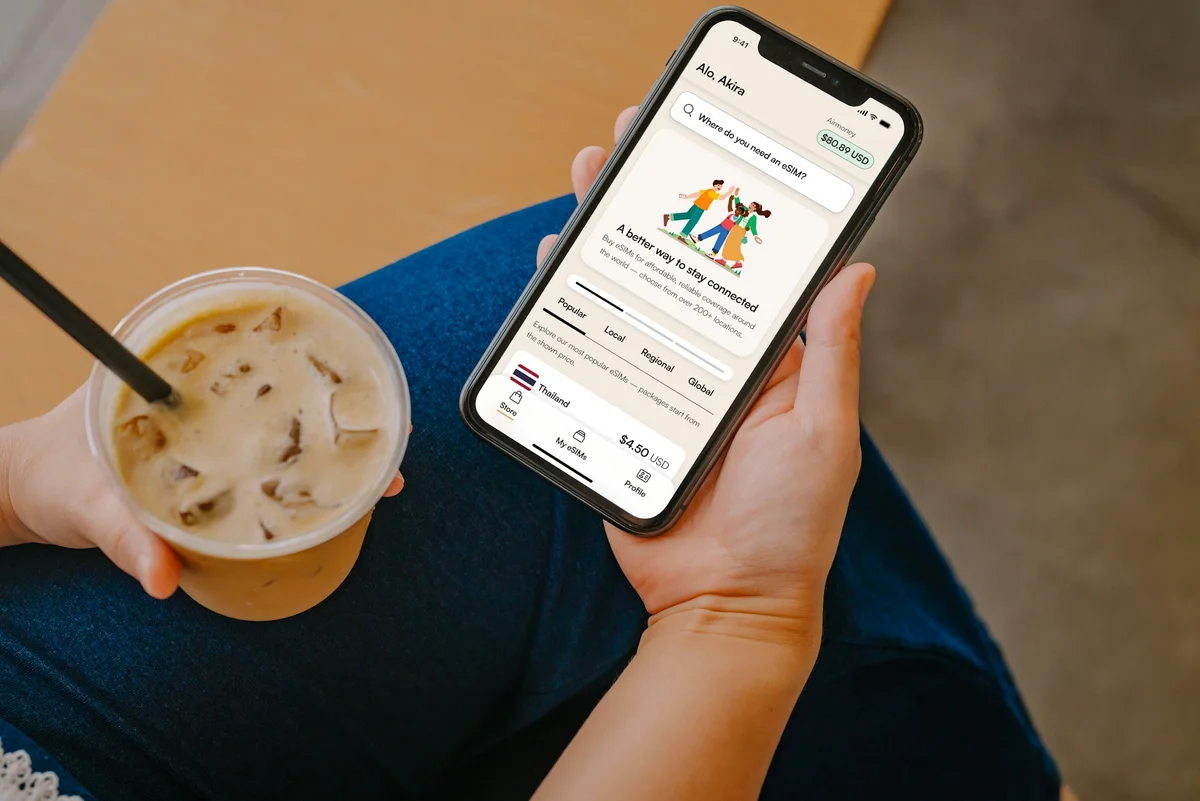
Airalo is one of the leading eSIM providers
Essential Apps You'll Use Every Day in Vietnam
Once your SIM card is sorted, your phone quickly becomes one of your most useful travel tools.
Vietnam is incredibly easy to explore, but a few apps will make your journey significantly smoother.
Especially if you’re travelling independently before or after your Ha Giang Loop adventure.
1. Grab App
Think of it as the Swiss Army knife of Vietnamese travel.
Need a taxi for a group of friends? Grab.
Fancy a solo motorbike taxi across town? Grab.
Hungry after arriving on an overnight sleeper bus? Grab will happily deliver dinner to your hostel.
2. Google Maps
You'll probably use this every single day.
Download offline maps before heading into remote areas like the Ha Giang Loop, Sapa or national parks, just in case your signal disappears for a while.
3. Google Translate
Menus, market stalls and conversations with your Easy Rider become far easier when you've got instant translations in your pocket.
Downloading Vietnamese offline before travelling is well worth doing.
4. Zalo
This is Vietnam's favourite messaging app with many local businesses and guides using it instead of WhatsApp.
5. WhatsApp
Still widely used by international hotels, hostels and tour operators—including Bong Hostel—making it handy throughout your trip.
Common Mistakes to Avoid with Vietnam SIM Cards or eSIMs
Even though getting connected in Vietnam is straightforward, there are a few mistakes that catch travellers out.
1. Buying an unofficial SIM
Always use official carrier stores or airport counters.
It's the safest option and ensures your SIM remains active.
2. Forgetting your passport
Physical SIM registration requires your original passport.
No passport usually means no SIM.
3. Choosing the cheapest network for mountain trips
If you're heading anywhere remote—especially the Ha Giang Loop—choose Viettel wherever possible.
Your future self will thank you halfway up a mountain pass.
4. Forgetting offline maps and Google Translate
Even Vietnam's best mobile network has the occasional blind spot.
Download Google Maps and Vietnamese on Google Translate before setting off.
5. Buying far too much data
Unless you're working remotely or streaming videos every evening, you probably don't need an unlimited plan.
Most travellers use far less data than they expect.
Before You Fly: Your Connectivity Checklist for Vietnam Travel
Tick these off before boarding your flight to Vietnam and you'll hit the ground running.
Decide whether you want an eSIM or physical SIM.
Check whether your phone supports eSIM.
Make sure your phone is unlocked.
Download Google Maps offline.
Install Google Translate's Vietnamese language pack.
Keep your original number available for banking verification.
Choose Viettel if you're travelling beyond the cities.
Remember you need your passport when going out to buy a physical SIM.
Five minutes of preparation now can save a lot of hassle later.
FAQS: Vietnam SIM Cards & eSIMs in 2026
Can Tourists Buy a SIM Card in Vietnam?
Yes. Tourists can easily buy a physical SIM card from official stores, as well as airport kiosks.
Is an eSIM better than a physical SIM in Vietnam?
Neither is objectively better.
An eSIM is more convenient because you're connected as soon as you land, while a physical SIM usually offers better value and larger data allowances.
Can I buy a SIM card at Hanoi Airport?
Absolutely. You'll find SIM card counters in the arrivals hall at Noi Bai International Airport in Hanoi, as well as other major international airports across Vietnam.
Staff will usually register the SIM, install it in your phone, activate your data plan and check everything is working before you leave the airport.
Which mobile network has the best coverage in Vietnam?
For most travellers, Viettel remains the safest choice, especially if you're exploring northern Vietnam, the countryside or islands.
Is 5G available in Vietnam?
Yes. 5G coverage continues to expand throughout Vietnam and is available across all provinces, with particularly strong performance in major cities.
Which Vietnam SIM Card Has Unlimited Data?
Unlimited data plans do exist, although they're usually offered through selected eSIM providers such as Holafly or certain local network packages.
Most travellers won't actually need unlimited data, as 10–15GB is more than enough for using Google Maps, Grab, WhatsApp and social media during a typical backpacking trip.
Can I use my UK SIM card in Vietnam?
Yes, but using international roaming can be expensive depending on your mobile provider.
Some UK networks offer travel passes, while others charge daily roaming fees or high pay-as-you-go rates.
For most travellers, buying a Vietnamese SIM card or eSIM is significantly cheaper and usually provides much more data.
Do I need my passport?
Yes, for physical SIM cards passport registration is required under Vietnamese regulations.
Travel eSIMs purchased online generally don't require passport registration.
Can I keep my WhatsApp number if I use a Vietnamese SIM?
Yes. Your WhatsApp account is linked to your phone number, not your SIM card.
You can continue using your existing WhatsApp account after switching to a Vietnamese SIM or eSIM, so there's no need to create a new account or lose your chats.
Should I buy my SIM card at the airport?
If convenience matters most, yes.
If saving money is your priority, buy one from an official carrier store in the city instead.
Can I use dual SIM in Vietnam?
If your phone supports dual SIM or eSIM technology, you can usually keep your home SIM active for calls and verification texts while using a Vietnamese SIM or eSIM for mobile data.
Just remember to disable data roaming on your home SIM to avoid unexpected charges.
Can I top up my Vietnam SIM card online?
Yes. Most Vietnamese mobile networks allow you to top up your balance through their apps, websites or authorised retailers.
Can I use my phone as a hotspot in Vietnam?
Yes. Both physical SIM cards and most eSIM plans allow mobile hotspot or tethering, although some providers may place restrictions on unlimited data plans.
If you plan to connect a laptop or work remotely, it's worth checking the terms of your chosen package before purchasing.
Will I have a phone signal on the Ha Giang Loop?
Mostly, yes—but don't expect perfect coverage.
Viettel provides the strongest signal throughout the region, although deep valleys and mountain passes still have occasional dead zones.
Downloading offline maps and Google Translate for Vietnamese before your tour is always recommended.
For more FAQs click here: Ha Giang Loop FAQs: 65+ Questions Backpackers Ask Before Doing the Loop (A–Z Guide: Part 1).
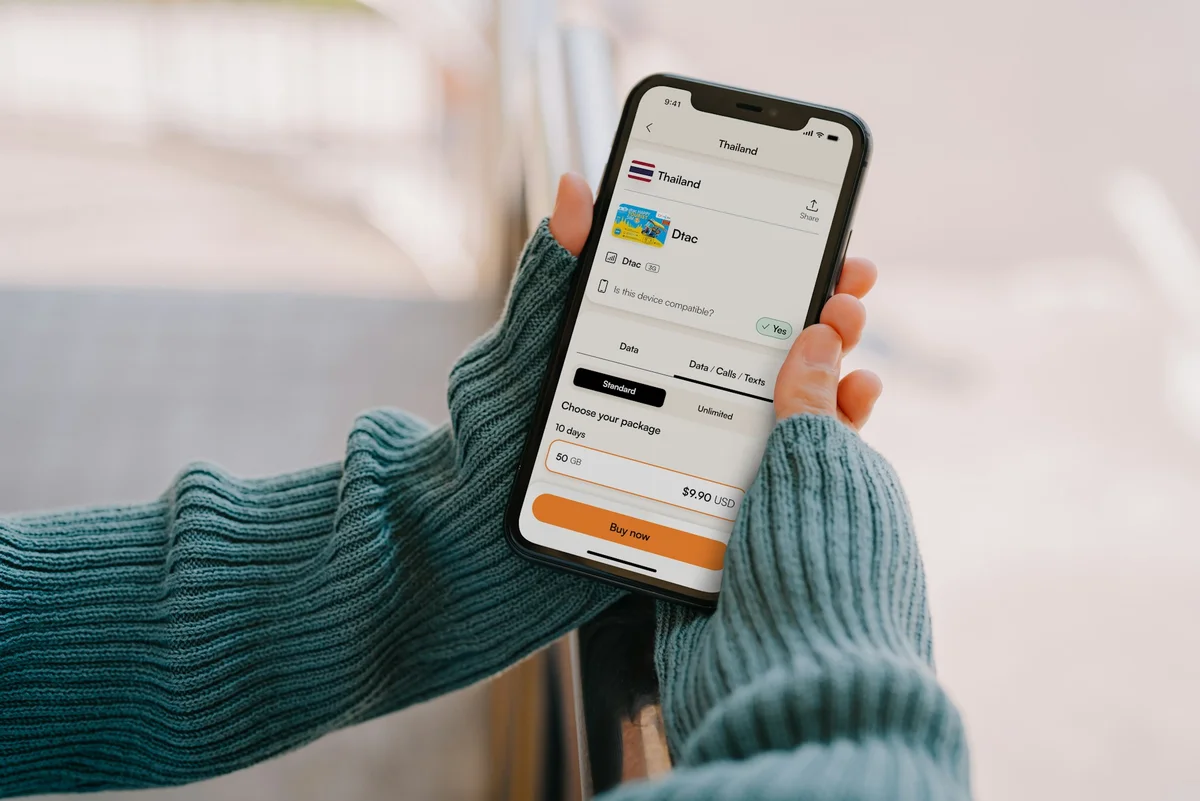
You can buy your eSIM at any time, but we recommend purchasing it before you arrive in Vietnam
Final Word on Getting Connected with Vietnam SIM Cards and eSIMs
Sorting your mobile data might not be the most exciting part of planning your Vietnam adventure...
But once it's done, everything else becomes much easier.
You'll be able to book transport in seconds, navigate unfamiliar streets with confidence, message new friends, and upload all your envy-inducing travel photos.
But while getting connected is one of the first things you'll do after landing in Vietnam—the Ha Giang Loop is something you'll remember long after your SIM card has expired.
Bong Hostel helps hundreds of travellers experience Vietnam's most breathtaking road trip each week with experienced Easy Riders, fantastic accommodation, delicious local food and unforgettable mountain scenery.
Ready to Start your Adventure?
👉 Book your Ha Giang Loop tour with Bong Hostel today and experience northern Vietnam the way it was meant to be explored.
Already planning the rest of your Vietnam itinerary? Don't forget to explore our other travel guides covering visas, the best time to visit Vietnam, weather throughout the year, and everything you need to know before hitting the road.
About Faye Hilling
Travel writer and Vietnam explorer sharing authentic experiences and insider tips for discovering the beauty of Vietnam.