
Vietnam Sleeper Buses in 2026: The Backpacker Survival Guide to Overnight Travel Done Right

Vietnam is the longest country in Southeast Asia. That means you can spend weeks traveling from North to South and still somehow feel like you’ve only scratched the surface.
Mountains, caves, rice terraces, beaches, Mekong islands, chaotic cities, sleepy villages… they’re all stretched out across more than 1,600 kilometres of coastline and winding roads.
So if you’re backpacking Vietnam in 2026, there’s one thing you’ll almost definitely experience at some point: The legendary Vietnam sleeper bus.
Sleeper buses in Vietnam are one of the best ways to travel the country.
They’re affordable, surprisingly efficient, much more comfortable than many people expect, and perfect for stretching your budget while covering long distances.
Plus, there’s something iconic about waking up somewhere completely different after drifting through the Vietnamese countryside overnight.
At Bong Hostel, we help travelers organize sleeper buses every single day—to the Ha Giang Loop, Cat Ba, Sapa, Ninh Binh, or further south through Vietnam.
So before you panic-book a domestic flight or convince yourself you’ll “just wing it,” here’s everything you actually need to know about Vietnam sleeper buses in 2026.
What Are Vietnam Sleeper Buses?
A Vietnam sleeper bus is basically a long-distance coach fitted with reclining beds instead of traditional upright seats.
Instead of sitting bolt upright for 8 hours questioning your life choices, you get your own padded bunk where you can stretch out, lie back, watch Netflix, doom-scroll TikTok, or attempt to sleep.
Many travelers are surprised to learn that sleeper buses in Vietnam also operate during the daytime, not just overnight.
Standard sleeper buses usually have:
Two levels of beds
Three columns across the bus
Reclining padded bunks
Air conditioning
Curtains or partial privacy dividers (though some don’t)
Blankets
Rest stops every few hours
VIP sleeper buses step things up further with:
Wider beds
More personal space
Cabin-style pods
USB charging
Privacy curtains
Fewer passengers
Sometimes onboard WiFi
Occasionally bizarre massage-chair functions
Some honestly feel halfway between a capsule hotel and a spaceship. Others feel like a moving hostel dorm with LEDs and aggressive horn usage.
That’s part of the experience.
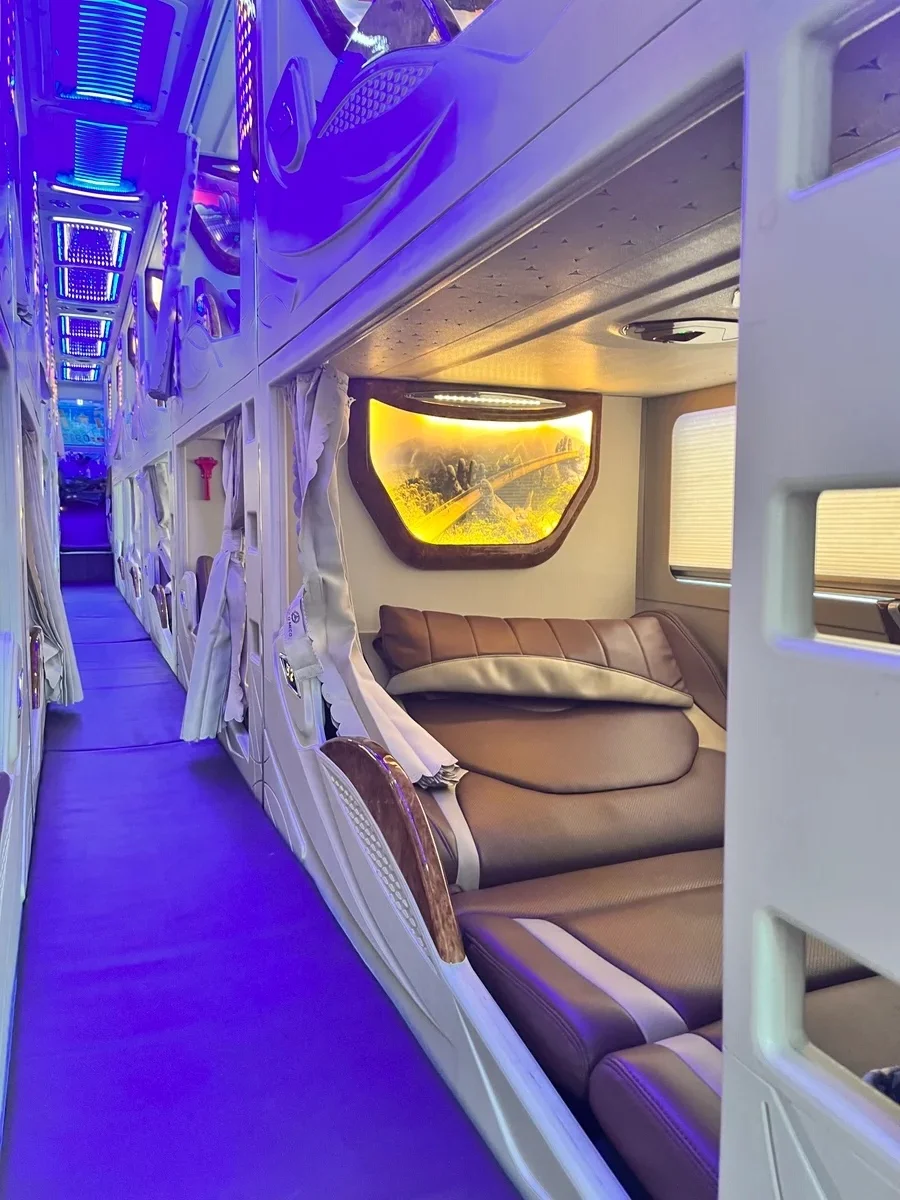
VIP Cabin Sleeper Bus in Vietnam
Why Sleeper Buses Are So Popular in Vietnam
Vietnam’s train network is limited, domestic flights add up quickly, and distances between destinations can be massive.
Sleeper buses solve a lot of problems at once:
They’re budget-friendly
They save daylight travel time
Overnight buses save accommodation costs
Routes reach places trains don’t
Departures happen constantly
Backpackers use them everywhere
For many travelers, buses become the backbone of their entire Vietnam itinerary.
👉 At Bong Hostel, we regularly help guests organize onward sleeper buses between major backpacker destinations—especially for Northern Vietnam routes where buses are often the easiest option.
Types of Vietnam Sleeper Buses
1. Reclining Seat Buses
These are standard coaches with seats that recline further than normal.
Good for:
Short daytime journeys (i.e. Hanoi to Ninh Binh)
Budget travelers
Routes under 4–5 hours
Not ideal for overnight travel.
2. Standard Sleeper Buses
This is the classic Vietnam sleeper bus setup.
Three rows
Upper and lower bunks
Lots of people
Minimal privacy
The beds are already reclined, though they’re rarely completely flat. Most travelers can sleep reasonably well—assuming they aren’t too tall.
The vibe is chaotic but functional.
On almost every Vietnam sleeper bus, you’ll remove your shoes before boarding and place them into a plastic bag provided by the driver to help keep the bus cleaner.
You’ll then crouch awkwardly through narrow aisles while trying not to elbow another passenger in the face.
And somehow, despite the chaos, the entire system still works surprisingly well.
3. VIP Cabin Sleeper Buses
If your budget allows it, these are absolutely worth considering for longer routes.
VIP buses usually feature:
Two rows instead of three
Individual cabin pods
Curtains
Better suspension
Quieter atmosphere
For overnight routes longer than 6–7 hours, most backpackers find VIP cabin buses dramatically more comfortable and far easier to sleep on.
Especially if you’re tall, traveling as a couple, or simply enjoy arriving at your destination feeling vaguely human.
👉 At Bong Hostel Hanoi, we usually recommend VIP cabin buses for overnight mountain routes because travelers almost always appreciate the extra space and smoother ride afterward.
What Vietnam Sleeper Buses Are Actually Like
The First Five Minutes Feel Weird
The first time you board a sleeper bus in Vietnam, there’s a brief moment where your brain struggles to process what’s happening.
You remove your shoes
A bus attendant gestures vaguely at a bunk
Someone is listening to TikToks at full volume
Someone else is already asleep
There are LED lights for absolutely no reason
You navigate narrow aisles trying not to headbutt the ceiling
And then suddenly you’re tucked into your little bunk wondering why other countries haven’t copied this system yet.
The Driver Will Use the Horn Constantly
This isn’t aggression. This isn’t to stop you from sleeping. This is communication.
Vietnamese roads operate on organized chaos, and horns are part of the system. Your driver is basically announcing his existence to everyone else on the road.
You’ll adjust faster than you think. Still bring earplugs though.
Expect Random Stops and Mild Chaos
One thing many first-time travelers don’t realise is that sleeper buses in Vietnam are often more flexible than rigidly scheduled Western transport.
It’s completely normal for buses to:
Stop to pick up parcels
Drop locals off at random roadside locations
Arrive outside the city centre
Switch vehicles unexpectedly mid-route
Pause for lengthy snack breaks
Load extra luggage into every available gap
Sometimes attendants assign seats manually after boarding rather than when you book online.
Occasionally, you may even book one bus company online and end up traveling with another partner company instead.
This sounds alarming, but in Vietnam, it’s surprisingly normal.
Don’t Expect Perfect Sleep
Some people sleep brilliantly on Vietnam sleeper buses. Others spend eight hours hovering somewhere between sleep and mild confusion.
Road quality, driver style, your bunk position, and sheer luck all play a role.
That said, sleeper buses are surprisingly comfortable compared to:
Budget airlines
Overnight trains
Sitting upright for hours
Certain hostel mattresses we could mention
The Air Conditioning Is Ruthless
You know that one friend who insists 16°C is “refreshing”? Vietnam sleeper buses are that friend.
Always bring:
A hoodie
Long trousers
Socks
Even if it’s 35 degrees outside.
The blankets provided are hit-and-miss. Some are perfectly fine. Others look like they’ve survived several backpacking seasons already.
Read everything you need to know about getting the sleeper bus to Ha Giang for the Ha Giang Loop.
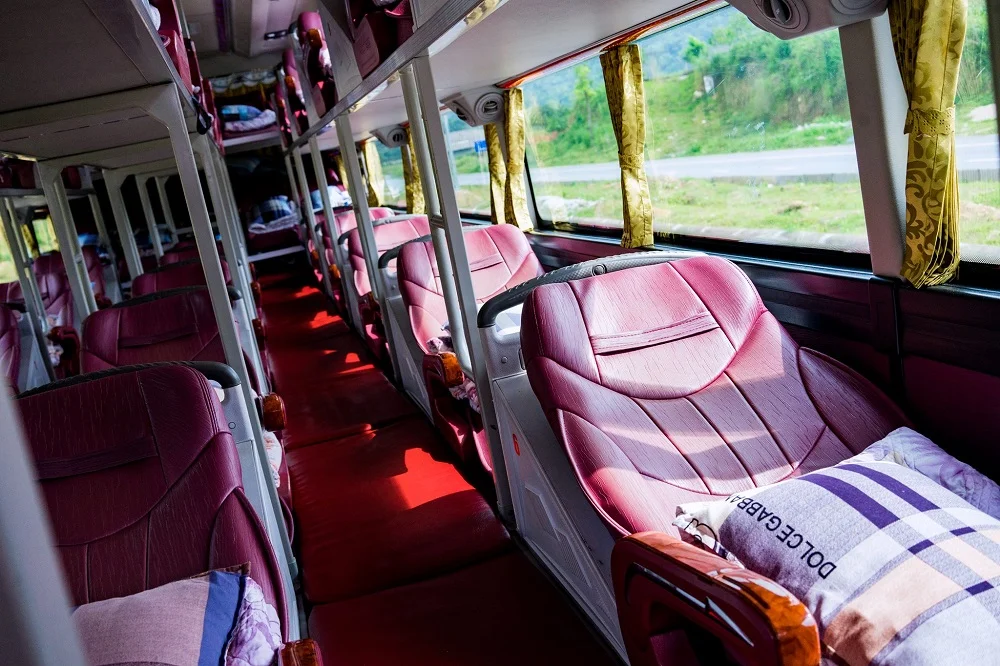
Standard Sleeper Bus in Vietnam
Are Vietnam Sleeper Buses Comfortable for Tall Travelers?
This is probably one of the biggest concerns for Western backpackers.
Vietnam sleeper buses are primarily designed around Vietnamese average heights, so space can feel tight if you’re tall.
Most standard sleeper bus beds are roughly:
1.7–1.8 metres long
Narrower than a normal Western single bed
Slightly reclined rather than fully flat
If you’re:
Under 5’6” — you’ll probably fit comfortably
Over 5’6” — manageable but snug
Taller than 6ft — you may resemble folded laundry
VIP cabin buses are significantly better for taller travelers because they usually offer wider, flatter beds so you can lie on your side or curl up and find a more comfy position.
👉 If you’re tall and planning multiple overnight routes in Vietnam, paying slightly extra for VIP buses is genuinely worth it.
Do Vietnam Sleeper Buses Have Toilets?
Sometimes. But definitely don’t rely on them.
Some VIP sleeper buses in Vietnam have onboard toilets, but the reality is that most buses do not.
Even when a toilet exists, it may not be particularly clean or pleasant during long journeys.
Fortunately, most sleeper buses stop every 2–3 hours for bathroom breaks, snacks, and stretching your legs.
What to Expect During Sleeper Bus Rest Stops
Rest stops typically last: 20–30 minutes. But they can only last 10 minutes if the bus driver has pulled over quickly to refuel.
You’ll find:
Pho and banh mi stops at roadside restaurants
Snack vendors selling chips and drinks
Strong Vietnamese coffee
Squat toilets (bring small change as you may need to pay about 5,000 VND)
Cold bottled drinks everywhere
Bring cash, toilet paper, and hand sanitiser—always.
👉 At rest stops, sandals are provided so you do not have to keep taking your trainers on and off.
Can You Choose Your Seat on a Vietnam Sleeper Bus?
Sometimes—but not typically.
If you’re booking online through platforms like 12Go Asia or Bookaway, some companies allow seat selection in advance. Others assign bunks automatically.
On most routes, even if you have a pre-assigned seat, bus attendants still manually direct passengers to bunks after boarding.
VIP cabin buses are more likely to allow seat selection than standard sleeper buses.
Best Seats on a Vietnam Sleeper Bus
If you can choose your seat on a Vietnamese sleeper bus:
Best Options
Lower bunks
Middle section
Window side
Front half of the bus
These tend to:
Feel less bumpy
Have smoother suspension
Cause less motion sickness
Seats to Avoid
Very back row
Shared rear platforms
Upper rear bunks
If you sit at the back of the bus above the engine, not only can it become very hot but you’ll likely get bounced around like luggage in a washing machine.
Motion Sickness on Vietnam Sleeper Buses
Motion sickness is a major concern for mountain routes like:
Sapa
Ha Giang Loop region
Why it happens:
Winding mountain roads
Sharp bends
Frequent overtaking
Best prevention:
Choose lower bunks
Sit in the front half of the bus
Avoid rear rows
Take motion sickness tablets
Avoid heavy meals before departure
Lower front sections are significantly smoother.
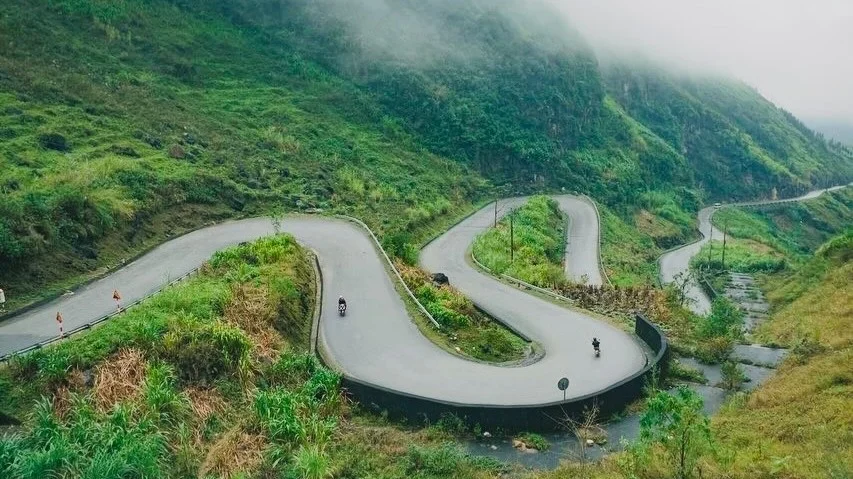
There are lots of winding roads in the North of Vietnam that can cause motion sickness for sleeper bus passengers
Day Bus vs Night Bus: Which Is Better?
Day Sleeper Buses
Pros:
Better scenery
Easier if you struggle sleeping
Safer-feeling for nervous travelers
Less disorientating
Cons:
Takes up travel time
Can interrupt sightseeing days
Northern Vietnam daytime routes can actually be stunning. The roads around Sapa and Ha Giang are unreal during daylight hours.
Overnight Sleeper Buses
Pros:
Saves accommodation costs (if you’re smart about arrival times)
Maximises travel time
Efficient for long routes
Cons:
Sleep quality varies
You may arrive exhausted
Early arrivals can be awkward
Arriving in a city at 4:30am while carrying your entire life in a backpack builds character quickly.
Sleeper Bus vs Domestic Flights vs Trains in Vietnam
Domestic flights in Vietnam can sometimes be cheap, especially if booked early.
Trains have more space with room to move around and are often the best mode of transport for nervous travelers.
But sleeper buses still have major advantages.
Sleeper Bus Pros
Usually cheaper overall
No luggage stress or added costs
More eco-friendly
Scenic routes
Better access to smaller towns (such as Ha Giang—there’s no airport here folks)
More immersive travel experience
More flexible
Easier hostel pickup/dropoff
Flights are faster. Trains are more spacious. And sleeper buses are cheaper and the only way to reach certain regions.
Most backpackers end up using a combination of both.
👉 Pssst! The Reunification Express train is iconic.
Popular Vietnam Sleeper Bus Routes in 2026
Some of the most common backpacker routes include:
Hanoi → Sapa
Hanoi → Ha Giang
Hanoi → Ninh Binh
Hanoi → Cat Ba/Ha Long Bay
Sapa → Ha Giang
Sapa → Hanoi
Ha Giang → Sapa
Ha Giang → Cat Ba/Ha Long Bay
Ha Giang → Hanoi
Ha Giang → Ninh Binh
Ninh Binh → Ha Giang
At Bong Hostel, we help guests organize many of these routes directly alongside our famous motorbike tours, hostel stays, and combo packages throughout Northern Vietnam.
This is especially helpful for travelers connecting sleeper buses with Ha Giang Loop tours or Ha Long Bay cruise trips.
Read more on getting to Ha Giang from different destinations across northern Vietnam.
How Much Do Vietnam Sleeper Buses Cost in 2026?
Prices vary depending on:
Route length
Bus company
Season
VIP vs standard
Holidays like Tet (Vietnamese Lunar New Year)
Rough 2026 prices:
Route
Standard
VIP Cabin
Hanoi → Sapa
$15–20
$25–35
Hanoi → Ha Giang
$12–18
$20–30
Ninh Binh → Phong Nha
$10–18
$18–28
HCMC → Da Lat
$18–25
$30–40
Compared to flights, sleeper buses are still one of the cheapest ways to travel Vietnam.
How to Book Vietnam Sleeper Buses
1. Through Your Hostel
This is the easiest option for most backpackers.
Hostels can:
Recommend reliable companies
Arrange pickup
Help avoid scams
Solve communication issues
Organize combo transport packages
At Bong Hostel in Hanoi, our team regularly helps travelers arrange buses alongside Ha Giang Loop tours, Cat Ba trips, hostel stays, and onward Vietnam itineraries.
It removes a huge amount of stress—especially after a long travel day.
Discover the best small group Ha Giang Loop tours in 2026.
2. Online Booking Platforms
Popular booking websites include:
12Go Asia
Bookaway Vietnam sleeper bus listings
These are useful for:
Comparing prices
Reading reviews
Checking schedules
Booking ahead during busy periods
During Tet (Vietnamese Lunar New Year), sleeper buses often sell out days or even weeks in advance.
If you’re traveling around Vietnam during Tet, or other public holidays, book transport as early as possible.
3. Directly at Bus Stations
Usually cheapest. Also usually most chaotic.
If you enjoy navigating large stations with limited English signage while backpacking in 34°C heat, this may be your moment.
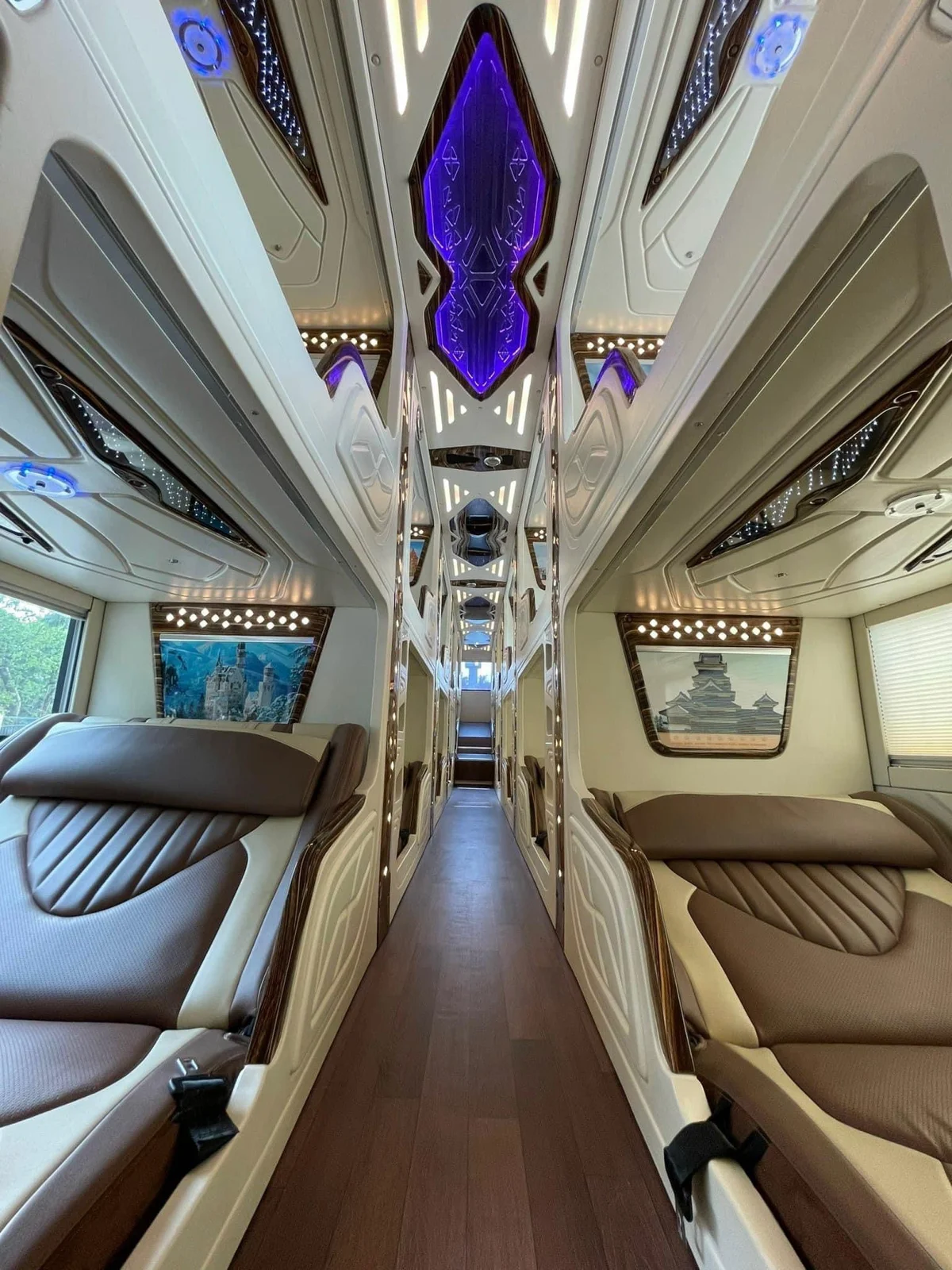
Traveling by sleeper bus is very common for tourists and locals in Vietnam
What to Pack for a Vietnam Sleeper Bus
Your sleeper bus survival kit should include:
Hoodie
Socks
Earplugs
Eye mask
Power bank and cables
Water
Snacks
Wet wipes
Hand sanitiser
Toilet paper
Travel pillow
Offline Netflix downloads (phone signal is patchy on the roads)
Motion sickness tablets if needed
If you forget any of these, you’ll probably survive. But you’ll become dramatically more aware of your mistake around hour two.
Read for more packing tips, including everything you need to bring for the Ha Giang Loop.
Common Sleeper Bus Mistakes to Avoid
A few mistakes nearly every backpacker makes at least once:
Wearing shorts and freezing under AC
Forgetting to remove your shoes (the bus driver will scold you)
Booking the absolute cheapest company blindly
Forgetting a power bank
Leaving essentials (phone charger cables, wallet, headphones) in your big backpack, which is stored underneath the bus
Trusting WIFI will be working properly (always download entertainment for offline use)
Sitting in the back row on mountain routes
Planning tight schedules after overnight buses
Assuming punctual arrival and departure times
Vietnam sleeper buses are much easier when you approach them with flexibility.
Are Vietnam Sleeper Buses Safe?
Yes, sleeper bus travel in Vietnam is generally safe with thousands of locals and travelers using sleeper buses daily across the country.
That said, standards vary between companies so research matters and typical travel precautions still apply.
Good operators:
Maintain vehicles properly
Rotate drivers
Have better customer service
Have one or more rest stops
Run newer buses
This is another reason many travelers prefer booking through trusted hostels or established operators rather than random street agencies.
👉 At Bong Hostel, we only use reliable operators for popular backpacker routes (that we use ourselves) throughout Northern Vietnam.
Solo Female Traveler Safety on Sleeper Buses
Sleeper buses are widely used by solo female travelers across Vietnam.
They are generally safe, especially on popular backpacker routes.
However:
Stick to reputable operators
Keep valuables on you
Choose well-reviewed companies
Book through trusted hostels when possible
Let family back home know your route/hostel/itinerary
For more solo female traveler tips read our blog about female safety on the Ha Giang Loop.
Bong Hostel’s Advice for Sleeper Bus Travel in Vietnam
After helping countless travelers organize transport across Vietnam, here’s the simple version:
1. Keep Valuables with You
Your main backpack usually goes underneath the bus.
Keep these with you:
Passport
Cash
Electronics
Wallet
Phone
Medication (sickness or headache tablets, etc.)
Kindle reader or book
Headphones
Petty theft isn’t wildly common, but basic travel common sense still applies.
2. Daytime Routes Feel Safer for Nervous Travelers
If you’re anxious about overnight roads or mountain routes, daytime buses are a great compromise.
You’ll also get incredible scenery on many Northern Vietnam routes.
3. Book a VIP Sleeper Bus
Spend slightly more for VIP if:
You’re tall
You struggle sleeping
The route is overnight
The journey is 6+ hours
4. Bags on the Buses
Some good advice is not to overpack your day bag.
If you’re on a standard sleeper bus, space inside bunks is limited (there’s just enough room for you really) so only a crossbody bag is advised and maybe a small plastic bag with a book/water in.
If you book a VIP cabin you will have space to put a small backpack next to you but again, don’t overpack too much.
5. Be Flexible
If you Google Vietnam sleeper buses, you’ll find some absolute nightmare stories online.
And yes, occasionally:
Buses run late
Drivers are chaotic
Communication gets confusing
Routes change unexpectedly
Drop-off points are unclear
Vehicle swaps happen unexpectedly
Schedules in Vietnam are more “general guidance” than sacred law sometimes.
Embrace the chaos.
Vietnam becomes far more enjoyable when you stop expecting Western transport systems and lean into the adventure instead.
But in light of that, Bong Hostel recommends not planning your itinerary too tightly.
Sleeper buses are efficient, but delays happen. Leave breathing room in your schedule wherever possible.
Booking Sleeper Buses with Bong Hostel
At Bong Hostel, we help travelers organize:
Sleeper buses
Ha Giang Loop tours
Cat Ba trips
Sapa trekking trips
Ninh Binh day trips
Hostel stays
Combo travel packages across Northern Vietnam
Instead of spending hours comparing random companies online, trying to decode conflicting WhatsApp messages, or getting dropped at mysterious roadside locations at 3am, our team helps make the process smoother and easier.
Especially if it’s your first time backpacking Vietnam.
👉 Explore the wide range of Bong Hostel tours here.
Vietnam Sleeper Bus FAQs
Are sleeper buses safe in Vietnam?
Yes, Vietnam sleeper buses are generally safe and are used daily by both locals and backpackers throughout the country.
However, standards vary between companies, so it’s best to book through trusted hostels, reputable operators, or well-reviewed platforms like 12Go Asia.
Do Vietnam sleeper buses have toilets?
Some VIP sleeper buses in Vietnam have onboard toilets, but many standard sleeper buses do not.
Most buses stop every 2–3 hours at roadside rest stops for bathroom breaks, snacks, and coffee.
Can tall people fit on Vietnam sleeper buses?
Tall travelers can fit on Vietnam sleeper buses, but bunks can feel cramped. VIP cabin buses usually offer more space and are a much better option for taller passengers.
Are VIP sleeper buses worth it in Vietnam?
For overnight journeys longer than 6–7 hours, most backpackers find VIP sleeper buses absolutely worth the extra cost.
VIP buses usually offer wider beds, more privacy, smoother suspension, quieter cabins, and a far more comfortable sleeping experience overall.
Can you actually sleep on Vietnam sleeper buses?
Yes—many travelers sleep surprisingly well on Vietnam sleeper buses, especially on VIP routes. Sleep quality depends on road conditions, driver style, your bunk position, and your tolerance for occasional chaos, horns, and cold air conditioning.
How much do sleeper buses cost in Vietnam?
Most Vietnam sleeper bus routes cost between $10–40 USD depending on the route length, season, and whether you choose a standard or VIP cabin bus.
Popular backpacker routes like Hanoi to Ha Giang or Hanoi to Sapa are usually very affordable compared to domestic flights.
What should I bring on a Vietnam sleeper bus?
Essentials for a Vietnam sleeper bus include:
Hoodie or warm layer
Socks
Earplugs
Eye mask
Power bank
Water
Snacks
Hand sanitiser
Toilet paper
Motion sickness tablets for mountain routes
Should I book sleeper buses in advance in Vietnam?
During normal travel periods, booking a few days ahead is usually enough.
However, during Tet (Vietnamese Lunar New Year), weekends, or peak backpacker season, sleeper buses can sell out quickly, especially VIP cabin buses.
Click for more Bong Hostel FAQs on travel in North Vietnam.

Sleeper buses in Vietnam can take you to all the beautiful sites the country has to offer
Final Thoughts: Are Vietnam Sleeper Buses Worth It?
Absolutely.
Vietnamese sleeper buses are chaotic, practical, affordable, occasionally confusing, and somehow one of the most memorable parts of backpacking the country.
Just make sure not to expect perfect Western transport systems and lean into the adventure a little.
That’s when sleeper buses become part of the experience rather than just a way to get from A to B.
No matter your destination—Ha Giang, Sapa, Cat Ba, Ninh Binh, or a full North Vietnam backpacking route—getting the right bus company can make a massive difference to your trip.
👉 At Bong Hostel, we help travellers organize reliable sleeper buses, Ha Giang Loop tours, hostel stays, Cat Ba trips, and complete Northern Vietnam travel itineraries every single day.
So instead of wasting hours comparing random bus companies online, dealing with confusing pickup points, or ending up stranded outside a city at 3am, let our local team help make the process easier.
👉 Explore Bong Hostel tours, transport, and travel packages here.
About Faye Hilling
Travel writer and Vietnam explorer sharing authentic experiences and insider tips for discovering the beauty of Vietnam.