
Harvest Season on the Ha Giang Loop: Top Rice Fields You Can't Miss in 2026

If there's one thing that can make an already spectacular Ha Giang Loop even more spectacular, it's covering the mountains in gold.
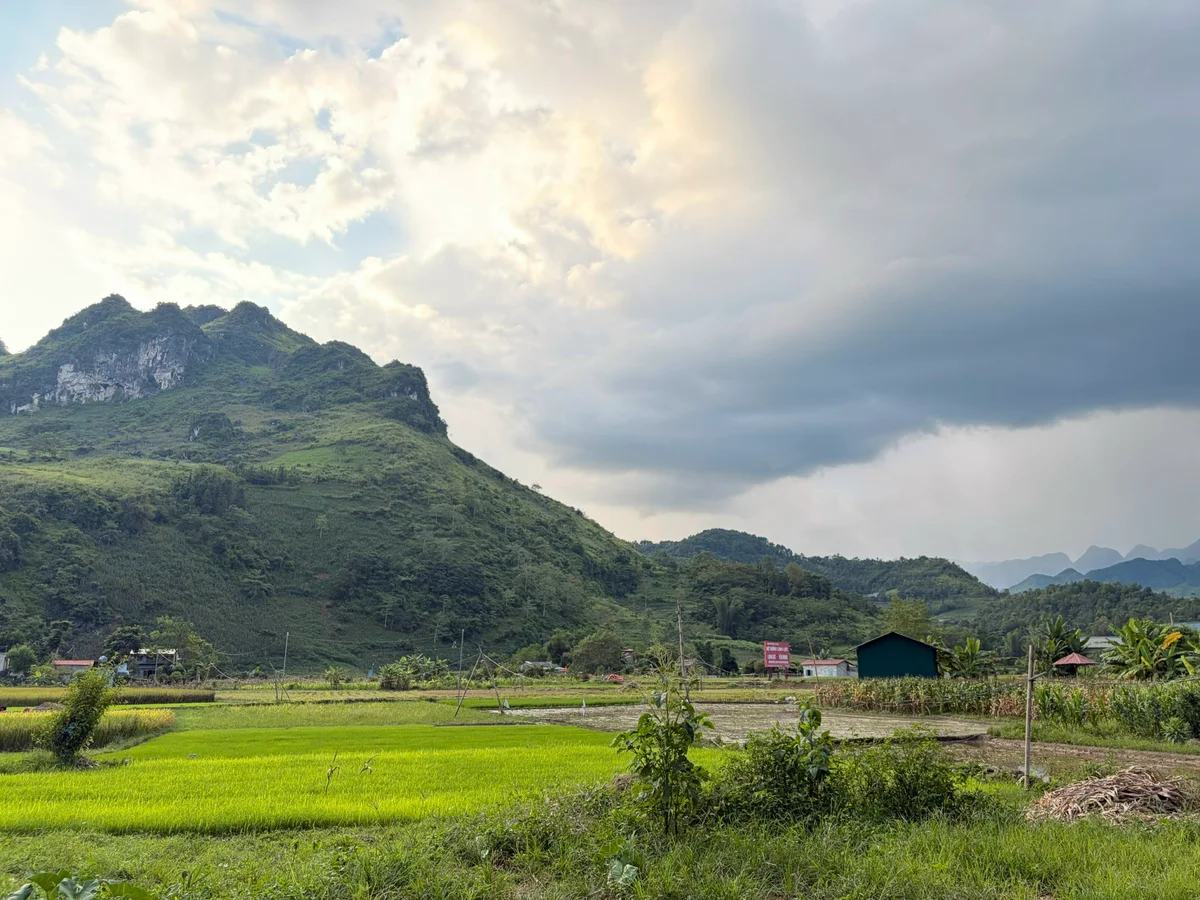
From September into October, the rice fields around Ha Giang begin to ripen, transforming green valleys and mountain terraces into golden patches between the limestone peaks.
If you're planning the Ha Giang Loop during harvest season in 2026, here's where to look for the best rice fields, when to go, and how to enjoy them without treating somebody's rice field like a public footpath.
When Is Rice Harvest Season on the Ha Giang Loop?
The rice harvest season in Ha Giang generally falls between September and October, with the exact timing varying between locations and depending on weather and when local farmers planted their rice.
For many travellers, mid-September to early October is a particularly good window for seeing the landscape at its golden best. Some areas begin turning yellow earlier, while others can remain golden later into October.
This is important because there isn't one magical day when the entire province suddenly goes golden.
In some valleys, farmers may already be harvesting while fields a little further along the route are still green.
That's actually part of what makes travelling through Ha Giang at this time of year so interesting. You get a patchwork of colours rather than one enormous yellow carpet.
And because Ha Giang's rice terraces are working farmland, harvest timing can change from year to year.
So, if you're booking a trip specifically to see golden rice, aim for late September or early October, but don't expect every field to be at exactly the same stage.
What is the Weather Like During Harvest Season?
September and October bring cooler conditions than Ha Giang's hotter summer months, making autumn a particularly pleasant time to explore the province by motorbike.
Here's a quick idea of what to expect:
Month | Rice fields | Weather | What to pack |
September | Rice begins turning golden, with some fields still green | Cooler than summer, but conditions can still be changeable | Light layers, a waterproof jacket, comfortable shoes |
October | Golden rice and harvest activity, although timing varies by location | Generally cooler, particularly in the mountains | Light jacket, long sleeves, a waterproof layer, comfortable shoes |
If you're visiting specifically for the golden rice fields, keep in mind that the best conditions can vary between valleys.
And remember, mountain weather can change quickly, so even if the forecast looks perfect when you leave Ha Giang City, it's worth carrying a waterproof layer and something warmer for the higher roads.
What About the Rice Fields in May and June?
Harvest season gets all the attention, but the rice fields have another impressive moment earlier in the year.
During the planting, or ‘Mirror Season’, rice terraces are filled with water, creating mirror-like surfaces that reflect the surrounding mountains and sky.
So, if you're travelling outside September and October, don't assume you've missed all the rice-field scenery.
You just won't get quite as much gold.
Why Does Harvest Season Matter to the Communities of Ha Giang?
The golden rice fields aren't just there to look pretty.
For communities across Ha Giang, rice farming is part of everyday life, and the harvest is the result of months of work.
Families cultivate small plots of land wherever the mountainous terrain allows, with terraces and valley fields providing rice for households and contributing to local livelihoods.
So when you ride through Ha Giang in September and October and see people working among the golden fields, you're seeing a real part of rural life.
Harvesting can be physically demanding work, too. Depending on the location and terrain, rice is harvested by hand, gathered, and carried away from the fields.
What looks like a beautiful golden landscape from the road represents a considerable amount of time and effort for the people who farm it.
That's worth remembering when you're taking photographs.
Want to dig a little deeper into the traditions and communities behind harvest season? Read What Harvest Season in North Vietnam Really Means.
Enjoy the Scenery, But Don't Get in the Way
It's tempting to wander into a golden rice field for the photo. We get it. Golden terraces, mountains in the background, perfect lighting—your camera practically starts taking photos by itself.
But these are working farms. Don't walk through crops, move tools or equipment, or interrupt someone who is working just to get a better angle.
A little respect goes a long way.
You can also support the communities you pass through by eating at local restaurants, staying at local homestays, and buying locally made products where possible.
That way, you're not just passing through Ha Giang looking at the scenery. You're contributing to the places that make the scenery—and the whole experience—possible.
Where Can You See the Best Ha Giang Loop Rice Fields?
You don't need to spend your entire trip hunting for rice terraces.
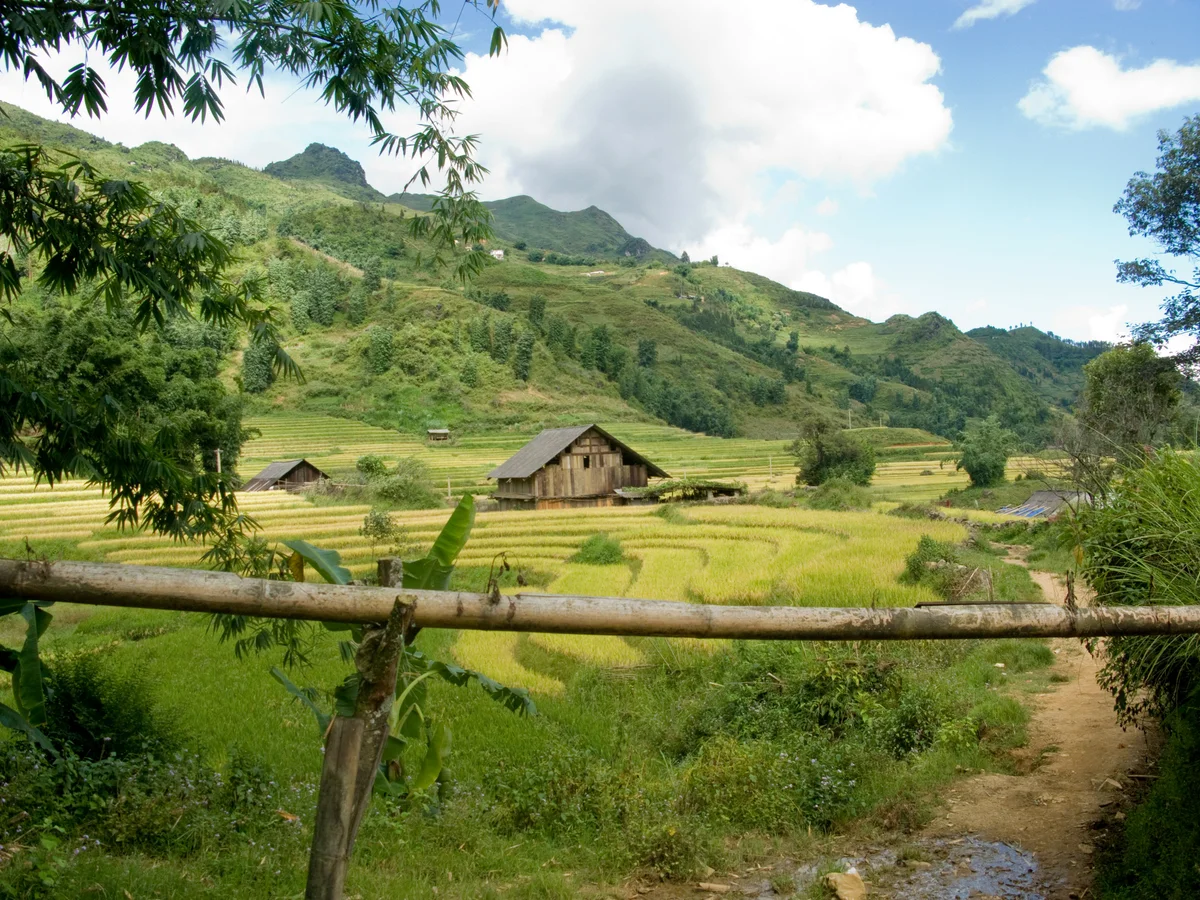
One of the best things about riding the Ha Giang Loop during harvest season is that the scenery comes to you. Rice fields appear in valleys, beside roads, around villages, and tucked into the mountainsides.
Here are some of the spots worth keeping an eye out for.
1. Du Già
Du Già is one of the places to put firmly on your rice-field radar.
The valley around Du Già is surrounded by mountains and smaller cultivated fields, creating a much softer landscape than some of the enormous limestone scenery elsewhere on the Loop.
During harvest season, the rice adds splashes of gold to the green hillsides and makes the whole area look even more photogenic.
It is also one of those places where the journey matters as much as the destination. You'll be winding through mountain roads, passing villages and fields, and finding plenty of scenery between the official "stops".
2. Mậu Duệ
Mậu Duệ is another excellent place to look for Ha Giang Loop rice fields during harvest season.
The area has broad valley landscapes surrounded by mountains, with rice fields and villages scattered throughout. It tends to feel quieter and more rural than some of the Loop's headline attractions, which is precisely why we like it.
During September and October, the rice fields can turn golden, creating a brilliant contrast with the surrounding green mountains.
And there's a practical bonus: you don't need to go trekking for hours to see them. Much of the scenery can be appreciated from the road.
This is also a good reminder that the Ha Giang Loop isn't just about ticking off famous viewpoints. Some of the best moments happen when your driver spots a particularly good valley, pulls over, and you realise you've just found your favourite view of the day.
3. The Valleys Around Yên Minh
As you travel through the Yên Minh area, keep an eye on the valleys below the road.
The landscape here changes dramatically as you travel, and rice fields become particularly striking when they're surrounded by the forested and rocky mountains of the northern Loop.
The best bit? You don't have to find one specific viewpoint called "The Famous Rice Field". Just look around.
If there's a golden valley sitting between two enormous mountains, you've probably found something worth photographing.
4. Rice Fields Around Quản Bạ
Quản Bạ is often one of the first major landscapes you'll encounter on the Ha Giang Loop, and harvest season gives it another reason to slow down.
The area around Quản Bạ combines mountains, valleys, villages, and cultivated land, so the rice fields form part of a much bigger landscape rather than standing alone.
If you're lucky with the weather, you can get that classic Ha Giang combination: golden fields below, dramatic mountains behind, and clouds floating somewhere in the middle.
Quản Bạ is also close enough to Ha Giang City to be a good option if you're short on time and can't commit to several days on the Loop.
5. Lũng Cú
Lũng Cú is about as far north as you can get in Vietnam, and while most people come here for the famous Flag Tower, the surrounding landscape deserves some attention, too.
During harvest season, the smaller rice fields around Lũng Cú can turn golden against the dramatic limestone landscape of the Đồng Văn Karst Plateau.
The contrast is pretty spectacular: enormous rocky mountains, tiny patches of farmland, and golden rice tucked into the valleys below.
The rice terraces here aren't necessarily the huge, sweeping fields you'll see in photographs of Hoàng Su Phì. They're smaller and more scattered, but that's part of their charm.
And you're not coming all this way just for the rice. A visit to Lũng Cú also means you can head up to the Lũng Cú Flag Tower for those enormous panoramic views across the surrounding plateau.
What Will You Actually See Along the Rest of the Loop?
The five spots above are the ones we'd put on your rice-field radar, but don't spend the entire Loop staring at Google Maps trying to find them.
Rice fields are scattered throughout Ha Giang's valleys, so you'll see plenty of smaller patches as you travel between destinations, including around Quản Bạ and on the roads towards Mèo Vạc.
Some will be bright green, some golden, and some may already have been harvested. That's because Ha Giang's rice doesn't all ripen at exactly the same time.
And honestly, some of your favourite rice-field views may not have a name at all.
Your Easy Rider suddenly pulls over, points down into a valley, and there it is: golden rice, towering mountains, and absolutely no other tourists fighting you for the same photo.
Those are the moments you remember.
Xà Phìn: Golden Rice Close to Ha Giang City
Here's one for anyone who wants to see Ha Giang's golden rice fields but doesn't have time for a full Loop.
Xà Phìn Village sits beneath the Tây Côn Lĩnh mountain range, roughly 20 kilometres from Ha Giang City.
The high-altitude village is home to a Dao community and is known for its peaceful scenery, traditional houses, ancient Shan Tuyết tea trees, and, importantly for us, its rice terraces.
September and October are particularly special here, when the rice ripens and the landscape takes on its famous golden appearance.
If you've only got one day in Ha Giang, Bong Hostel's 1-day city tour gives you the chance to explore beyond the city and see some of the surrounding rural landscape.
So, if your itinerary is already packed with Hanoi, Ninh Binh, Sapa, and approximately twelve other places you've somehow promised yourself you'll visit in two weeks, you don't necessarily have to skip Ha Giang's rice fields.
Xà Phìn gives you another option.
What About Hoàng Su Phì Rice Terraces?
Now for an important bit of Ha Giang rice-field geography.
If you've been searching for the best rice terraces in Ha Giang, you'll almost certainly come across Hoàng Su Phì.
And yes, they're spectacular.
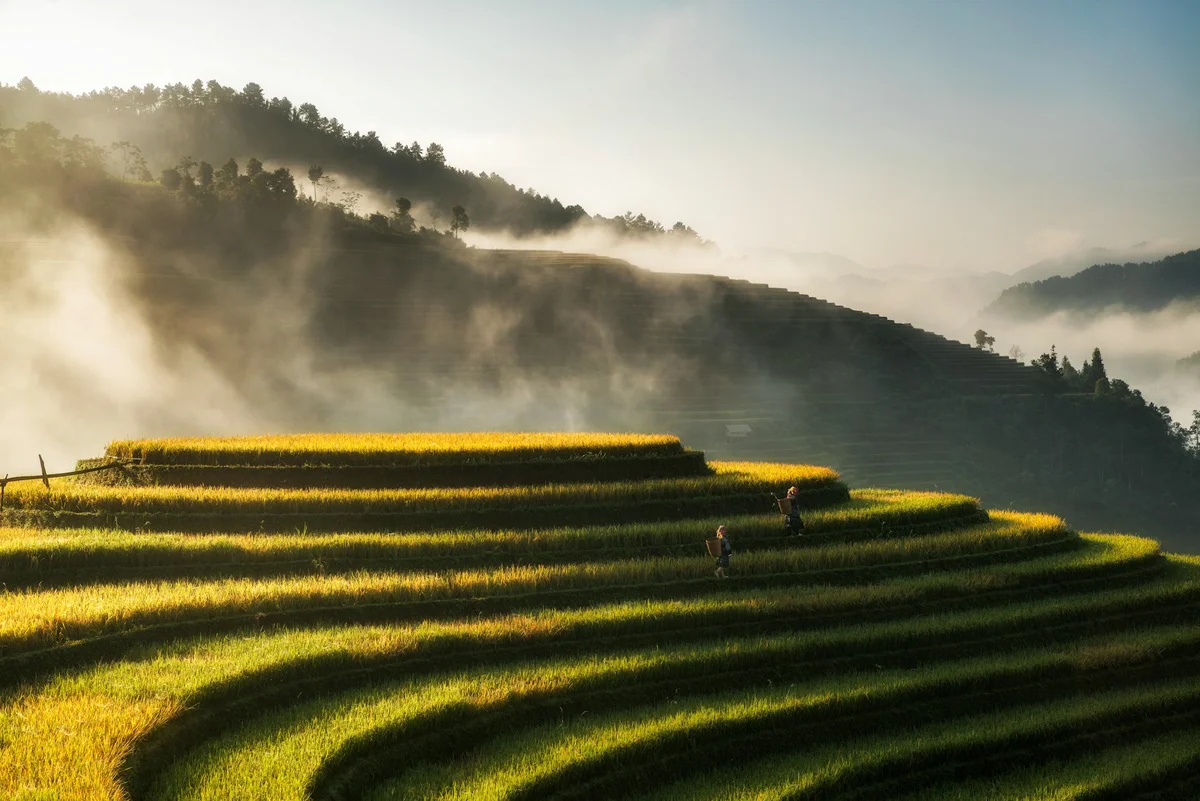
Hoàng Su Phì is famous for its steep terraced rice fields, with terraces climbing dramatically up the mountainsides.
But there's a catch. Hoàng Su Phì isn't part of the classic Ha Giang Loop route.
It's west of Ha Giang City and requires a separate journey, so don't assume you'll automatically see those famous enormous terraces on a standard 3- or 4-day Loop.
If seeing huge terraced rice fields is the main reason you're coming to Ha Giang, Hoàng Su Phì may be worth adding to your itinerary.
Basically: don't book the wrong trip because Google Images got you excited.
Tips for Seeing the Rice Fields Responsibly
The rice fields might look like the perfect place for an Instagram photoshoot, but remember that they're someone's farmland.
A few simple things make a big difference:
Ask before photographing people. If someone is working in the fields, a smile and a polite gesture asking permission goes a long way.
Don't walk through crops without permission. That golden field isn't a giant outdoor photography studio.
Don't pick the rice. This should hopefully go without saying, but we've all seen people do strange things for a photo.
Be respectful around villages. Ha Giang is home to several ethnic communities, including H'Mông, Tày, and Dao communities. You're travelling through people's homes, not simply passing through a tourist attraction.
Support local businesses. Eating at local restaurants, staying in local homestays, and buying locally made products helps keep more of your travel spending within the communities you're visiting.
And perhaps most importantly, slow down.
The temptation on the Loop is to race from one famous viewpoint to the next. During harvest season, some of the best experiences are the completely unplanned stops.
FAQs: Ha Giang Loop Rice Fields
When is the best time to see rice fields on the Ha Giang Loop?
The rice harvest season in Ha Giang generally falls between September and October, although the exact timing varies depending on the location, weather, and when the rice was planted.
Late September and early October are a particularly good window if seeing golden rice is your priority.
Are the Ha Giang Loop rice fields golden in September?
They can be, but don't expect every field to turn golden at the same time. Some rice fields may still be green in September, while others may already be turning yellow or even have been harvested. This varies between valleys and from year to year.
Where are the best rice fields on the Ha Giang Loop?
Some of the best areas to look for rice during harvest season include Mậu Duệ, Du Già, Yên Minh, and Lũng Cú. You'll also see smaller rice fields and cultivated valleys throughout the route, so keep your eyes open between the main stops.
Is Hoàng Su Phì part of the Ha Giang Loop?
No. Hoàng Su Phì is not part of the classic Ha Giang Loop route and requires a separate journey from Ha Giang City. It is famous for its enormous terraced rice fields, so it's worth considering if spectacular rice terraces are the main reason for your trip.
Can I see rice fields near Ha Giang City?
Yes. Xà Phìn is a good option for seeing rice fields without doing the full Loop. It's located relatively close to Ha Giang City and is particularly scenic during harvest season.
Bong Hostel also offers a 1-day city tour, making it an option for travellers who have limited time but still want to explore the countryside around Ha Giang.
Can I visit the rice fields without doing a Ha Giang Loop tour?
Absolutely. You don't need to complete the full Loop to see rice fields in the area. A 1-day trip from Ha Giang City can take you into the surrounding countryside, while a multi-day Loop gives you much more time to experience the valleys, villages, and mountain scenery.
Can I walk into the rice fields to take photos?
Not unless you have permission. These are working rice fields belonging to local communities, not public parks. Stick to paths and roads where possible, and always ask before entering farmland or photographing people working there.
Is September a good month to do the Ha Giang Loop?
Yes. September is generally a popular time to visit because the weather begins to cool from the summer, and many rice fields start changing from green to golden. Just remember that September can still bring changeable mountain weather, so pack accordingly.
What should I bring for the Ha Giang Loop during harvest season?
Layers are your friend. Bring comfortable clothes, a light jacket or long-sleeved layer for cooler mornings and evenings, comfortable shoes, sun protection, and something waterproof just in case.

Want to See Harvest Season on the Ha Giang Loop in September or October?
If golden rice fields are high on your Vietnam bucket list, September and early October are excellent months to do the Ha Giang Loop.
Golden rice fields, winding mountain roads, tiny villages, and farmers working in the valleys all come together to make the scenery even more spectacular.
And because the rice doesn't ripen everywhere at exactly the same time, there's always something different waiting around the next bend.
Bong Hostel's Easy Rider Ha Giang Loop lets you enjoy the views while a local driver handles the mountain roads or choose self-riding if you're experienced and have the correct licence to legally drive in Vietnam.
Just remember that harvest timing varies, so we can't promise that every field will be golden on the exact day you arrive. What we can promise is plenty of spectacular mountain scenery—and plenty of reasons to stop along the way.
About Faye Hilling
Travel writer and Vietnam explorer sharing authentic experiences and insider tips for discovering the beauty of Vietnam.