
Cao Bang Loop vs Ha Giang Loop: How the Scenery Compares
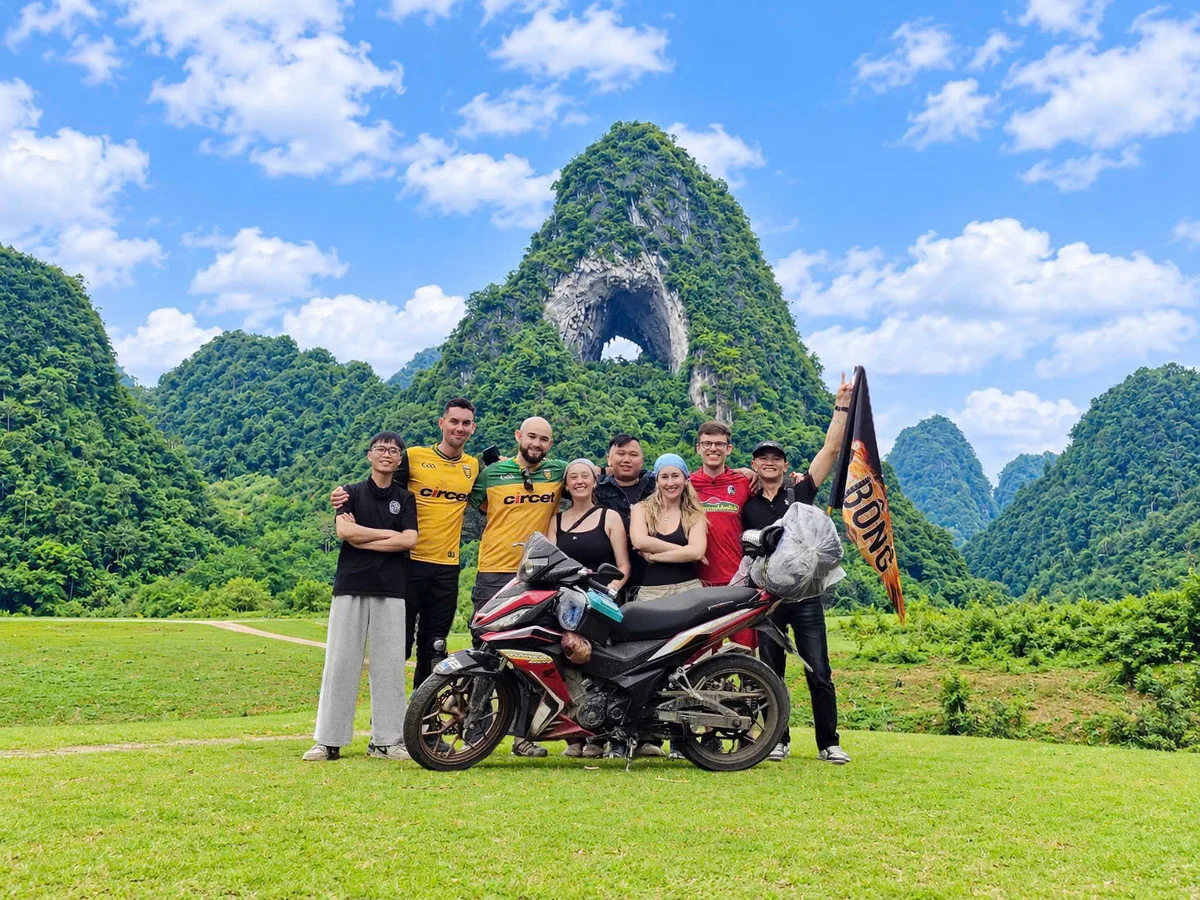
Okay, so you're starting to see the Cao Bang Loop pop up on backpacker TikTok, but you're wondering how it compares with its more popular cousin, the Ha Giang Loop—and, more importantly, which one has the better scenery.
Here's the thing: both are beautiful, but in completely different ways.
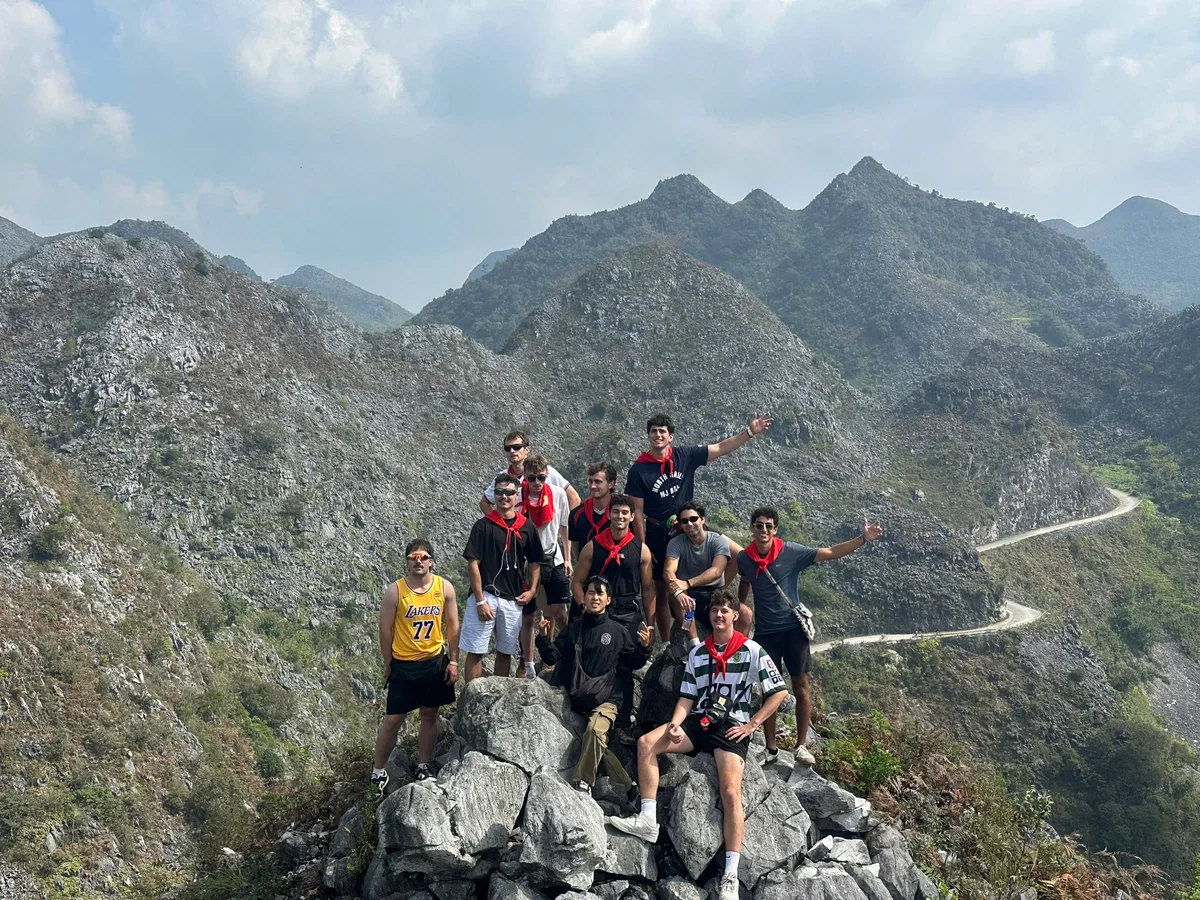
Ha Giang is made up of dramatic mountain passes, with towering limestone peaks and rice terraces carved into impossibly steep hillsides.
And Cao Bang is all sweeping valleys filled with rice fields, winding rivers, and enormous natural attractions.
Having travelled between these regions many times with Bong Hostel, one difference really stands out: Ha Giang delivers breathtaking views around almost every corner, while Cao Bang saves some of its biggest wow moments for particular destinations.
Of course, scenery is subjective. Some travellers prefer Cao Bang, and others can't stop talking about Ha Giang long after they've left.
Let's look at what makes each one special, so you can decide which belongs on your Vietnam itinerary. And if you're struggling to choose, don't worry, you don’t have to.
Cao Bang Loop vs Ha Giang Loop: Scenery at a Glance
Feature | Ha Giang Loop | Cao Bang Loop |
Overall landscape | Dramatic mountains, steep valleys, and winding passes | Broader valleys, spread out mountain setting, and open countryside |
Rice fields | Terraces carved into steep mountainsides | More open fields stretching between mountains |
Scenery along the route | Frequent dramatic views and mountain panoramas | A mix of scenic countryside, connecting roads, and major highlights |
Standout scenery | Tham Ma Pass, Ma Pi Leng Pass, the Nho Que River and Tu San Canyon, and the rice terraces around Ngoc Long Valley | Ban Gioc Waterfall, Eye of God Mountain, and Me Pia Pass |
Local atmosphere | Busier international backpacker route | Generally fewer international tourists along the touring routes |
Best for | Travellers who love dramatic mountain scenery throughout the journey | Travellers who enjoy varied landscapes and impressive natural attractions |
And what about Ba Be National Park? It's an extra highlight on Bong Hostel's 7-day Ha Giang to Cao Bang route, adding a different landscape of freshwater lakes, forest scenery, and caves.
Ha Giang Loop Scenery: Breathtaking Views Around Every Corner
If you want dramatic mountain scenery, Ha Giang is difficult to beat.
The landscape is relentless in the best possible way. You're riding uphill, winding around a mountain, dropping into a valley, and climbing again before you've had time to process the last viewpoint.
And then another one appears.
The mountains are the main attraction here. Towering peaks rise above narrow valleys, roads cling to steep slopes, and entire hillsides are covered in layers of black karst-rock terrain with hints of wildflowers poking through.
It's not just about the famous viewpoints, either. One of the best things about the Ha Giang Loop is that the scenery between the attractions can be just as impressive as the attractions themselves.
Ma Pi Leng Pass and Meo Vac
Ma Pi Leng Pass is a perfect example.
The road winds along the mountainside above the Tu San Canyon and Nho Que River, with enormous cliffs dropping towards the narrow turquoise water below. The scale of the landscape is easily appreciated once you're standing there yourself.
It's one of those places where photos just don’t do it justice.
Around Meo Vac, the mountains continue to dominate the landscape, creating dramatic ridgelines and deep valleys that seem to stretch on forever.
Mau Due and the Terraced Mountains
Elsewhere on the route, particularly around Mau Due and Ngoc Long, you'll see a different side of Ha Giang's mountainous scenery.
Rice terraces are carved into the slopes wherever the terrain allows, creating layers of cultivated land that follow the contours of the mountains. Rather than seeing one enormous flat field, you're looking at agriculture shaped by steep terrain.
These terraces also change throughout the year. Depending on when you visit, they may be filled with water, covered in green crops, or turning golden towards harvest.
It's a landscape that feels constantly in motion, whether you're watching the clouds roll over the peaks or seeing farmers working on the hillsides.
Want to know the best time to see the rice fields on the Ha Giang Loop? Check out our Harvest Season Guide 2026.
Is Ha Giang Beautiful Throughout the Whole Route?
Mostly, the scenery is a major part of the experience from the moment you leave Ha Giang City and head into the mountains.
That doesn't mean every kilometre is spectacular, or that you'll never encounter roadworks, ordinary towns, or stretches that are less exciting. But the dramatic mountain scenery is a defining feature of the journey.
If you want to see the famous viewpoints, take lots of photos of them, and repeatedly announce that this is definitely the best view so far, Ha Giang is your kind of place.
Cao Bang Loop Scenery: Sweeping Valleys and Big One-Off Highlights
Cao Bang is also mountainous, so don't expect to arrive and not see a single peak.
The difference is how the mountains and valleys fit together.
Compared with the steep, continuously dramatic terrain of the Ha Giang Loop, parts of Cao Bang feel more open.
You'll ride through broad valleys—particularly noticeable around the Ban Gioc area—see horses grazing in the rice fields, follow rivers through the countryside, and pass villages surrounded by cultivated land.
One particular difference from Ha Giang is that the landscape feels lived in rather than designed around viewpoints. You're travelling through the working countryside, passing communities going about their daily lives, with the mountains forming the backdrop.
Ban Gioc Waterfall: The Big ‘OMG, How is this Real?’ Moment
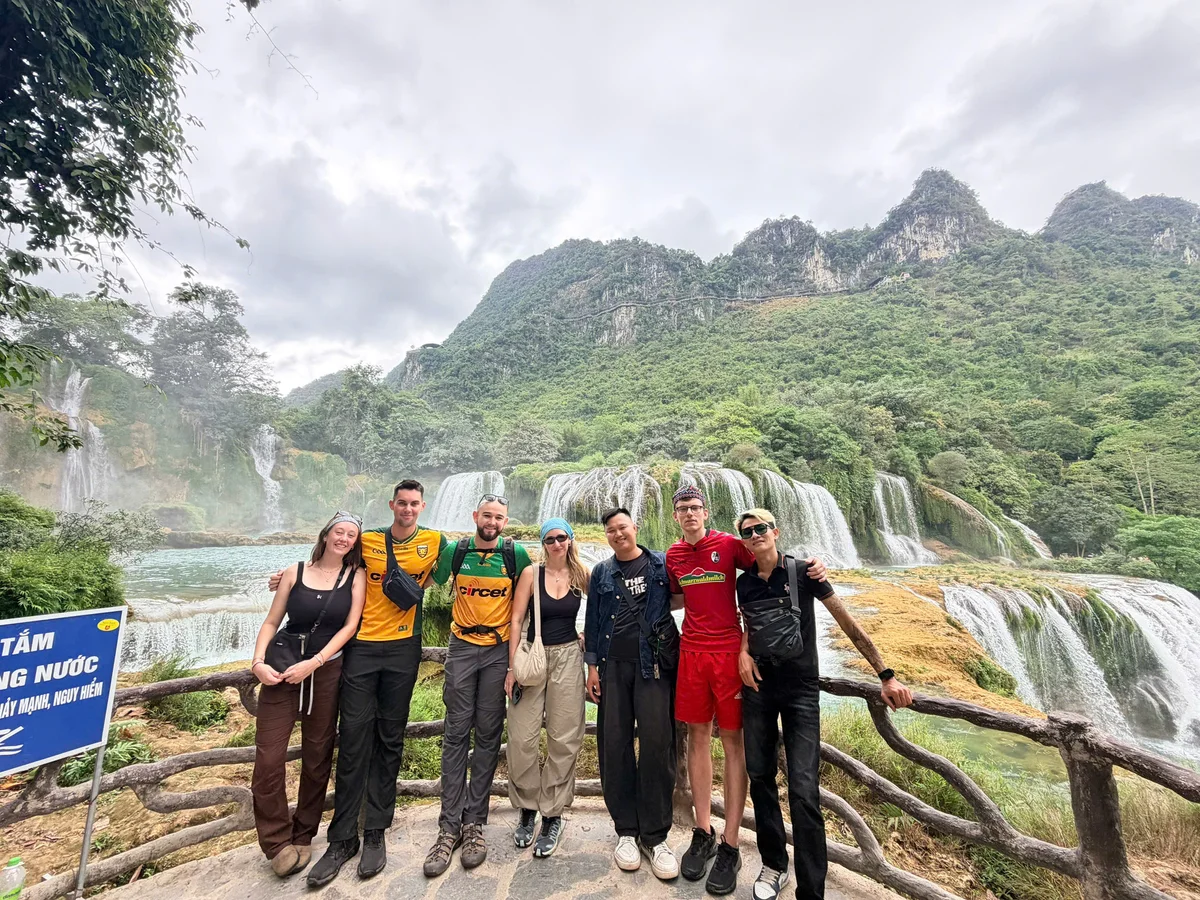
Ban Gioc Waterfall is one of Cao Bang's defining destinations.
The waterfall stretches along the Vietnam–China border, cascading over multiple limestone tiers into the Quay Son River.
Surrounded by countryside and mountains, it's a spectacular sight and one of the region's most recognisable natural landmarks.
You can even take a raft out onto the river for a closer look at the falls and better photo opportunities.
Unlike a viewpoint where you might stop for 20 minutes before climbing back onto the bike, Ban Gioc is somewhere you can spend a good chunk of time exploring.
Just watch your clock—it might accidentally switch to the Chinese time zone even though you’re still in Vietnam!
Eye of God Mountain and the Open Valleys
Another highlight is Eye of God Mountain, also known as Nui Thung.
The mountain has a huge natural hole straight through the centre of its peak, creating a distinctive shape against the surrounding countryside.
What makes the setting special is the contrast between the mountain and the open valley below. Instead of being surrounded by steep slopes on every side, like lots of viewpoints on the Ha Giang Loop, you're looking across open grassland.
Me Pia Pass: Cao Bang’s Most Impressive Mountain Pass
Just because Cao Bang has a more open landscape doesn't mean it's short on mountain-pass drama.
Me Pia Pass, known for its series of sharp bends, is one of the standout sections of the journey. The road twists through the mountains, providing a reminder that Cao Bang can be every bit as adventurous as Ha Giang.
However, once you've passed these standout sections, the landscape can become more open and less consistently dramatic.
There are also stretches between Bao Lac and Cao Bang where road construction and ordinary connecting roads can interrupt the views.
You might see rivers, villages, and mountain scenery, but not every section offers the kind of spectacular panorama that makes you want to stop immediately.
Cao Bang Loop vs Ha Giang Loop: Rice Fields and Landscapes
One of the easiest ways to understand the difference between Cao Bang Loop vs Ha Giang Loop scenery is to look at the rice fields.
Rice Terraces on the Ha Giang Loop
In Ha Giang, flat land is limited by the terrain. Farmers have created terraces along the mountainsides, carving out usable growing space on slopes that would otherwise be difficult to cultivate.
The result is a landscape where the rice fields themselves become part of the mountains. You can see the terraces wrapping around hillsides, following their curves and creating intricate patterns across the landscape.
Rice Fields in Cao Bang
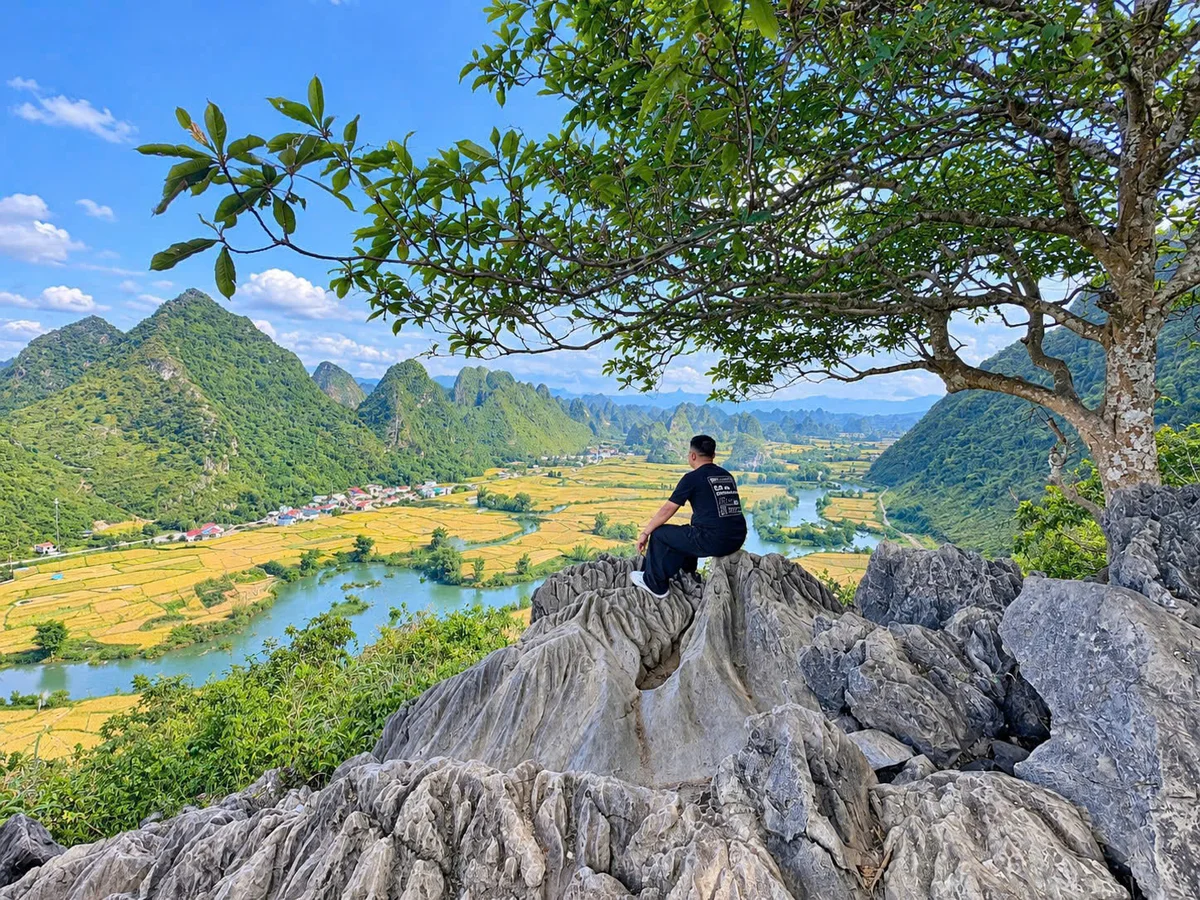
In Cao Bang, you'll find more open valleys where rice fields spread across flatter ground between the mountains.
The fields can stretch for considerable distances, with rivers winding through the countryside and limestone peaks rising in the background. The scenery feels less vertical, giving you a wider view across the landscape.
Neither is inherently better. If you love dramatic mountain terraces, Ha Giang will probably be your favourite. If you prefer expansive countryside, open valleys, and fields framed by mountains, Cao Bang could win you over.
Cao Bang Loop vs Ha Giang Loop: Which Has Better Scenery Throughout?
This is where the biggest difference between the two routes becomes clear.
On the Ha Giang Loop, the road itself is a major part of the experience.
The mountains, deep valleys, and winding passes provide impressive views throughout much of the journey, rather than just at the famous viewpoints.
Cao Bang is different. You'll find broad valleys, open rice fields, rivers, and limestone mountains, but the main thing is the individual highlights such as Ban Gioc Waterfall and Eye of God Mountain.
This means some connecting stretches are less dramatic, and road construction can affect the views in places. That doesn't make Cao Bang disappointing, though. It simply means you should approach it with different expectations.
And here's the thing: I've known travellers who preferred Cao Bang to Ha Giang. Scenery is personal, and you can't predict exactly which landscape will capture someone's imagination.
Is Cao Bang Less Touristy Than Ha Giang?
Yes, generally speaking, Cao Bang sees fewer backpackers than the popular Ha Giang Loop.
Ha Giang has become a major stop on the northern Vietnam backpacker trail, so you'll often encounter tour groups from other companies at popular viewpoints.
However, Bong Hostel does its best to avoid the crowds, taking guests to quieter coffee shops and lesser-known stops along the route.
Cao Bang feels noticeably quieter by comparison. There are fewer foreign tour groups at many of the stops, and the experience of travelling through the countryside feels different.
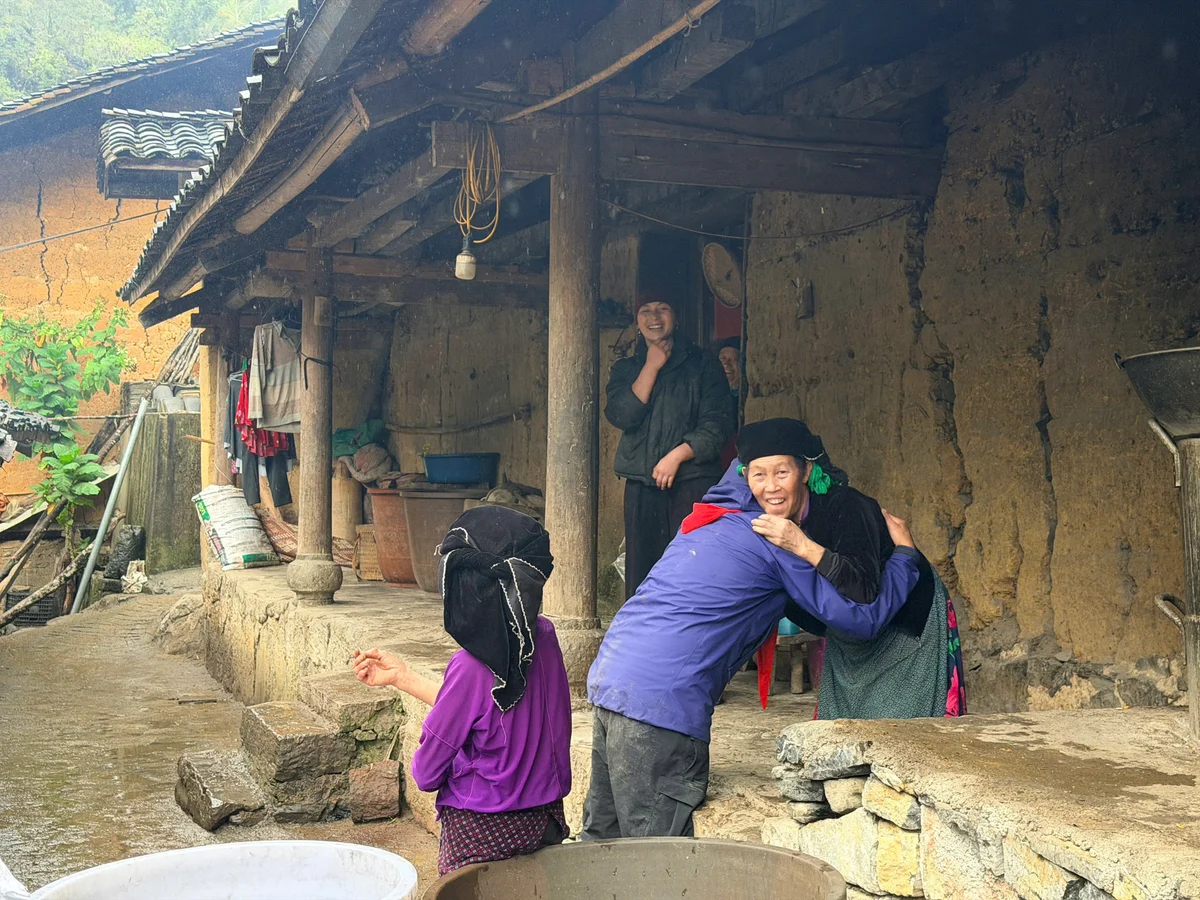
One thing I've particularly noticed is the difference in roadside interactions. Along parts of the Ha Giang route, you'll see children walking to and from school, sometimes reaching out for a high five as you drive past. In Cao Bang, I've never encountered this.
Of course, fewer international tourists doesn't mean Cao Bang is empty or untouched. It's home to busy towns, working farms, and local communities going about their everyday lives.
If you'd like to experience northern Vietnam's spectacular scenery without quite as many international tour groups, Cao Bang is well worth considering.
What About Ba Be National Park?
If you have more time, there's another landscape worth adding to the conversation: Ba Be National Park.
Ba Be feels different again from both Ha Giang and Cao Bang. The scenery is centred around Vietnam’s largest natural freshwater lake surrounded by forest-filled mountains.
Rather than winding through mountain passes or visiting waterfalls, you can explore the lake by boat or kayak, discover caves, go swimming, and appreciate the quieter landscapes of the national park.
It's a particularly appealing addition if you want to experience more than one type of northern Vietnam scenery.
Cao Bang Loop vs Ha Giang Loop: Why We Recommend Experiencing Both
If you have enough time, my recommendation is simple: don't choose between Cao Bang and Ha Giang, do both.
The two regions complement each other.
Many guests who travel from Ha Giang into Cao Bang with Bong Hostel are glad they experienced both. By the end of the journey, they've seen far more than they would have on a single loop.
And adding Ba Be National Park makes the trip even more varied.
At Bong Hostel, we offer two Northern Frontier routes that combine Ha Giang and Cao Bang:
5 days, 4 nights: Travelling from Ha Giang through Cao Bang to Ban Gioc Waterfall and Eye of God Mountain, finishing in Cao Bang City.
7 days, 6 nights: Extending the adventure to include Ba Be Lake before returning to Ha Giang.
The itineraries take you through Ha Giang highlights such as Bac Sum Pass, Heaven's Gate, Tham Ma Pass, and Ma Pi Leng Pass, before moving towards Cao Bang Province where you’ll see Me Pia Pass, Ban Gioc Waterfall, and the landscapes around Cao Bang.
Both routes are designed to combine the dramatic mountain landscapes of Ha Giang and the natural wonders of Cao Bang.
Cao Bang Loop vs Ha Giang Loop: FAQs
Is the Cao Bang Loop or Ha Giang Loop more scenic?
It depends on what you enjoy. Ha Giang is known for its dramatic mountain passes, deep valleys, and spectacular views throughout much of the route. Cao Bang offers broader valleys, open rice fields, rivers, and standout attractions such as Ban Gioc Waterfall and Eye of God Mountain.
Does Cao Bang have better scenery than Ha Giang?
Neither destination is objectively better. Some travellers prefer Cao Bang's quieter countryside, while others prefer Ha Giang's towering mountains.
Can you visit Ha Giang and Cao Bang on the same trip?
Yes. Bong Hostel offers 5-day, 4-night and 7-day, 6-night Ha Giang and Cao Bang Combo Tours that combine the two regions. The 5-day route finishes in Cao Bang City, while the 7-day route includes Ba Be Lake and returns to Ha Giang.
Is Cao Bang less touristy than Ha Giang?
Cao Bang generally sees fewer international backpackers along many of its touring routes. Ha Giang is much more established on the backpacker trail, with busier viewpoints and more tour groups. Cao Bang still has active towns, villages, and local communities, even where international tourism is quieter.
━━━━━━━━━━━━━━━━━━━━━━━━━━━━━━━━━━━━━━━━━━━━━━━━━━━━━━━━━━━━━━━━━━━━━━━━━━━━━━━━
So, Which Loop Should You Choose?
If dramatic mountain passes and breathtaking views throughout the journey are your priority, Ha Giang is hard to beat. If you prefer quieter roads, sweeping valleys and spectacular natural attractions, Cao Bang is well worth exploring.
But if you have the time, experiencing both is the best way to appreciate just how varied northern Vietnam's landscapes can be.
About Faye Hilling
Travel writer and Vietnam explorer sharing authentic experiences and insider tips for discovering the beauty of Vietnam.