
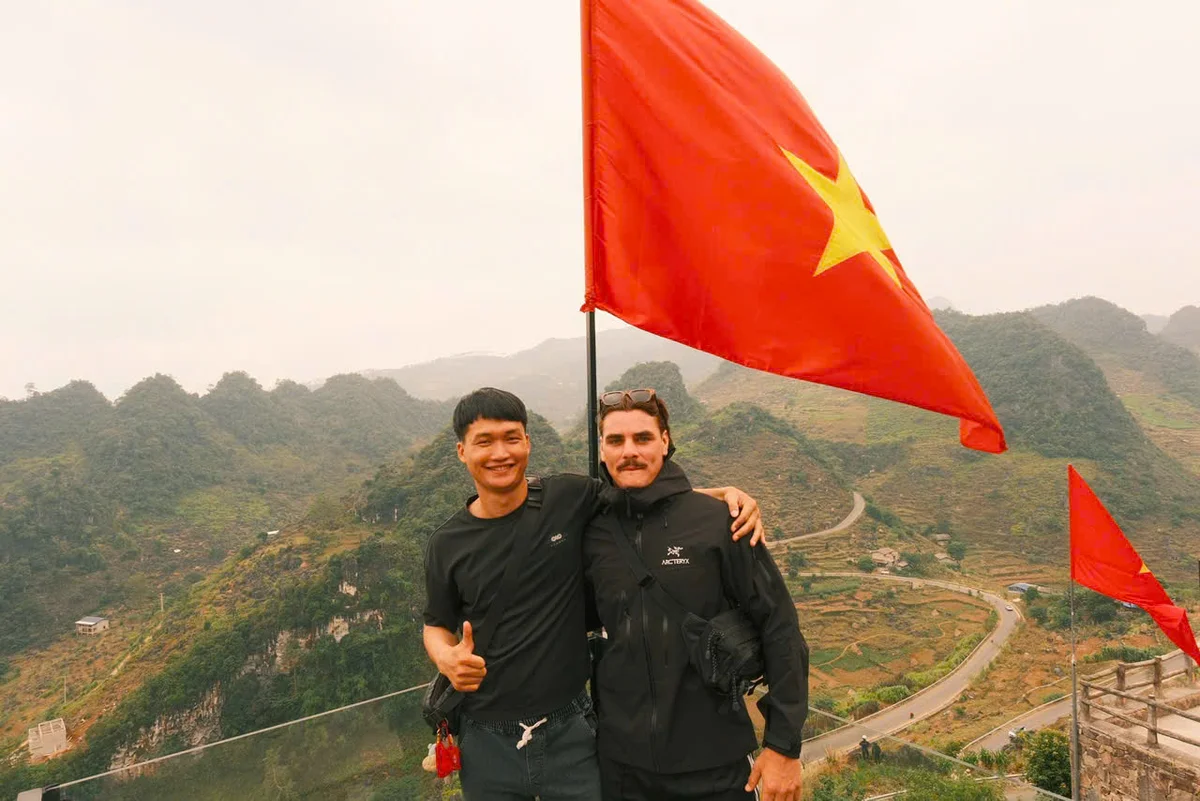
The Cao Bang Loop in northern Vietnam is filled with the kind of scenery that makes you want to pull over every five minutes.
There are enormous waterfalls, peak after peak of limestone mountains, hidden valleys, winding mountain passes, and peaceful villages.
But with so many scenic spots scattered across Cao Bang Province, where should you actually go? And how do you fit the best viewpoints into your itinerary without spending the entire trip on a motorbike?
This guide covers the best scenic stops on the Cao Bang Loop, the main route and its eastern and western extensions, and the best time to visit.
You don't have to organise the entire journey independently, either. We'll also explain how you can explore Cao Bang and Ha Giang together on a Bong Hostel Easy Rider tour, with a local driver taking care of the riding.
Cao Bang Loop Map: Understanding the Routes
Unlike the Ha Giang Loop, the Cao Bang Loop doesn't have one universally followed itinerary. Most travellers start in Cao Bang City and head east towards Ban Gioc Waterfall.
But, you can extend your journey into the northern and western parts of the province to explore quieter roads and more remote landscapes as well.
The main options are:
Route | Time needed | Main highlights | Best for |
Core route | 2–3 days | Angel Eye Mountain, Ban Gioc Waterfall, Nguom Ngao Cave, Phong Nam Valley | First-time visitors |
Eastern extension | Add around 1 day | Ha Lang, Vinh Quy grass hills, quiet mountain roads | Travellers wanting fewer crowds |
Western extension | Add 2–3 days | Pac Bo, Me Pia Pass, Bao Lac, Phja Oac National Park | Adventure seekers and experienced riders |
Combined route | Around 5–7 days, depending on stops | The main attractions and both extensions | Travellers with more time |
The core route covers the best scenic stops, but adding the eastern or western extensions gives you a better sense of just how much there is to discover in Cao Bang.
For a full route breakdown from Ha Giang to Cao Bang, click here: Cao Bang Loop Map and Itinerary 2026: The Ultimate Route Through Vietnam’s Wild Northeast.
The Core Cao Bang Loop: Best Scenic Stops & Route Guide
This is the section most travellers prioritise, particularly if they're short on time.
You'll start in Cao Bang City, head towards the limestone landscapes and lakes around Angel Eye Mountain, continue east to Ban Gioc Waterfall, and explore the surrounding countryside before returning.
1. Cao Bang City
Cao Bang City is your practical starting point, with accommodation, restaurants, fuel stations, and transport connections.
There's no need to spend days exploring the city itself, but it's worth giving yourself time to prepare before heading into the mountains.
Stock up on cash, download offline maps, and check your motorbike if you're riding independently.
2. Ma Phuc Pass
Located east of Cao Bang City, Ma Phuc Pass is a mountain road winding between peaks that reach up to the skies.
It's a good introduction to the dramatic nature of the region's landscapes and an easy place to appreciate the views as you begin your journey.
3. Angel Eye Mountain (Nui Thung)
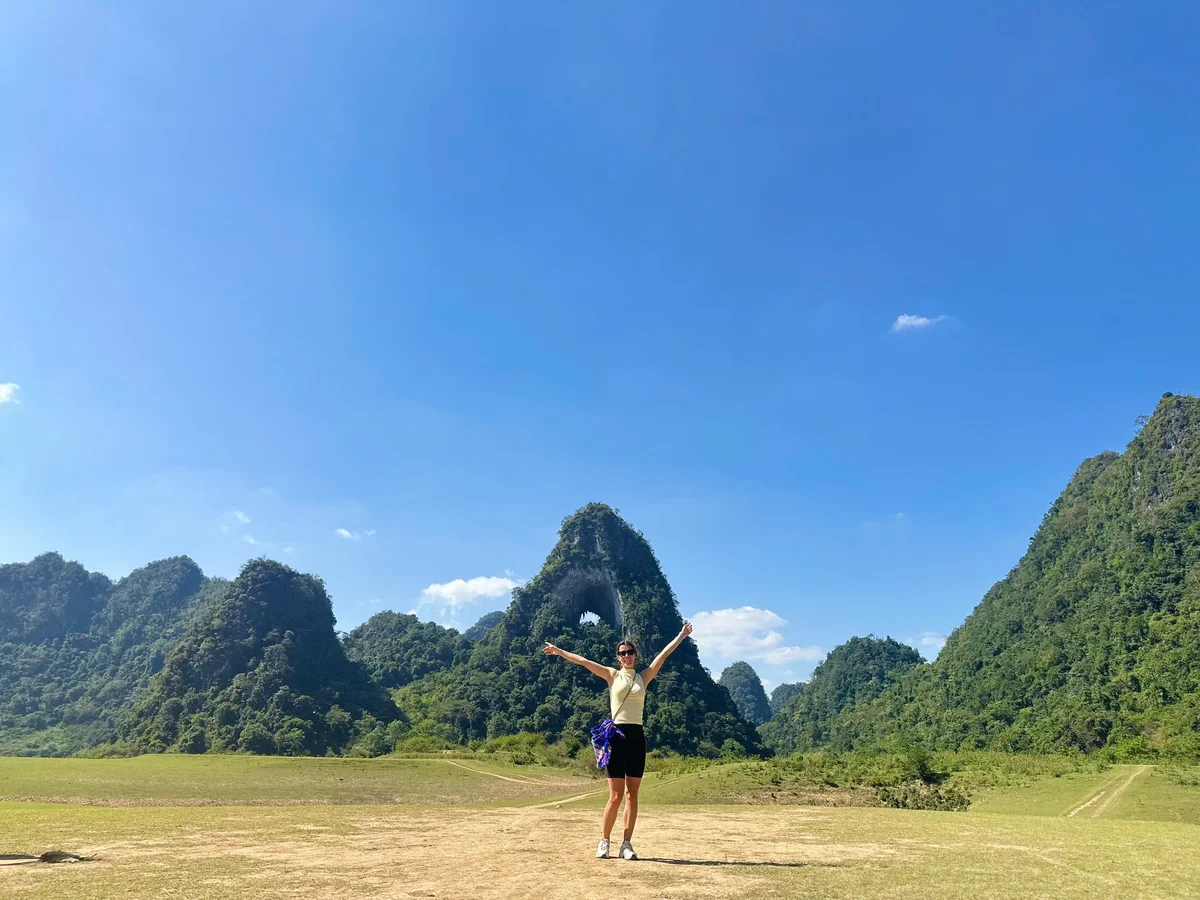
Angel Eye Mountain, also known as God's Eye Mountain, is one of Cao Bang's most distinctive natural landmarks.
A huge circular opening cuts through the A-shaped peak, creating an unusual silhouette against the surrounding mountains.
The mountain sits within a wide valley of grassland, fields, and seasonal water. Depending on the time of year, the landscape can look dramatically different, particularly when water collects around the base of the cliffs.
It's one of the best scenic stops for landscape photography, although conditions and access can vary after heavy rain.
4. Thang Hen Lake
A short detour from Angel Eye Mountain takes you towards Thang Hen Lake, part of a wider network of lakes among the limestone hills.
It's a peaceful spot to take a break from the road, enjoy the scenery, have a snack or a drink, and appreciate the quieter side of northern Vietnam.
5. Trung Khanh and the Quay Son River
Trung Khanh is a district rather than a single attraction, but it's one of the most scenic parts of the Cao Bang Loop.
The area is known for limestone peaks, rural villages, green fields, and the Quay Son River, which winds through the countryside towards Ban Gioc Waterfall.
6. Ban Gioc Waterfall
Ban Gioc Waterfall is the star attraction of Cao Bang, and for good reason.
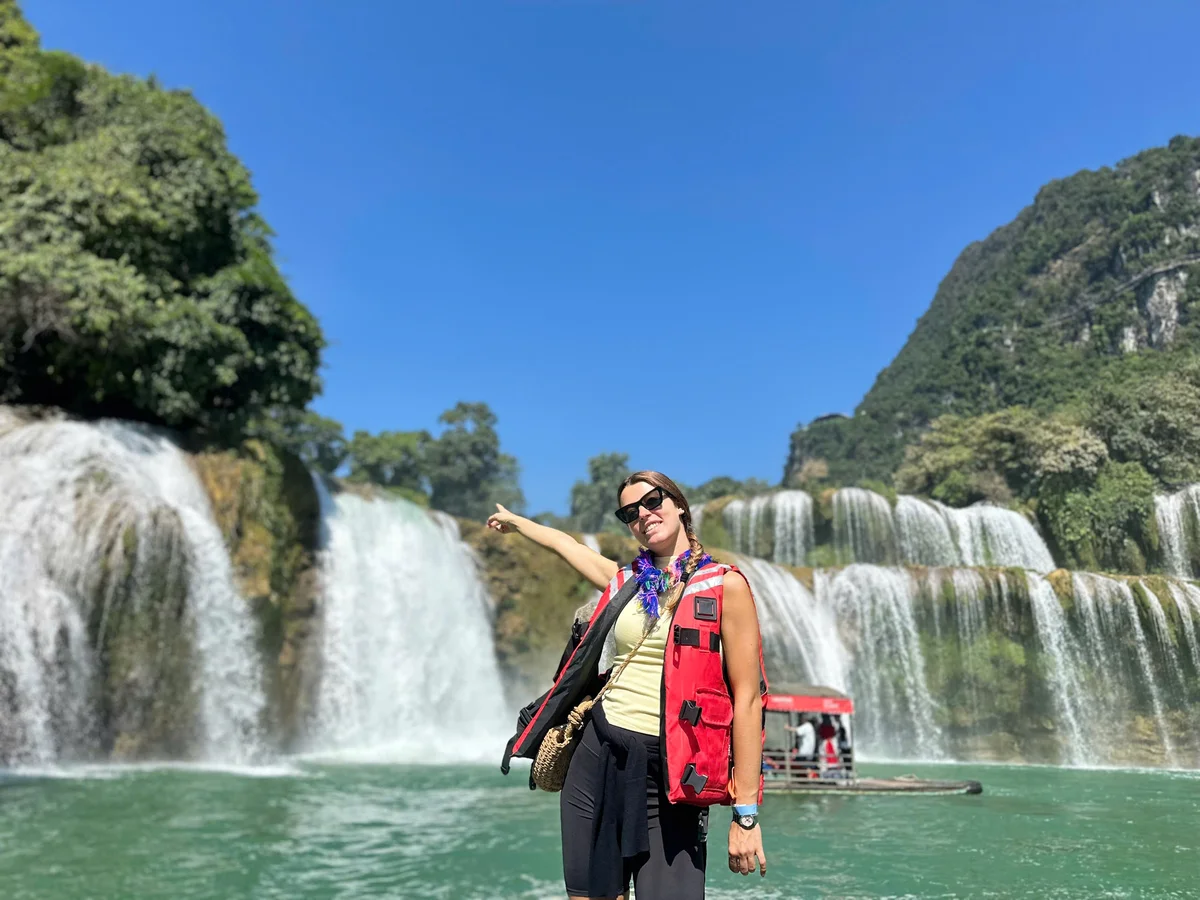
The broad cascades spill over the Quay Son River along the Vietnam–China border, surrounded by limestone mountains and green countryside. You can admire the waterfall from the viewing areas or take a bamboo raft closer to the water when available.
Water levels change throughout the year, so the waterfall can look different depending on when you visit. Wetter months generally bring more powerful flows, while weather and visibility also affect the experience.
Give yourself enough time to enjoy the falls rather than rushing in for a photograph before heading straight back out.
Ban Gioc is worth giving yourself plenty of time to explore. For more practical advice, see our Ban Gioc Waterfall travel guide, including how to get there, when to visit, and what else to see nearby.
7. Phat Tich Truc Lam Ban Gioc Pagoda
The Phat Tich Truc Lam Ban Gioc Pagoda is situated above the Ban Gioc Waterfall area.
On a clear day, you can enjoy views across the countryside and part of the waterfall area. It's also a peaceful place to pause after a busy day of sightseeing.
As this is a religious site, dress respectfully, keep noise to a minimum, and be considerate of people visiting to worship.
8. Nguom Ngao Cave
Located close to Ban Gioc Waterfall, Nguom Ngao Cave takes you underground into a world of limestone formations, impressive chambers, and stalactites.
It's an easy attraction to combine with Ban Gioc, and a welcome change from spending hours outdoors in the heat.
When you buy your ticket you have two options.
You can either choose an easy stroll through the cave to the Lotus Flower rock formation and then to see the silver trees on the way out.
Or a more adventurous route that takes you deeper into the cave and may take around 1 hour to complete.
9. Khuoi Ky Stone Village
Near Nguom Ngao Cave, Khuoi Ky Stone Village is known for its traditional stone houses and its Tay community.
It's a worthwhile cultural stop if you want to see more than Cao Bang's natural attractions. Take time to appreciate the architecture and surroundings, and remember that this is a living community rather than an open-air museum.
If you visit homes or photograph residents, ask permission first. Choosing local accommodation or eating at family-run establishments can also help support the community.
10. Phia Thap Incense Village and Phuc Sen Knife-Making Village
For a glimpse of Cao Bang's traditional crafts, make time for the villages around Quang Uyên. They're a welcome change from the mountain viewpoints and waterfalls that dominate the Cao Bang Loop.
Home to the Nhung An people, Phia Thap Incense Village is known for its traditional incense-making craft.
You'll often see bundles of incense drying outside local homes, and visitors may have the opportunity to learn how it's made. It's a lovely stop if you want to experience a more cultural side of Cao Bang.
Nearby, Phuc Sen is famous for its traditional knife-making workshops, where Nung An artisans forge knives, scissors, and farming tools using skills passed down through generations.
If you stop, you may be able to watch the blacksmiths at work and buy a locally made item.
11. Phong Nam Valley
Phong Nam Valley is one of the places I'd prioritise if you're looking for scenic landscapes away from the busiest tourist spots.
The valley features dramatic limestone peaks, rice fields, waterways, and small villages scattered across the countryside. It's a beautiful place to witness the slower pace of rural northern Vietnam.
The landscape is particularly photogenic when the fields are green or golden, although the exact appearance depends on the season.
Want to know when to see golden rice fields in North Vietnam? Read our guide: Ha Giang Loop Rice Fields: Harvest Season Guide 2026.
The Eastern Cao Bang Loop Extension: Add 1 Day
If you've got an extra day, the eastern extension lets you explore a quieter side of the province and turn the shorter out-and-back route into a broader circuit.
Rather than adding more famous ticketed attractions, this section is about peaceful roads, open countryside, and the chance to see a less-visited part of Cao Bang.
12. Ha Lang District and Vinh Quy Grass Hills
Ha Lang is a quieter district where the appeal lies in the surrounding scenery rather than a long list of famous landmarks.
The Vinh Quy grass hills are an expanse of open grassy slopes and mountain views, with a short hike to reach them.
I really recommend it as a must-visit for travellers who enjoy a scenic ride and a short walk away from the main tourist route.
The Western Cao Bang Loop Extension: Add 2–3 Days
The western extension is a more ambitious addition, taking you towards Pac Bo, Bao Lac, and the mountainous landscapes around Phja Oac.
This is where the Cao Bang Loop becomes a bigger adventure. Distances between attractions can be considerable, and you should plan realistically rather than trying to squeeze everything into one long day.
13. Pac Bo Historical Site
Pac Bo is an important historical destination associated with Ho Chi Minh's return to Vietnam in 1941.
Visitors can explore the historic sites around the area, including the cave where he lived.
It's a good addition if you want to combine natural landscapes with a deeper understanding of Vietnamese history.
14. Lenin Stream
Nearby, Lenin Stream is one of the scenic features of the Pac Bo historical area, known for its clear water and peaceful mountain surroundings.
It's a quiet spot to appreciate the natural beauty of the area while exploring the historic site. The setting is particularly striking when the water is clear and the surrounding vegetation is lush.
15. Me Pia Pass
Me Pia Pass is one of the most dramatic mountain routes in Cao Bang, famous for its series of 14 sharp switchbacks climbing through the mountains.
The road itself is impressive, but the viewpoint above the pass is the main attraction for photographers hoping to capture the zigzagging route from above.
Reaching the viewpoint involves a hike over uneven cobbles, and steep steps that may take up to 1.5 hours to complete (there and back, with time to appreciate the view at the top).
That’s why it's best to allow additional time. This is not a quick stop to squeeze between two distant attractions.
Discover more mountain passes in North Vietnam.
16. Bao Lac
Bao Lac is a remote district on the edge of the Ha Giang Province, surrounded by rugged mountain scenery and communities with diverse cultural traditions.
It's a useful overnight stop when exploring the western extension, particularly if you're travelling towards or from Ha Giang.
17. Phja Oac National Park
Phja Oac National Park is another change from Cao Bang's limestone valleys, with forested mountain landscapes, cooler conditions at higher elevations, and misty peaks.
It's a worthwhile addition if you have enough time for the southern part of the western extension.
The landscape feels different from the area around Ban Gioc, giving you another perspective on the province's natural diversity.

The Best Time to Do the Cao Bang Loop
Cao Bang is worth visiting throughout the year, but the experience changes with the seasons so the best time for you depends on what you want to prioritise during your trip.
Here’s a seasonal breakdown:
Season | What to expect | Best for |
Spring (March–May) | Mild weather, fresh greenery, and generally pleasant conditions | Exploring and sightseeing |
Summer (June–August) | Hotter temperatures, lush scenery, and a greater chance of heavy rain | Green landscapes and stronger waterfall flows |
Autumn (September–November) | Cooler air, changing rice-field colours, and often clearer conditions | Rice field photography and golden scenery |
Winter (December–February) | Cold mountain weather, particularly at higher elevations | Travellers prepared for chilly conditions |
Spring and autumn are generally the best all-round choices. Both offer good opportunities to explore the region, although weather can never be guaranteed in the mountains.
Before setting off, check the forecast and local road conditions. If heavy rain or fog makes a route unsafe, change your plans rather than trying to stick to your itinerary.
For a closer look at temperatures, rainfall, and what to expect during autumn, read our guide to Cao Bang weather in September, October, and November.
How to Travel the Cao Bang Loop: Self-Riding or Easy Rider?
Once you've picked your stops, the next question is how to get around.
Self-riding
Riding independently gives you the freedom to choose your route, stop for photographs, and explore Cao Bang at your own pace.
However, mountain roads require concentration and experience. Before setting off, make sure you hold a valid driving licence for the motorcycle you're riding, have the required international driving permit, and carry insurance that covers you for riding in Vietnam.
For UK licence holders, check the latest official guidance before travelling. You may need your UK driving licence (with motorbike endorsement) alongside a 1968 International Driving Permit (IDP), again the IDP must have A and A1 motorbike endorsements.
Don't assume that a standard car licence or your travel insurance automatically covers you to ride a motorbike.
Easy Rider
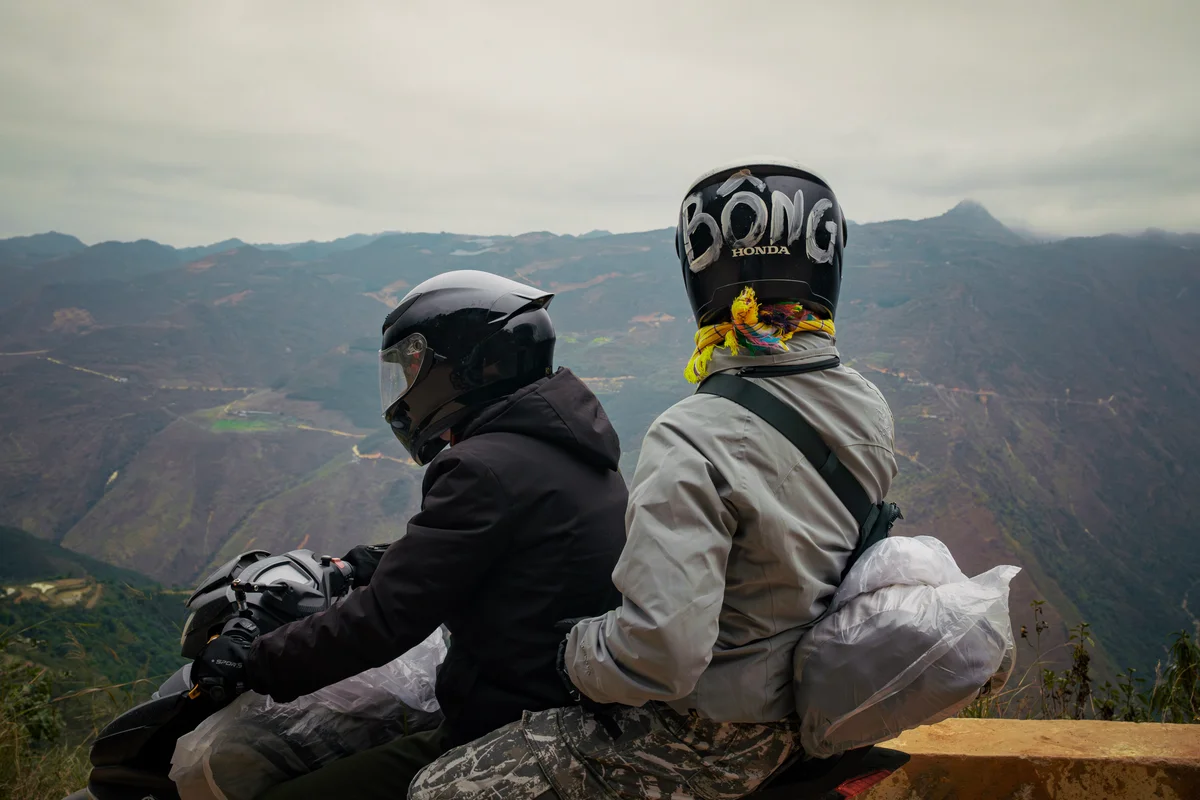
An Easy Rider tour lets you enjoy the motorbike experience without having to ride yourself. A local driver handles the road while you sit back and enjoy the scenery.
This is a particularly good option for travellers who aren't confident on mountain roads or who want to spend more time enjoying the views rather than navigating unfamiliar routes.
At Bong Hostel, our combined Ha Giang and Cao Bang tours are Easy Rider only. Because these journeys cover long distances between regions, having a local driver makes it easier to enjoy the trip.
Not sure whether you’re ready to tackle the mountain roads? Read our guide to doing the Cao Bang Loop as a beginner before deciding whether to ride yourself or travel with an Easy Rider.
Want an Easier Way to Explore Cao Bang and Ha Giang?
If Cao Bang is on your northern Vietnam bucket list but you'd rather not organise all the transport, accommodation, and mountain riding yourself, there's another option.
Rather than planning two separate trips, you can combine Cao Bang and the Ha Giang Loop into one guided adventure with Bong Hostel.
The two regions offer very different experiences. Ha Giang is famous for its dramatic mountain passes and deep river canyons, while Cao Bang is home to Ban Gioc Waterfall, Nguom Ngao Cave, and Angel Eye Mountain. Together, they make an incredible northern Vietnam adventure.
This is where Bong Hostel comes in.
Our combined Ha Giang and Cao Bang tours are Easy Rider only, meaning a local driver handles the motorbike while you enjoy the scenery.
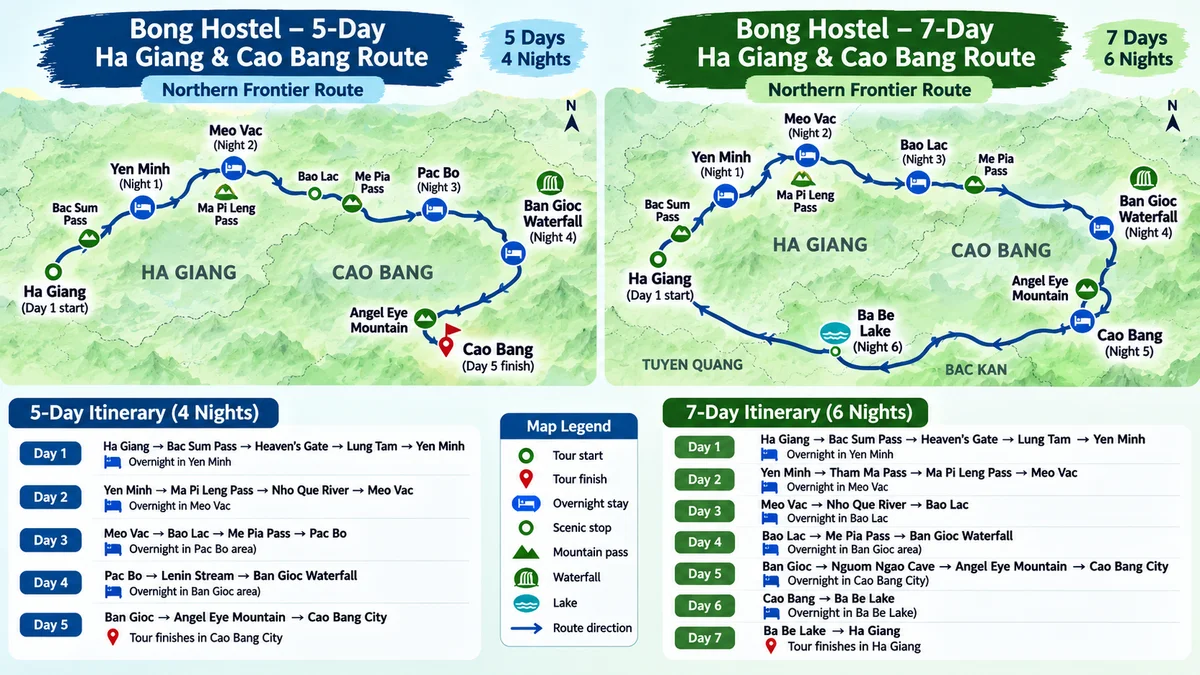
You can choose between two tour lengths, depending on how much time you have.
Ha Giang and Cao Bang: 5 Days, 4 Nights
Our Northern Frontier Route takes you from Ha Giang through its famous mountain passes and river valleys before continuing into Cao Bang.
Highlights include Ma Pi Leng Pass, the Nho Que River, Me Pia Pass, Pac Bo, Ban Gioc Waterfall, and Angel Eye Mountain.
It's a great option if you want to experience the highlights of both regions without committing to a full week on the road.
Ha Giang and Cao Bang: 7 Days, 6 Nights
If you have more time, our longer itinerary gives you a chance to explore at a slower pace and venture further into northern Vietnam.
You'll visit highlights including Bao Lac, Ban Gioc Waterfall, Nguom Ngao Cave, and Angel Eye Mountain, before continuing south to Ba Be Lake.
It's the better choice if you want a longer adventure and more time exploring beyond the main Ha Giang and Cao Bang highlights.
Both tours include an English-speaking tour leader, a local driver, accommodation, meals, sightseeing tickets, and motorbike support included, subject to the individual itinerary.
Still deciding whether to visit both regions? Our guide to the Ha Giang Loop vs. Cao Bang Loop compares the two experiences and explains why you don’t necessarily have to choose between them.
Practical Tips for Riding the Cao Bang Loop
Cao Bang’s roads take you through some of northern Vietnam’s most beautiful landscapes, but mountain routes can take longer than expected. A little preparation makes the journey much easier.
Allow extra time: Don’t plan every day around reaching the next stop as quickly as possible. You’ll want time to enjoy the viewpoints, explore villages, and stop for photos along the way. We recommend 1 to 2 scenic spots per day.
Check the weather and road conditions: Heavy rain can make rural roads slippery and may cause landslides or temporary road closures. Check local conditions before setting off, particularly during the rainy season.
Avoid riding after dark: Some roads are narrow, winding, or poorly lit, so aim to reach your accommodation before sunset.
Download offline maps: Mobile signal can be unreliable in more remote areas, so save your route before leaving Cao Bang City.
Check your motorbike before setting off: Make sure the brakes, tyres, lights, and fuel level are all in good condition. Refuel whenever you have the opportunity, especially before heading into quieter areas.
Temperatures can change quickly in the mountains, so pack layers and rain protection even if the forecast looks good. Our Cao Bang Loop packing checklist covers the essentials to bring along.
Cao Bang Loop FAQs
1. How many days do you need for the Cao Bang Loop?
Allow 2–3 days for the main highlights or 4–6 days if you want to explore further, including Pac Bo, Me Pia Pass, and Phja Oac National Park.
2. What are the best stops on the Cao Bang Loop?
Don't miss Ban Gioc Waterfall, Angel Eye Mountain, Ma Phuc Pass, Nguom Ngao Cave, and Phong Nam Valley. If you have more time, visit Pac Bo or Vinh Quy grass hills.
3. What is the best time to do the Cao Bang Loop?
September to November is ideal for cooler weather and golden rice fields. March to May is also a great time to visit, with mild temperatures.
4. Is the Cao Bang Loop difficult to ride?
Some roads are winding, narrow, and challenging in wet weather. If you are inexperienced or uncomfortable riding in the mountains, consider travelling with an Easy Rider.
5. Can you do the Cao Bang Loop without a motorbike?
Yes. You can arrange transport between attractions or join a guided tour with an Easy Rider, who drives while you enjoy the scenery as a passenger.
6. Can you combine the Ha Giang Loop and Cao Bang Loop?
Yes, combining both regions is a great way to explore northern Vietnam. However, the distances between them require careful planning. Bong Hostel offers combined 5-day 4-night and 7-day 6-night tours with Easy Riders.
7. Is it better to do the Cao Bang Loop independently or on a guided tour?
Going independently offers more flexibility, but you must arrange your own transport, accommodation, and route. A guided tour takes care of much of the planning and is a good option if you want a more straightforward journey.
━━━━━━━━━━━━━━━━━━━━━━━━━━━━━━━━━━━━━━━━━━━━━━━━━━━━━━━━━━━━━━━━━
Ready to Explore the Cao Bang Loop?
From Ha Giang to Cao Bang, these two regions offer some of the most amazing scenery in northern Vietnam.
You could spend days planning separate routes, arranging accommodation, and figuring out how to travel between the two regions. Or you could let Bong Hostel take care of the planning.
Our combined Ha Giang and Cao Bang Easy Rider tours make it easier to experience both regions, with a local driver, accommodation, meals, and sightseeing included.
Choose between our 5-day and 7-day adventures, and get ready to discover more of northern Vietnam without having to ride yourself.
About Faye Hilling
Travel writer and Vietnam explorer sharing authentic experiences and insider tips for discovering the beauty of Vietnam.