
Self-Riding the Ha Giang Loop in Rainy Season 2026: Is It Legal?

You’ve seen the Ha Giang Loop photos.
Winding roads, mountain peaks disappearing into clouds, tiny villages tucked into impossibly green valleys.
And now you're thinking: “I want to ride that myself.”
Fair enough. There’s something pretty special about self-riding the Ha Giang Loop—but then you check the calendar.
Rainy season.
So, can you self-ride the Ha Giang Loop in the rainy season 2026?
Yes—but only if you're legally licensed and confident riding in challenging mountain conditions.
Rain can bring slippery roads, reduced visibility, mud, and sudden changes in weather.
But it also transforms Ha Giang into one of its most spectacular seasons, with green rice fields, full rivers, powerful waterfalls, and fewer tourists.
So, before you pack your waterproofs, let's answer the most important question first: Is self-riding the Ha Giang Loop actually legal in 2026?
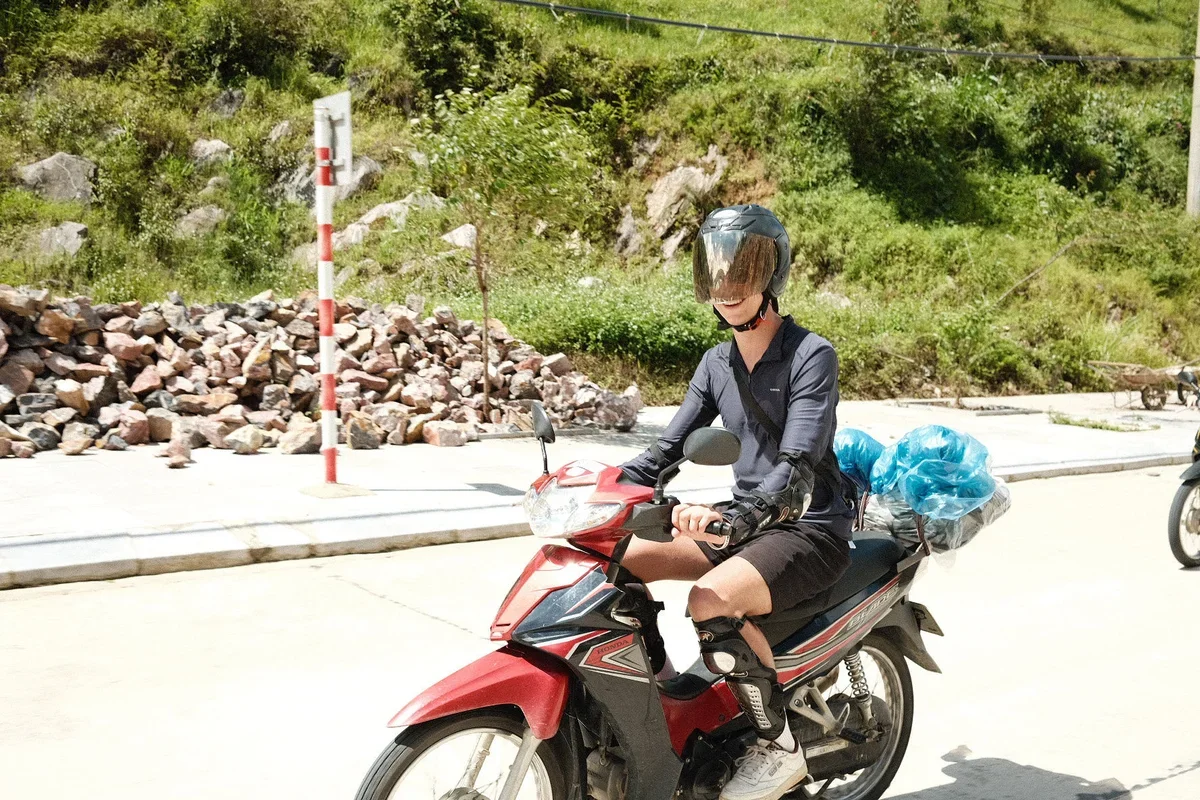
Can You Legally Self-Ride the Ha Giang Loop in Rainy Season 2026?
Before we look at how to self-ride in the rain, let's talk about whether you’re legally allowed to do so in 2026.
1. You Need the Correct Licence
To legally self-ride the Ha Giang Loop in 2026, you need to meet Vietnam's motorcycle licensing requirements.
For foreign visitors, this means having an appropriate motorcycle licence from your home country together with a valid 1968 International Driving Permit (IDP) that covers the type of motorcycle you're riding.
The UK government's current Vietnam travel advice states that UK travellers driving a car or motorbike in Vietnam need both their 1968 IDP and their UK driving licence.
And here's the important bit: Having an IDP does not automatically mean you're licensed to ride a motorbike.
If your home-country licence only allows you to drive a car, getting an IDP doesn't magically turn you into a motorbike rider.
Likewise, having ridden scooters around Southeast Asia for six months doesn't necessarily mean you are prepared for several hundred kilometres of mountain roads.
The Ha Giang Loop is not the place to discover that your entire motorbike experience consists of three days on a 110cc scooter in Thailand.
If you don't have the correct licence, don't self-ride. It's simply not worth the risk.
Instead, you can book an Easy Rider tour with Bong Hostel, where an experienced local driver handles the bike while you enjoy the scenery.
Learn more about riding the Loop with the correct license.
2. You Need the Right Riding Experience
Having the correct licence is only half the equation.
Rainy-season self-riding is not recommended for inexperienced or nervous riders.
You should only consider self-riding the Ha Giang Loop during rainy season if you're a confident motorbike rider who is comfortable with mountain roads, wet conditions, steep climbs and descents, and rapidly changing weather.
You also need to be prepared to:
Slow down when road conditions deteriorate
Leave extra space between you and other vehicles
Change your route or plans if necessary
Stop riding if visibility becomes dangerously poor
Stay calm if you encounter mud, gravel or standing water
If you're only considering self-riding because it looks cheaper, or your motorbike experience consists mainly of a few scooter rides around Southeast Asia, we'd seriously reconsider.
Because the rainy-season Ha Giang Loop isn't just the dry-season Loop with a little more rain.
It's the same incredible landscape with an added layer of unpredictability. And occasionally that layer might be a landslide, some light flooding, or approximately six inches of mud.
If you're experienced, properly licensed, and happy to adapt to the conditions, self-riding can be an incredible way to experience Ha Giang in rainy season.
If you're not, there's absolutely no shame in handing the handlebars to a local Easy Rider and enjoying the views instead.
When Is the Rainy Season on the Ha Giang Loop?
Rainy season in Ha Giang generally runs from around late May through September, with June, July and August typically bringing the most challenging wet-weather conditions.
But don't picture 24-hour monsoon rain for four months straight—that's not usually how it works.
You might wake up to beautiful blue skies, spend the morning riding beneath sunshine, stop for lunch and watch the heavens open before the sunshine comes out again.
Mountain weather is wonderfully unpredictable, which is exactly why you need to be prepared.
Rainfall can also vary considerably from one part of the Loop to another. You might leave Ha Giang City in dry weather and find yourself riding through thick mist an hour later.
Self-Riding the Ha Giang Loop in June, July, August or September
The rainy season weather varies throughout the whole period.
Month | What to Expect |
June | Increasing rainfall, lush scenery and plenty of dry periods |
July | Often one of the wettest periods; greater chance of heavy rain and difficult conditions |
August | Very green landscapes, waterfalls and frequent heavy showers |
September | Rain can continue early in the month, with conditions generally improving later |
But Isn't the Rainy Season a Bad Time to Visit Ha Giang?
Rainy season isn't necessarily a bad time to visit Ha Giang. In fact, it's one of the greenest and most dramatic times to see the mountains.
Rice terraces are vibrant, waterfalls are flowing, and mist can give the landscape that classic Ha Giang atmosphere.
You'll also generally encounter fewer travellers than during the Loop’s high season.
The only catch is that you need to accept that weather can affect your riding plans.
If you're happy to trade guaranteed sunshine for spectacular scenery and quieter roads, rainy season can be well worth it.
What Makes Self-Riding the Ha Giang Loop in Rainy Season Difficult?
The Ha Giang Loop is already a demanding motorbike journey.
You're dealing with winding mountain roads, steep climbs and descents, sharp bends, traffic, livestock, villages and constantly changing road surfaces.
Add rainy-season weather to the mix and suddenly everything requires a little more concentration.
However, knowing what to expect can make a huge difference.
1. Slippery Roads
This is the obvious one.
When roads are wet, your tyres have less grip than they do on dry surfaces. Add mud, gravel, leaves or other debris washed onto the road and things can become even more slippery.
The biggest mistake you can make is riding exactly as you would in dry conditions.
Your speed needs to come down, your following distance needs to increase and your braking and acceleration need to become smoother.
Basically, rainy-season riding is all about keeping things calm and controlled.
2. Reduced Visibility
One minute you've got sweeping views of the road ahead, the next you're staring at approximately three metres of mist.
Fog and low cloud can settle across higher sections of the Loop, particularly around mountain passes. Heavy rain can also make it difficult to see road markings, vehicles and hazards ahead.
And while mist looks magical in a photograph, mist covering the road directly in front of your motorbike? A lot less magical.
If visibility starts to deteriorate, slow down. If it becomes dangerously poor, stop somewhere safe and wait for conditions to improve.
There is absolutely no prize for reaching Meo Vac twenty minutes earlier.
3. Mud, Gravel and Potholes
Heavy rain can wash soil, gravel, and other debris onto the road, particularly around bends and downhill sections.
Then there are the puddles.
A puddle can look completely harmless, but you have no idea what is hiding underneath it. It could be shallow, it could be surprisingly deep, or it could be a pothole.
If you can't see the road underneath standing water, don't charge straight through it. Slow down and avoid it where possible.
The same goes for loose gravel and mud. A perfectly innocent-looking corner can suddenly contain a slippery patch, so avoid sudden steering, braking or acceleration when riding over unpredictable surfaces.
4. Landslides and Road Debris
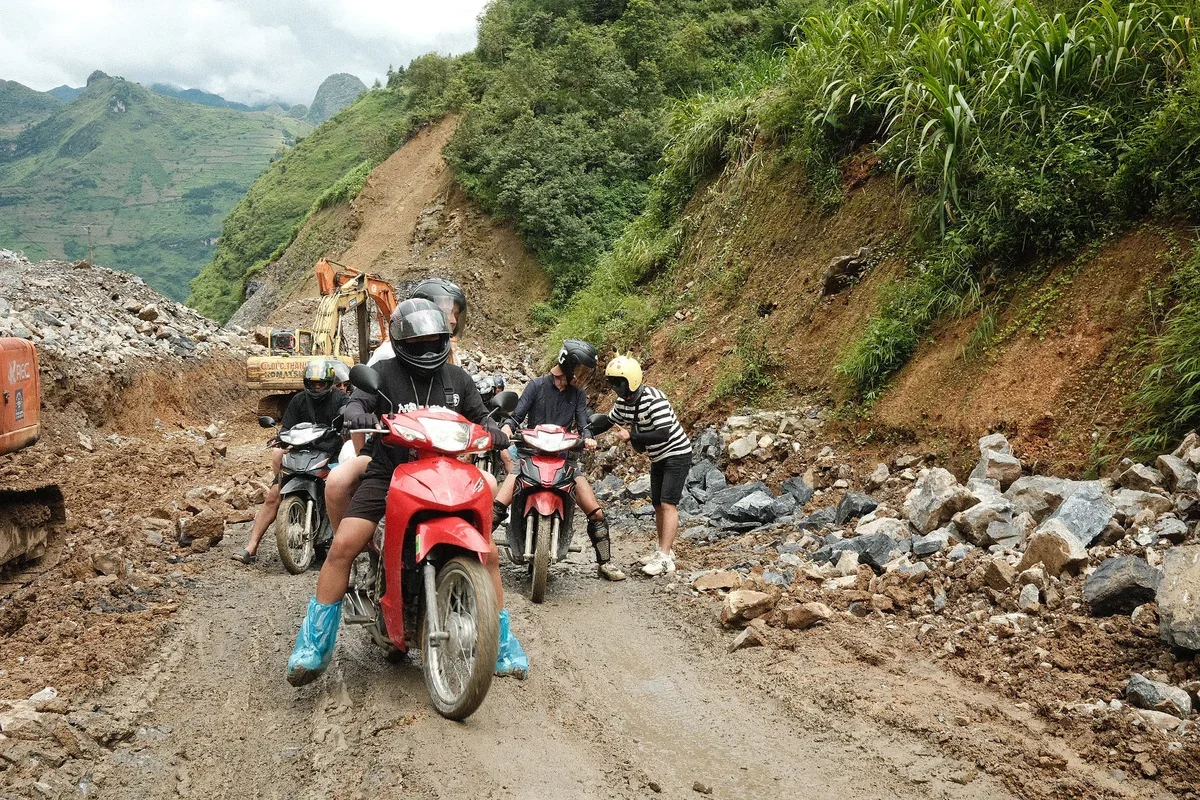
Heavy rainfall can also increase the risk of landslides, falling rocks, and other debris on mountain roads.
This is one of the biggest reasons you need to remain flexible when self-riding the Ha Giang Loop during the rainy season.
A road that was completely fine yesterday may be affected by heavy rain today.
That's why you should always be prepared to change your route or delay your journey if local conditions make riding unsafe.
For more generalised self-riding tips, click here: Tips on How to Self Ride the Ha Giang Loop.
How Should You Adapt Your Riding?
If you're experienced enough to self-ride the Ha Giang Loop in rainy season, your riding style needs to change when the weather does.
Slow down: You don't need to crawl along at walking speed, but your speed should match the road and weather conditions. The faster you're travelling, the less time you have to react to potholes, gravel, vehicles, animals and whatever else appears around the next bend.
Increase your following distance: Give yourself more space from the rider or vehicle in front. Wet roads mean you may need more time and distance to stop safely, particularly when travelling in a group.
Be smooth: Smooth braking, smooth acceleration and smooth steering are your best friends in wet conditions. Avoid suddenly grabbing the brakes or twisting the throttle.
Take corners carefully: The Ha Giang Loop has plenty of them. Reduce your speed before entering a bend and avoid aggressive leaning on wet or unpredictable surfaces. Never assume the road around the corner will be in the same condition as the road you're currently riding on.
Know when to stop: This is perhaps the most important one. If heavy rain, fog or road conditions make you uncomfortable or unable to see properly, pull over somewhere safe and wait. Your itinerary can change. Your safety shouldn't.
What to Pack for Self-Riding the Ha Giang Loop in Rainy Season
If you're planning to self-ride the Ha Giang Loop in rainy season, packing properly isn't just about staying comfortable.
Keeping yourself, your belongings, and your electronics dry can make a huge difference to your experience.
Rain Gear
Waterproof jacket and trousers: If you do the loop with Bong Hostel we provide ponchos. However, a waterproof outer layer is an extra layer of rainy season comfort.
Gloves: Wet hands are cold hands, and cold, wet hands trying to operate a motorbike are even less fun. Choose gloves that offer protection while still allowing you to comfortably operate the controls.
Proper footwear: Your shoes or boots should have good grip and ideally offer some protection from the rain. You don't want to step off the bike at a muddy viewpoint and immediately land on your backside.
Keep Your Stuff Dry
Your phone, camera, power bank, and other valuables should be kept somewhere genuinely waterproof.
A small dry bag is ideal for keeping important belongings protected, while resealable plastic bags can provide an extra layer of protection for electronics.
Don't Forget the Unexpected
Rainy season doesn't mean you'll be wet for your entire trip. You can still get blazing sunshine between showers, so pack for both sides of Ha Giang's personality.
We'd recommend bringing:
Spare socks
Spare T-shirt
Warm layer
Power bank
Sunscreen
Sunglasses
Insect repellent
Swimwear
Some cash for food, drinks, and unexpected expenses (around 2 or 3 million VND just in case)
Basic toiletries
And yes, pack your swimwear because you might spend the morning riding through a cloud and the afternoon swimming at a waterfall.
For a more comprehensive breakdown of what to bring, check out Bong Hostel's full rainy-season Ha Giang Loop packing guide.
Should You Self-Ride or Book an Easy Rider?
Still not sure whether you should be the one behind the handlebars?
Here's our honest answer: it depends on your riding experience.
Rainy season doesn't automatically mean you need to book an Easy Rider, but it does make choosing the right option even more important.
Self-Riding Is Best For Experienced Riders
If you're legally licensed, genuinely confident on a motorbike and comfortable riding mountain roads in changing weather, self-riding can be an incredible way to experience the Ha Giang Loop.
But you need to be prepared for the conditions.
Rain, fog, slippery roads, mud, and unexpected debris are all possibilities during the rainy season, so you need to be comfortable adapting your riding when the weather changes.
If you're experienced and properly licensed, go for it. Just don't let your confidence turn into overconfidence.
Easy Rider Is Best For Everyone Else
If you're a beginner, a nervous rider, haven't ridden in wet mountain conditions before or simply don't feel completely comfortable handling the bike yourself, an Easy Rider tour is the better option.
With an Easy Rider, an experienced local driver handles the motorbike while you sit back and enjoy the journey.
That means you can actually look around, take photographs, change the song if your playlist isn’t matching the vibe, and enjoy the scenery without worrying about keeping your eyes glued to the road.
And during the rainy season, there's something particularly appealing about letting someone else deal with the slippery bits.
Bong Hostel's Easy Riders are local drivers who know the Ha Giang Loop and ride these roads regularly.
That local experience is particularly valuable when weather and road conditions change, allowing you to focus on the scenery while your driver focuses on the road.
Bong's current 3D2N and 4D3N Ha Giang Loop group tours offer both self-riding and Easy Rider options, so you can choose the experience that suits your riding ability.

Still Weighing Up Your Options?
Self-Riding | Easy Rider | |
You drive the bike | Yes | No |
Best for | Experienced riders | Everyone, especially less confident riders |
Rainy-season difficulty | Higher | Much easier for you |
Navigation | You (follow the group if self-riding on a group tour) | Local guide |
Freedom | High | High, without handling the bike |
Road concentration | High | Much lower |
Legal licence required | Yes | No, because you're not driving |
Stress level | Depends on experience | Generally much lower |
Scenic appreciation | Between bends | Pretty much the whole time |
If you're experienced and properly licensed, self-riding gives you the freedom to experience the Loop under your own steam.
If you're less confident, an Easy Rider lets you enjoy the same incredible scenery without having to handle the mountain roads yourself.
Ready to book?
👉 Book Bong Hostel's 3D2N Ha Giang Loop Tour
👉 Book Bong Hostel's 4D3N Ha Giang Loop Tour
FAQs About Self-Riding the Ha Giang Loop in Rainy Season
Is it safe to self-ride the Ha Giang Loop in rainy season?
Yes, if you're an experienced and properly licensed rider who is prepared for changing road conditions.
Rain can make the Loop more challenging, with slippery surfaces, reduced visibility, mud, gravel and occasional road debris.
Always adjust your speed to the conditions and be prepared to stop or change your plans if the weather becomes unsafe.
Can beginners self-ride the Ha Giang Loop in rainy season?
We wouldn't recommend it. The Ha Giang Loop involves steep mountain roads, sharp bends and changing road conditions, and rainy weather adds another layer of difficulty.
If you're a beginner or nervous on a motorbike, an Easy Rider tour with Bong Hostel is a much more relaxed way to experience the Loop.
What licence do I need to self-ride the Ha Giang Loop?
You need the appropriate motorcycle licence from your home country together with a valid 1968 International Driving Permit (IDP) that covers the type of motorcycle you're riding.
You should also carry your original licence and IDP with you. Having an IDP alone does not give you motorcycle entitlement if your home-country licence doesn't cover motorcycles.
What is the wettest month on the Ha Giang Loop?
July and August are generally among the wettest months in Ha Giang, with more frequent heavy showers and thunderstorms.
However, rainy-season weather can vary considerably, and even during the wettest months you can experience plenty of dry and sunny periods between showers.
What should I pack for self-riding the Ha Giang Loop in the rain?
Waterproof clothing, including a jacket and trousers, is essential.
You should also bring good-grip footwear, gloves, spare clothes and socks, a dry bag or waterproof protection for your electronics, sunscreen, insect repellent and a warm layer.
And don't forget your swimwear—rainy season can still bring plenty of sunshine and the waterfalls around Ha Giang are hard to resist.
Is an Easy Rider better during the rainy season?
For inexperienced, nervous or less confident riders, yes.
An Easy Rider takes care of the riding while you enjoy the scenery, which can be particularly appealing when roads are wet, visibility is poor or conditions change unexpectedly.
Experienced and properly licensed riders may prefer the freedom of self-riding, but you should always be prepared to adapt your plans to the weather.
Can rain cause Ha Giang Loop road closures?
Heavy rainfall can sometimes cause landslides, flooding or debris on mountain roads, which may lead to temporary route changes or delays.
Conditions can change quickly during rainy season, so self-riders should remain flexible and avoid continuing if a route becomes unsafe.
Bong Hostel may also adjust tour itineraries when weather or road conditions require it.
Final Verdict: Should You Self-Ride the Ha Giang Loop in Rainy Season 2026?
If you've made it this far, here's the short version.
Yes, you can self-ride the Ha Giang Loop in rainy season 2026—but you need to be properly licensed, genuinely experienced, and prepared for changing conditions.
Rain can make the Loop more challenging and occasionally, the weather will decide that your carefully planned itinerary is merely a suggestion.
But the rainy season also gives you something pretty spectacular: Ha Giang becomes incredibly green, waterfalls are flowing, and the roads can be considerably quieter.
So don't write off the rainy season just because there's a chance you'll get wet. Just be realistic about what you're signing up for.
Ready to Ride the Ha Giang Loop?
Whether you want to take the handlebars yourself or sit back with an experienced Easy Rider, Bong Hostel can help you experience the Ha Giang Loop in 2026.
Our current 3D2N and 4D3N Ha Giang Loop group tours include self-riding and Easy Rider options, with the itinerary adjusted when necessary for weather and road conditions.
👉 Book the Bong Hostel 3D2N Ha Giang Loop
👉 Book the Bong Hostel 4D3N Ha Giang Loop
Not sure whether self-riding or Easy Rider is right for you?
Drop Bong Hostel a message and tell us about your riding experience. We'd much rather help you choose the right option before you set off than hear from you halfway up a mountain that you want to turn back!
About Faye Hilling
Travel writer and Vietnam explorer sharing authentic experiences and insider tips for discovering the beauty of Vietnam.